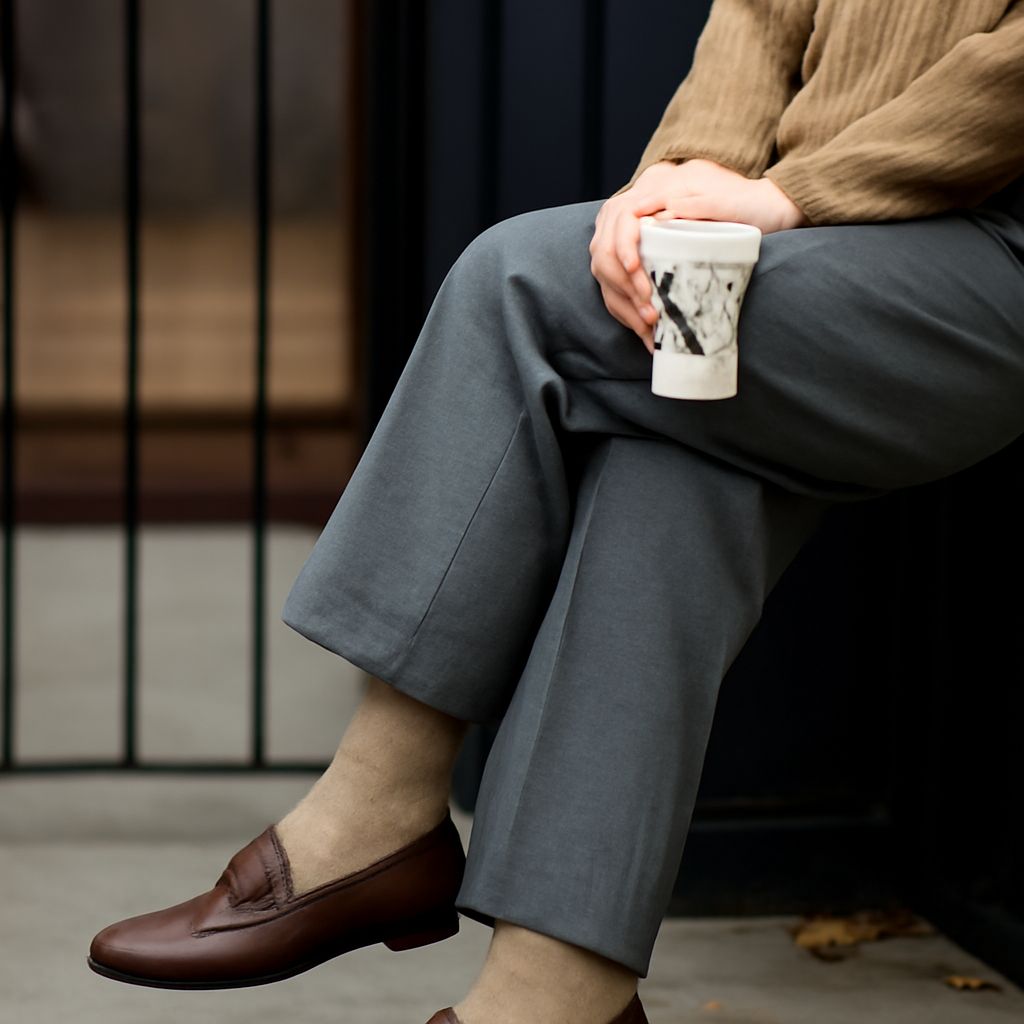
Should the color of socks follow the pants or the shoes? Match the pants for a continuous line from leg to ankle; echo the shoes when a deliberate contrast at the hem suits the outfit. Either choice can work, including black socks paired with brown footwear, provided the rest of the colors and the setting support it.
The deciding details are the distance between the colors, the amount of sock visible, and the formality of the clothes. A narrow strip above a dress shoe reads differently from a thick ribbed sock displayed between cropped pants and a loafer. Looking at the whole combination makes the choice easier.
Match the Pants for a Longer Line
With charcoal trousers and black leather shoes, charcoal socks carry the color of the pants down to the shoe. The shades need not be identical: a slightly darker gray can create the same quiet transition. Navy socks with navy trousers and dark brown shoes work similarly, giving the leg a continuous appearance even when the wearer sits and the hem rises.
For an interview or a conventional business meeting, this approach makes a useful starting point. Choose a fine-knit sock in a color close to the trousers, and a length that stays above the calf when seated. Fine knit refers to a smooth, relatively thin fabric that fits comfortably inside a dress shoe. The result keeps attention on the silhouette of the suit rather than on the ankle.
Should socks match pants or shoes when the pants are patterned? Follow the dominant background color. With gray plaid trousers, a plain gray sock lets the check remain visible without introducing another competing design. A small pattern can also work if its base color relates to the pants and its scale is distinct from the trouser pattern.
Match the Shoe for a Defined Finish
Socks in the color family of the footwear can make the shoe and ankle read as one unit. With cream cropped pants and dark brown loafers, for example, a chocolate sock extends the darker area upward. The contrast is visible and intentional, especially when the pants end above the ankle. A lighter brown sock would soften the change between the cream fabric and the shoe.
In a casual outfit, matching socks to footwear can also emphasize texture. A brown ribbed cotton sock with a brown suede loafer has a softer, more substantial look than a smooth dress sock with polished leather. If the loafer fits closely, try the sock with it: thicker fabric needs more room, and a crowded toe makes an attractive combination uncomfortable.
When deciding whether to coordinate socks with trousers or shoes, consider the hem. Full-length pants may reveal only a brief flash of color while walking, whereas a cropped leg makes the sock a visible part of the outfit. The more that shows, the more useful it is to assess the sock alongside the shirt, jacket, and accessories as well as the shoe.
Black Socks, Brown Shoes: How Contrast Works
Black socks with brown shoes can look considered when there is a clear connection to the rest of the outfit. Black trousers, black socks, brown shoes, and a black knit top make a dark column above the footwear. Deep brown leather gives the shoe a subtle contrast; a tan shoe produces a much sharper break. Either can be chosen deliberately, but the tan version draws more attention to the foot.
With navy trousers and dark brown shoes, black socks are an understated option, although navy socks produce a closer transition to the pants. For a more expressive casual outfit, try brown shoes, black socks, and cropped black jeans with a cream sweater. The exposed ankle echoes the jeans, while the shoes add a warm note. A black belt or bag can connect the dark pieces without requiring every accessory to match.
Light khaki trousers create a different effect with black hosiery and brown leather shoes: the dark sock becomes a distinct band between two lighter surfaces. If a quieter result is wanted, tan, olive, or medium-brown socks soften that division. If the contrast is the point, repeat black in a jacket or bag so the ankle feels related to the rest of the outfit.
Among socks for brown shoes, the most versatile color depends on the trousers. Gray socks bridge gray pants and brown leather; olive socks connect naturally with olive chinos; burgundy can add a richer accent to navy. For a dressier setting, keep the sock relatively fine and the color subdued. For a relaxed gathering, a ribbed sock or small pattern can add visual weight.
Use Texture and Pattern With Intention
Color is only part of the decision. Smooth wool or cotton socks sit neatly under tailored trousers, while chunky ribbing feels at home with denim, heavy cotton, and substantial shoes. A fine sock may look slight beside a rugged boot; a thick hiking sock may bunch inside a narrow oxford. Fit the sock to the shoe first, then judge how its surface relates to the fabric above it.
A patterned pair can connect several colors. Navy socks with a small rust stripe, for example, can link navy pants to warm brown shoes without matching either exactly. Keep the pattern’s background close to the pants for a restrained effect; choose a contrasting background when the exposed sock is intended as a focal point. In a formal setting, a small tonal pattern usually reads more quietly than a large, bright motif.
Choose for the Whole Outfit
Lay the pants, socks, and shoes together in the light in which they will be worn, then sit down to see how much fabric appears. For a conservative navy suit and brown dress shoes, navy socks create the smoothest transition. For cropped black jeans and brown loafers, dark socks echoing the jeans make a strong, deliberate contrast. When choosing sock colors for brown footwear, use the pants for continuity, the shoes for a defined ankle, and the occasion to decide how noticeable that contrast should be.