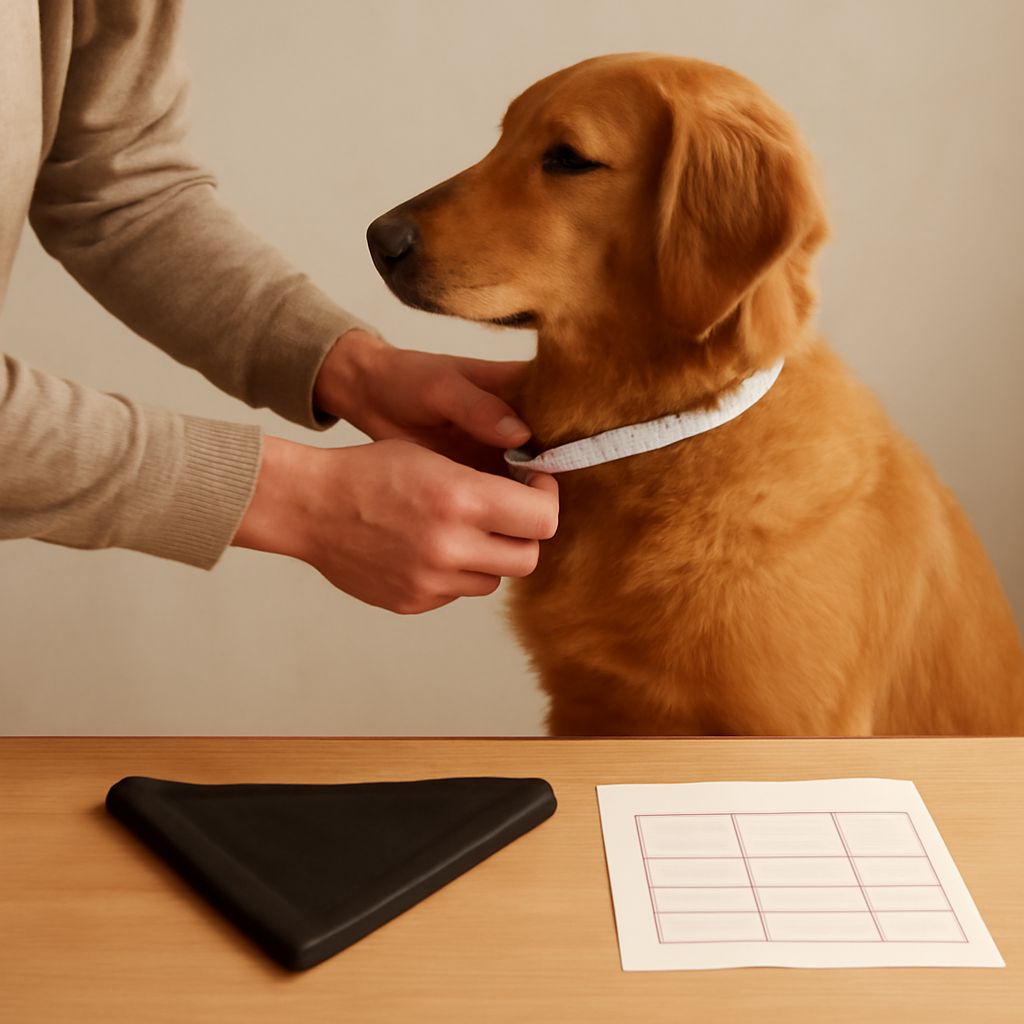
A 22-inch square measures about 31 inches from corner to corner. That diagonal becomes the long edge when opposite corners are folded together, potentially giving a band more tying length than one side of the square suggests. Bandana measurements therefore need to be read alongside the intended fold and the space required for a knot.
The dimensions of a bandana can refer to a finished square or to fabric cut before hemming. Both numbers are helpful, but they answer different questions: one describes the piece ready to wear, and the other helps a maker plan the fabric.
Bandana Dimensions: Square, Triangle and Folded Band
Finished square: Measure one side from finished edge to finished edge, then measure the adjacent side. A piece labeled 22 by 22 inches should be approximately that size after finishing; check the seller’s description for tolerances and washing guidance. A Bandana Company catalog lists both 22-inch and 27-inch squares, illustrating that products are sold in more than one size. Source accessed November 19, 2026.
Triangle: Fold a square by bringing opposite corners together. The folded edge runs along the square’s diagonal. A 22-inch square has a diagonal of about 31.1 inches; a 27-inch square has one of about 38.2 inches. These bandana dimensions describe flat fabric before any knot consumes length.
Narrow band: Starting at the triangle’s long edge, fold the material in toward the point in even strips. The diagonal is an upper limit: as the triangle is folded toward its point, its tapered ends make the usable band shorter. The result depends on band width and folding method. The triangle’s point can be tucked into a fold for a tidier finish.
For any bandana size, lay the cloth flat without stretching it and measure across the finished edges with a ruler or flexible tape. Smooth the cloth first. Record both sides and the diagonal if the intended use involves a diagonal fold.
Compare dimensions for different uses
The table shows example finished bandana measurements, not fixed categories. A person’s head, hairstyle and preferred knot determine the practical fit.
| Finished square | Approximate diagonal | Possible use |
|---|---|---|
| 16 × 16 inches | 22.6 inches | Small bag accent or a short hair tie |
| 22 × 22 inches | 31.1 inches | Narrow headband or neck accent, subject to fit |
| 27 × 27 inches | 38.2 inches | More fabric for a head wrap or longer tying ends |
These bandana sizes describe the square before folding, not the length left after tying. To estimate a headband, measure around the head along the intended path, including hair or a wig if worn. Add a starting allowance for both ends and the knot; then test with a strip of similar fabric. As an example, a 22-inch path plus 8 inches for tying calls for roughly 30 inches of fabric before the knot. A 31.1-inch diagonal alone does not show whether the smaller square will fit; folding reduces the usable length.
For bandana sizing, the 8-inch allowance is an example, not a universal requirement. A thick knot, bow, bulky hair or a preference for long tails can require more. Fold the actual cloth to the intended width, lay it flat and measure the usable band between the ends that can be held for tying. Compare that length with the measured path plus the knot and tails, then try the knot without tightening it. Never pull the band tight enough to cause discomfort.
For a neck accent, measure loosely around the base of the neck and add length for the desired tie and tails. A larger square can hang as a scarf. Try the actual fabric or a similar strip: thickness affects both how the knot forms and how much material it uses.
Measure fabric before cutting
A finished bandana size is smaller than its cut fabric when the edges are folded and hemmed. For a 22-by-22-inch finished square with a double-fold hem, first turn each edge under 1/4 inch, then turn it under another 1/4 inch. Each side uses 1/2 inch of fabric, so add 1 inch to both dimensions and cut a 23-by-23-inch square.
Press the folds and stitch around the edge, checking corners for excess bulk. A Montana State University sewing handbook describes single- and double-fold hems and narrow first folds. Source accessed November 19, 2026. Test the chosen hem on a scrap: a different fold width requires a different allowance. Prewash fabric according to its care instructions before measuring and cutting if the finished piece will be washed.
For a second example, a 27-inch finished square with the same two 1/4-inch folds on each edge needs a 28-by-28-inch cut. Mark square corners. The extra inch is the total allowance across each dimension, not an additional inch on every edge.
Choose the scale for the outfit
A small square accents a bag handle. For a ponytail, a narrow folded strip can leave short or long tails depending on the amount of hair and the knot. Compare the bandana’s dimensions with the desired tail length before choosing; slippery fabric may need a different knot from crisp cotton.
A bandana with larger dimensions provides more hair coverage and material to arrange at the back of the head. In a josou look, a diagonally folded scarf can frame a wig or coordinate with a blouse, while a narrow band can leave more of the hairstyle visible. Place it over the finished hairstyle and check that it stays comfortable when the head turns.
Before selecting a bandana size, use this checklist:
- Measure both finished sides and, for a diagonal fold, the corner-to-corner length.
- Measure the head, neck, hair or handle along the intended tying path; add room for the actual knot and tails.
- If sewing, add both folds at both edges to each cut dimension and account for washing before cutting.
- Test the fold and knot with similar fabric, then adjust the square size for coverage, comfort and the desired appearance.