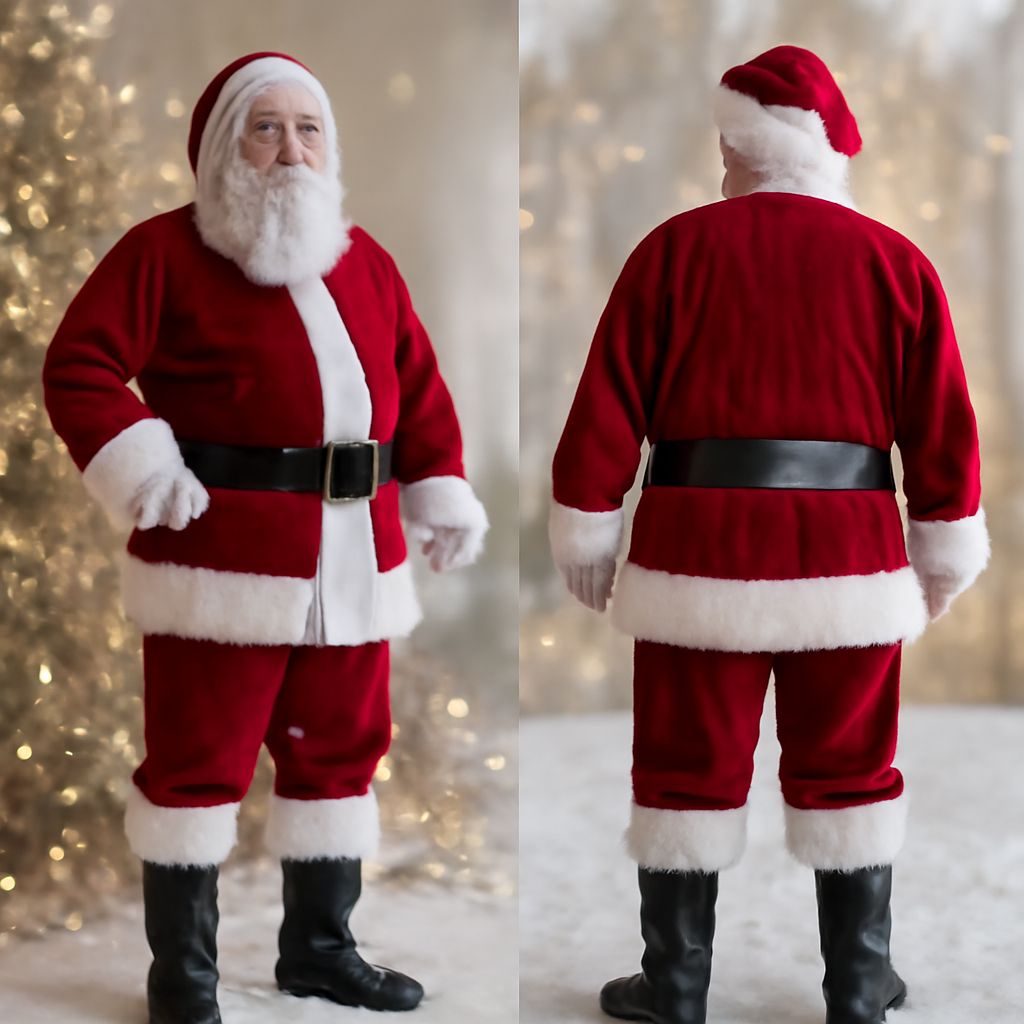
A red coat may establish the character immediately, but its weight, closure and white trim determine how it looks and feels through a performance. A Santa outfit also depends on the trousers, belt, hat, footwear and beard working together. A purchase decision is therefore more useful when it considers the complete ensemble rather than the coat alone.
A costume intended for one family gathering has different demands from clothing worn for repeated appearances under warm lights. Both can create a convincing traditional look; the choice depends on budget, fit, expected use and the time available to prepare.
Santa suit for sale: compare the complete package
A listing for a Santa suit for sale may show gloves, boots or a beard in photographs even when only the coat, trousers and hat are included. Read the contents line by line, then add the cost of any missing pieces. Check the size chart, return conditions and delivery estimate before ordering, particularly if alterations must be completed before an event.
Ready-made Santa Claus suits can be convenient for a short appearance. Some have a printed belt or thin boot covers; others include a separate coat, belt and lined trousers. Neither price nor the word “deluxe” alone establishes quality. Examine close photographs of seams, closures and trim, and look for fabric composition and measurements rather than relying on the model’s size.
For a custom route, Pierre’s Mascots & Costumes describes made-to-order Santa clothing and options including extra trousers, pockets and different trims. Its page is dated 2024 in the site metadata; current availability, timing and terms should be confirmed directly. A local theatrical costumer is another route: bring a reference image and discuss measurements, fitting, fabrics and a written estimate before placing an order.
Fabric and trim: appearance and weight
Velvet has a pile, a surface of short fibers that catches light differently as it moves. It can give the coat a rich surface, while a wool or wool-blend cloth can create a more matte, tailored appearance. Both vary in weight and breathability; the fiber content and lining affect comfort as much as the name on the listing. For a warm indoor venue, a lighter fabric or a removable layer may be preferable.
White trim frames the face, cuffs and coat front. Faux fur varies in density and pile length; check that it is securely attached and does not obscure a closure. The red fabric’s nap should run consistently across the coat.
An authentic santa suit is best understood as a traditional visual interpretation, not a guarantee that every historical depiction used the same fabric or cut. A red coat and trousers, white trim, black belt and boots establish a familiar image. Better construction, clean finishing and coherent proportions can make that image more convincing without requiring the heaviest materials.
Fit for the actual performance
Professional santa suits often need to withstand repeated sitting, standing and reaching. Measure chest, waist, hips, shoulder width, sleeve length and inseam over the underlayers intended for the performance. Compare those measurements with the maker’s chart and ask whether the listed dimensions describe the body or the finished garment. Allow enough ease for movement rather than choosing solely by height.
A well-fitting coat should close without strain and remain comfortable when the arms reach forward. Trousers should not pull at the seat when sitting. If padding is used to create a rounded silhouette, wear it during the fitting; it changes the space needed at the waist and chest. A separate, lightweight padded layer can be adjusted or removed more easily than stuffing placed directly inside the coat.
For a Santa suit used outdoors, allow room for a warm base layer and check whether the footwear is suitable for the surface. Indoors, plan for heat from lights and crowded rooms. Breathable underlayers and breaks between appearances may matter more than a thick coat that looks impressive only in a photograph.
Beard, hair, hat and footwear
A beard frames the face and should work with the hat and wig rather than cover the mouth or shift into the eyes. A fabric-backed beard with adjustable straps can be easier to remove than one requiring adhesive. If adhesive is used, follow the product’s directions, test it on a small area first and allow time for careful removal. A performer using natural facial hair can style it without adding a separate beard.
Try the hat over the intended hair or wig and check that beard straps do not pull it backward. Test boots and covers on stairs; adjust any cover that slips over the sole.
A belt should sit comfortably over the coat without preventing easy breathing. Gloves complete the familiar red-and-white outfit, but they should still allow the performer to hold a bag, turn a page or manage a door. A pair with enough grip and flexible fingers is more useful than an oversized decorative glove.
Buying and assessing a complete look
Compare expected use and cleaning methods. A washable set may suit occasional use; a lined outfit with repairable closures can suit frequent work. Ask whether alterations, beard and footwear are included in the quote.
A practical first set can consist of a red coat and trousers, a white-trimmed hat, a separate black belt, comfortable black footwear, gloves and a securely fitted beard or wig. For repeated professional performances, look for reinforced seams, accessible pockets and pieces that can be repaired or replaced individually. The right level of detail is the one the performance can support comfortably.
Before the event, put on every piece and sit, stand, reach forward and walk in the intended footwear. Check that the belt remains secure, the beard stays clear of the mouth, the hat stays in place and no trim catches on the floor. Confirm that the complete costume is comfortable enough for the planned appearance and that any missing accessory can be sourced in time.