Japanese kimonos should be judged by their construction, measurements, material and condition—not by the seller’s title alone. Before comparing price, decide whether the garment is a kimono, a related jacket or a robe-style product, then match its flaws to your intended use.
A vintage kimono can be suitable for wearing, display or textile reuse. The best choice depends on what the fabric and structure can realistically support.
Japanese Kimonos: Identify the Garment in a Listing
Kimono, Yukata, Haori or Robe?
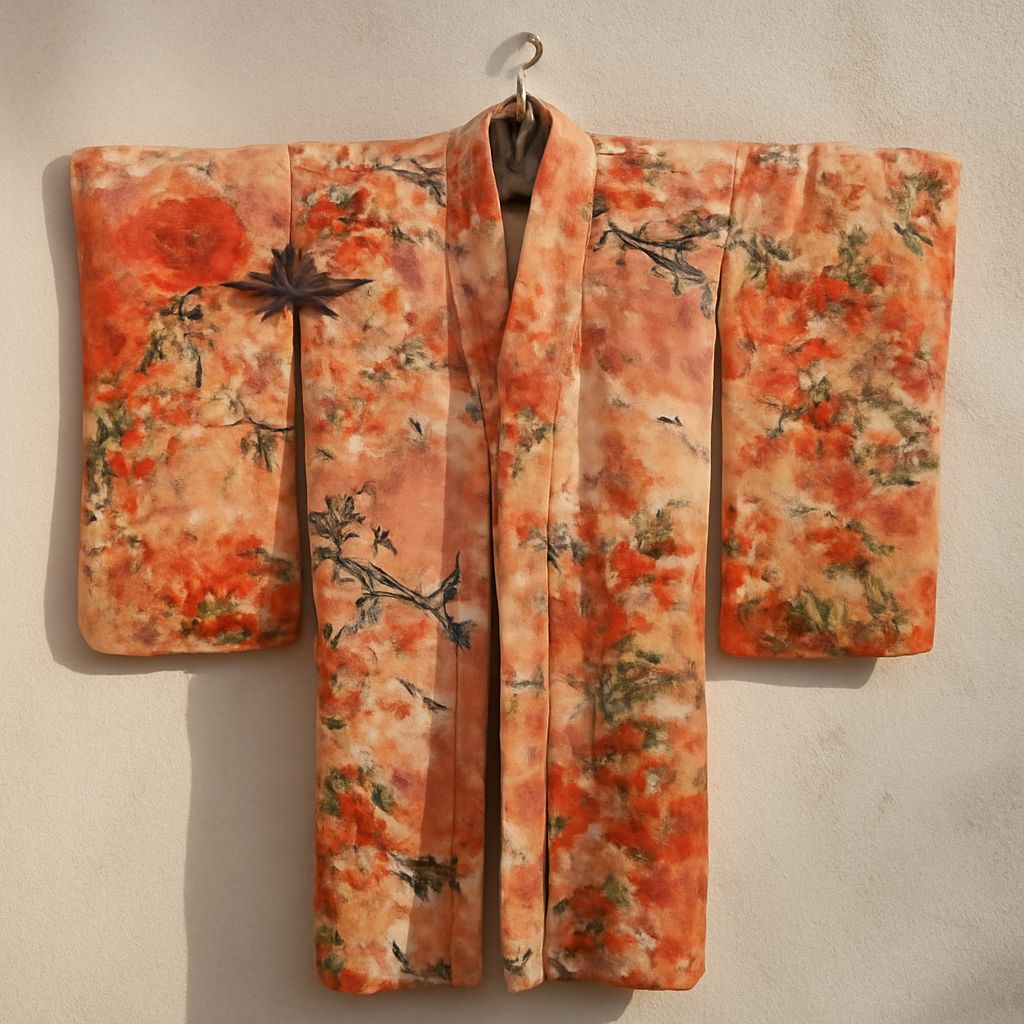
A traditional kimono has a T-shaped construction, straight overlapping front panels, wide sleeves and a continuous collar. It is usually secured with an obi rather than buttons or a sewn belt. A yukata is a lighter, casual cotton garment, often unlined and commonly printed with summer motifs.
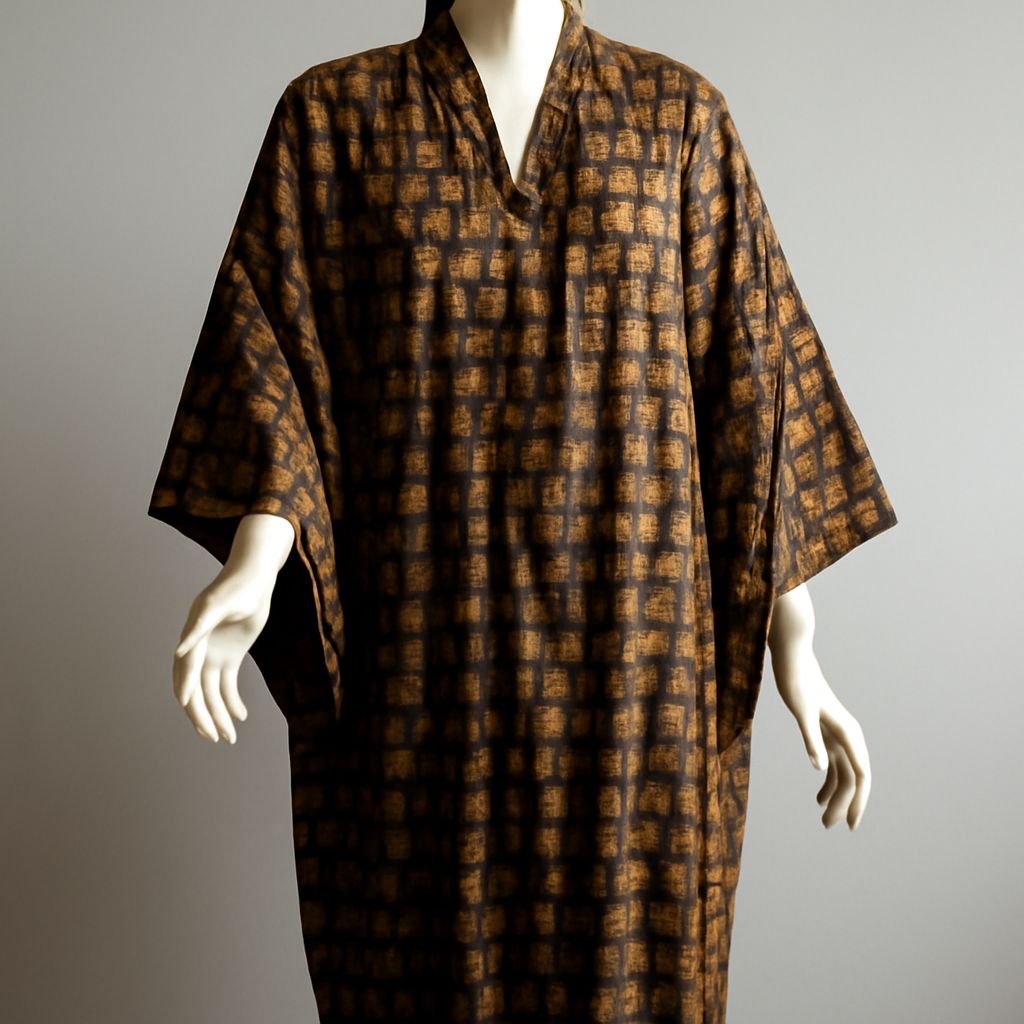
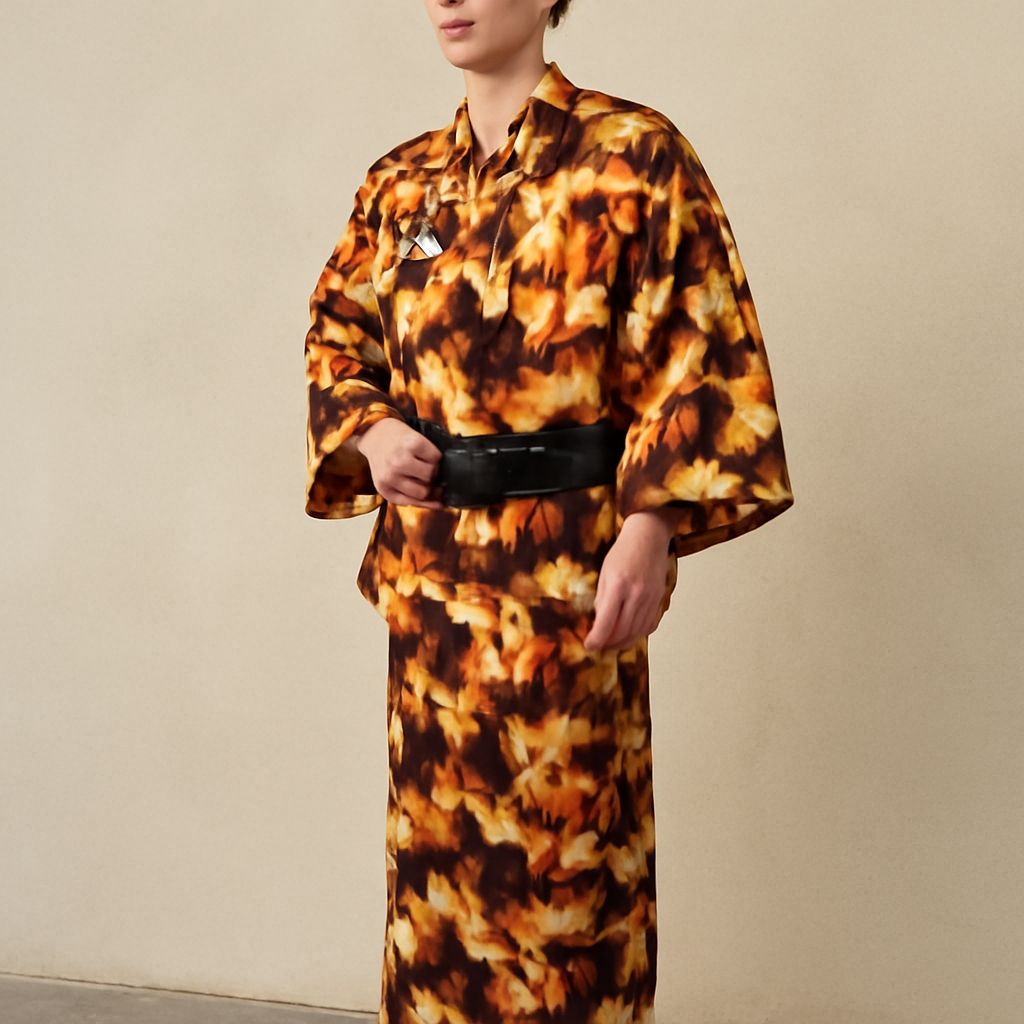
A haori is a shorter kimono jacket. It generally has a narrower body, a jacket-like length and no need for an obi. Robe-style products may borrow Japanese patterns while using western sleeves, attached ties, fitted shaping or synthetic fabric. They should not automatically be described as traditional kimono.
Construction Clues Over Listing Claims
Age, a “Made in Japan” label and a Japanese motif do not prove authenticity or wearability. Look for the garment’s panel construction, collar, sleeve shape and lining first. When reviewing kimonos for sale, ask whether the seller has photographed the inside, cuffs, collar and lower hem.
Read Measurements, Not the Size Label
Length, Width and Sleeve Measurements
Kimono sizing is not equivalent to modern small, medium or large labels. Request these measurements in centimetres:
- Length from the shoulder seam or back neck to the hem.
- Width across the garment, ideally measured flat from sleeve edge to sleeve edge.
- Back-body width and total sleeve-to-sleeve span.
- Sleeve length from the shoulder seam to the sleeve edge.
- Diagonal sleeve measurement from the centre back neck to the sleeve end, often called yuki.
- Hem width, collar width and sleeve depth when display proportions matter.
Allow for overlap at the front and possible folding at the waist. For wearing, compare the measurements with your body and the intended obi arrangement. For display, prioritise the full length, sleeve drop, body width and symmetry.
Assess a Vintage Kimono: Material, Construction and Value
Fabric and Lining
Silk may feel supple, crisp or textured, while cotton yukata fabric is usually firmer and more breathable. Synthetic fibres can still produce attractive garments but often affect value. Check whether the lining matches the quality of the outer fabric, and inspect for thinning, water marks or brittle fibres. Do not rely on a fibre label alone; ask for close-up photographs.
Seams and Alterations
Traditional construction often uses long, visible seams that can be unpicked for cleaning or resizing. Loose stitching, pulled seams and weakened shoulder joins need careful inspection. Look for shortened sleeves, replaced collars, removed panels, added hooks or western-style alterations. Neat professional alterations may improve wearability, but they can reduce value for collectors.
Grade Condition for Wearing, Display or Reuse
Stains, Odor and Storage Wear
Inspect the collar, cuffs and hem first because these areas receive the most handling and contact. Check the lining for yellowing, mildew, insect damage and storage stains. Persistent smoke or musty odor can remain even after airing. Fold lines, foxing, water marks and colour transfer should be described by location and severity, not simply called “age-related.”
Wear, Display or Textile Reuse
For wearing, deal breakers include brittle silk, active mildew, severe odor, failing seams and stains on prominent areas. For display, moderate collar wear or small hidden stains may be acceptable if the garment hangs securely and presents well from a distance. For textile reuse, prioritize sound, clean fabric and enough intact surface area; mismatched panels, repairs and shortened sections matter less than fibre strength.