An authentic kimono is best identified through several matching details, not a label, price, or country-of-origin claim. Traditional construction, proportions, fabric, finishing, and the seller’s description should tell the same story.
A real kimono may be casual, inexpensive, cotton, synthetic, unlined, or machine-sewn. Formal silk garments are only one category. The goal is to distinguish traditional kimono construction from a robe, costume, or loosely inspired fashion item.
Authentic kimono is cumulative evidence, not a single label
Start by treating “authentic” as a description that needs support. “Made in Japan” confirms location, not garment type. Likewise, silk, age, hand stitching, or an attractive obi does not prove that the garment is a traditional kimono.
Look for several of these signals together:
- Rectangular body panels and a recognisable T-shaped outline
- A continuous collar running from the back of the neck down both fronts
- Straight seams, rectangular sleeves, and no Western darts or fitted armholes
- A left-over-right front when worn
- Accurate measurements, interior photographs, and a specific garment description
How an authentic Japanese kimono shows straight-panel, T-shaped construction and a continuous collar
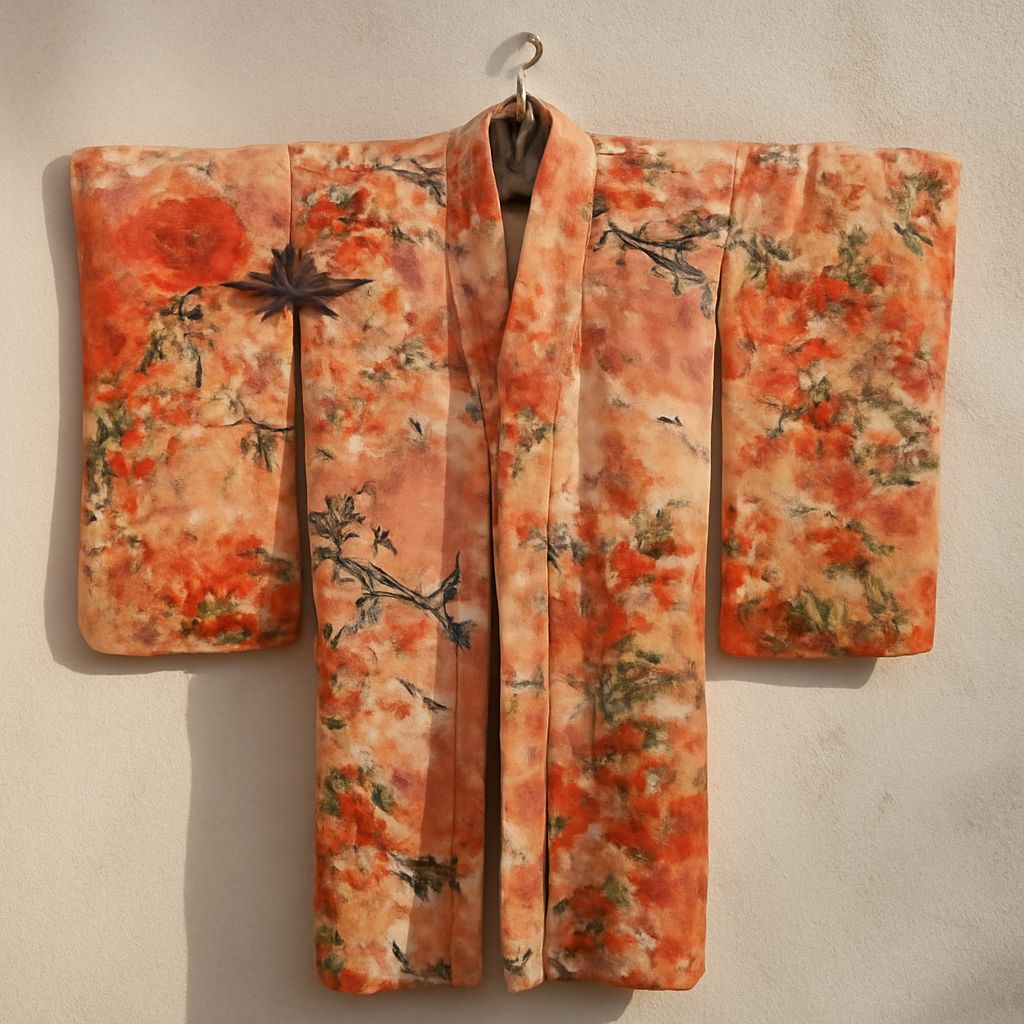
A traditional kimono is assembled largely from long, straight fabric panels. The body usually has broad front and back sections, with additional overlapping front panels called okumi. When laid flat, it forms a T shape rather than the tapered outline of a Western dress or tailored robe.
The collar, or eri, is a long band attached around the back of the neck and continuing down both front edges. It should not look like a separate shawl collar or a simple robe facing. The front also closes through overlapping panels, rather than buttons, zippers, or a permanently open centre.
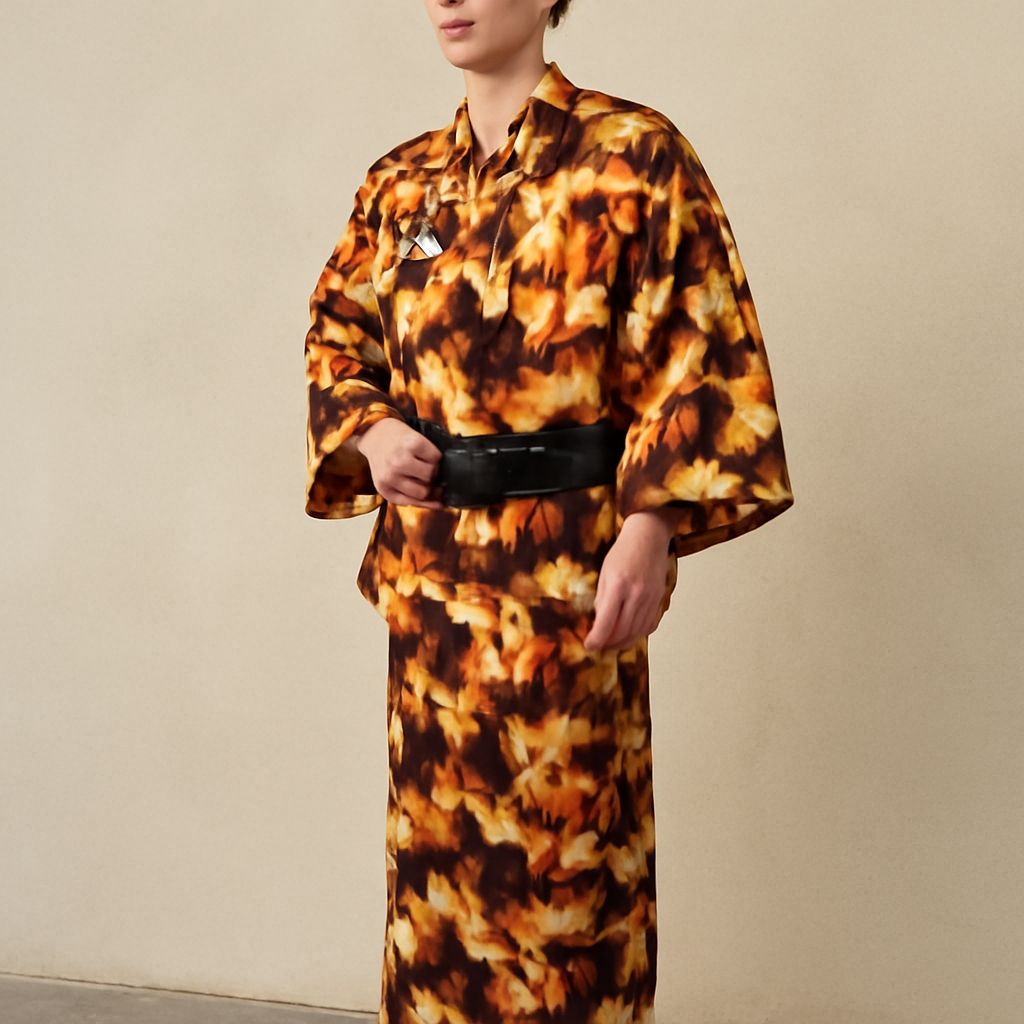
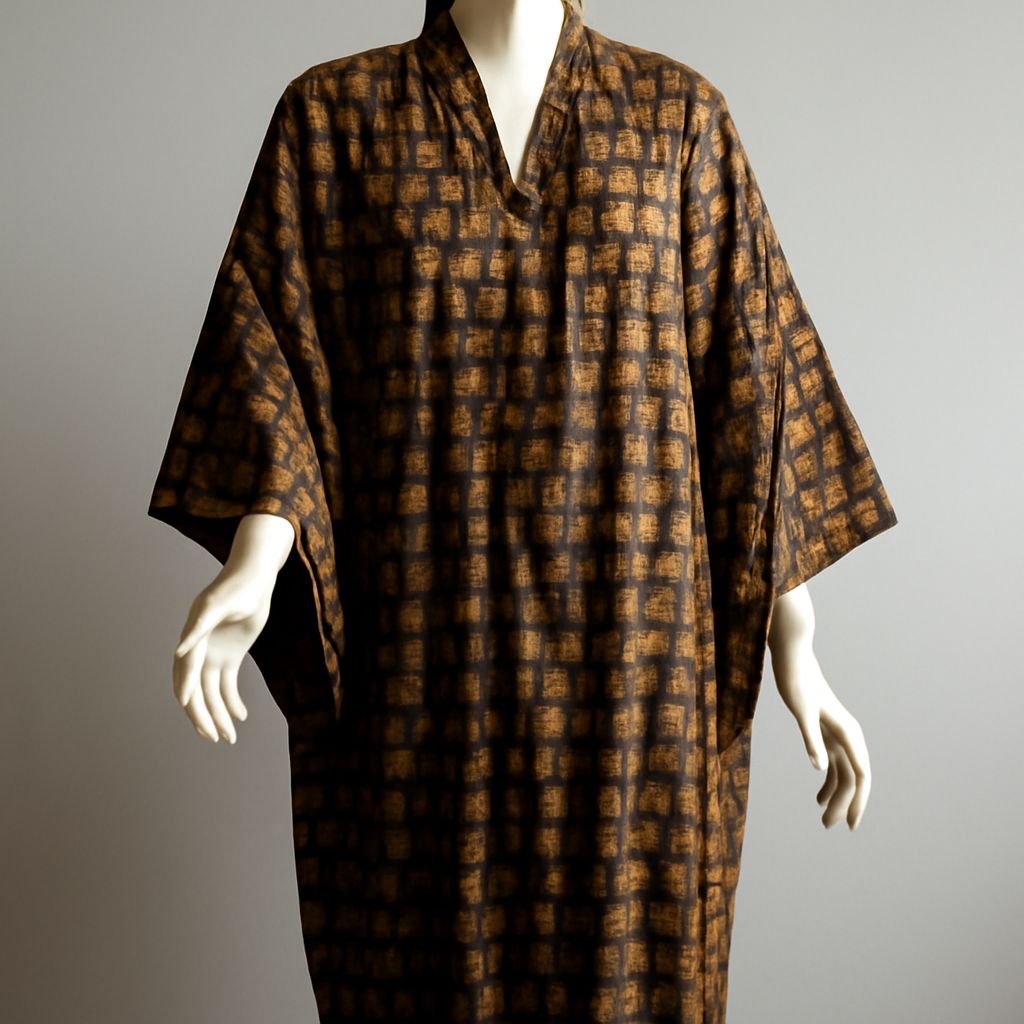
Small variations exist among kimono types and periods. However, strongly curved side seams, bust shaping, a narrow waist, or a set-in sleeve with a round armhole suggest a modern garment inspired by kimono.
Inspect sleeves, left-over-right overlap, and unshaped proportions
Kimono sleeves are generally broad, straight, and rectangular. They attach near the shoulder and upper body without the rounded sleeve cap used in most Western clothing. An opening commonly remains beneath part of the sleeve, especially in traditional designs. Sleeve shape and length vary by type, age, and formality.
When worn, the left front crosses over the right. The reverse orientation is associated with dressing the deceased. A listing photograph showing right-over-left closure should therefore prompt questions about styling, display, or the garment’s intended use.
Traditional kimono do not contain built-in Western shaping. Their straight body is adjusted with ties, padding, and an obi. Measure the garment as a flat rectangle, rather than expecting it to fit like a tailored jacket. Check total length, sleeve-to-sleeve width, sleeve length, back width, and front-panel width.
Use fabric, seams, lining, and listings to assess a real kimono
Fabric can support identification but cannot settle it alone. Silk may be woven, dyed, printed, embroidered, or decorated with techniques such as shibori or kasuri. Cotton is common in yukata, while wool and synthetic fibres also appear in genuine traditional garments. Examine the weave, pattern alignment, edge finishing, and colour variation rather than assuming silk equals authenticity.
Straight, orderly seams are useful evidence, whether machine-made or hand-sewn. A formal lined kimono may have carefully finished interior layers, but many casual garments are unlined. Inspect hems, sleeve openings, collar construction, seam allowances, stains, repairs, fading, and odour in interior photographs.
Before buying, ask the seller for:
- Exact measurements taken flat, with units and measuring points
- Photos of the inside, collar, hems, sleeves, and closure
- The garment type, such as yukata, furisode, haori, or robe
- Clear disclosure of flaws, repairs, resizing, shortened hems, or replaced lining
- Confirmation whether “kimono-style,” “costume,” or “inspired” describes the item