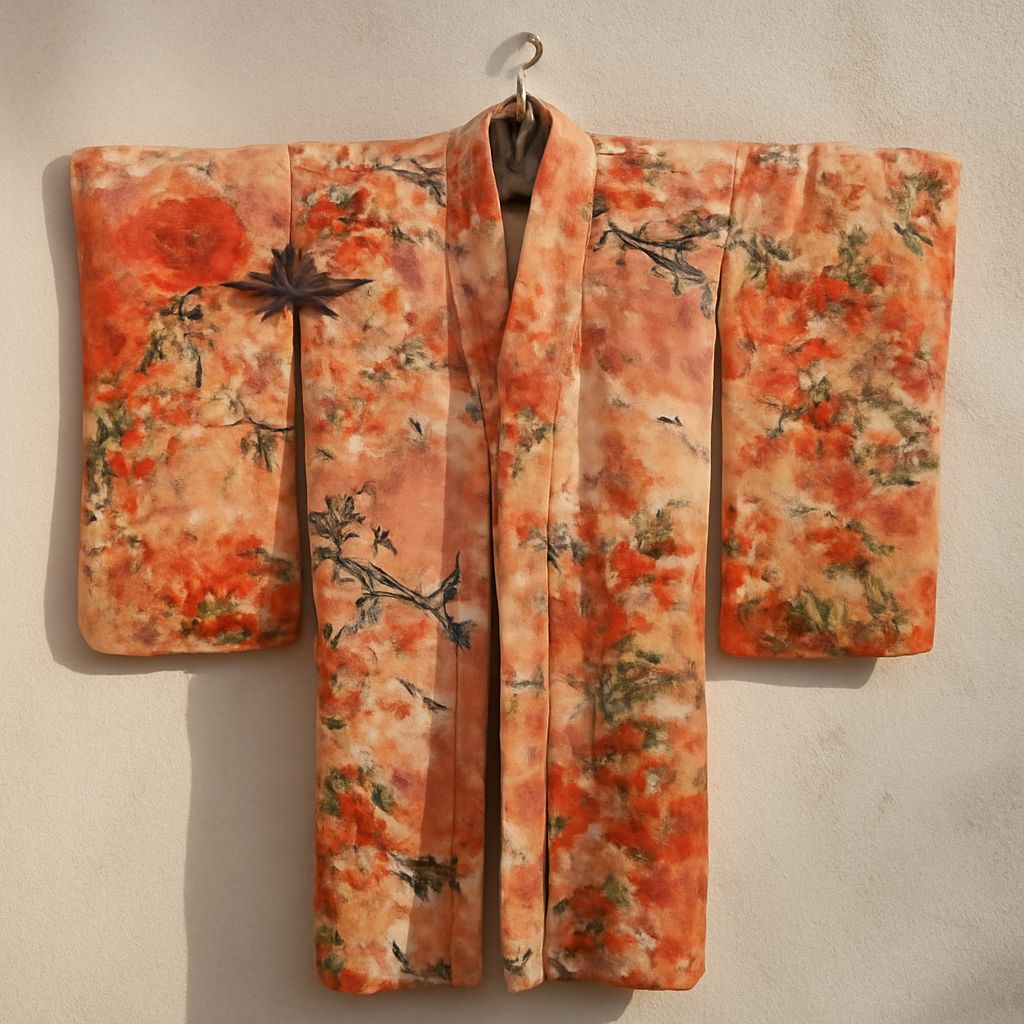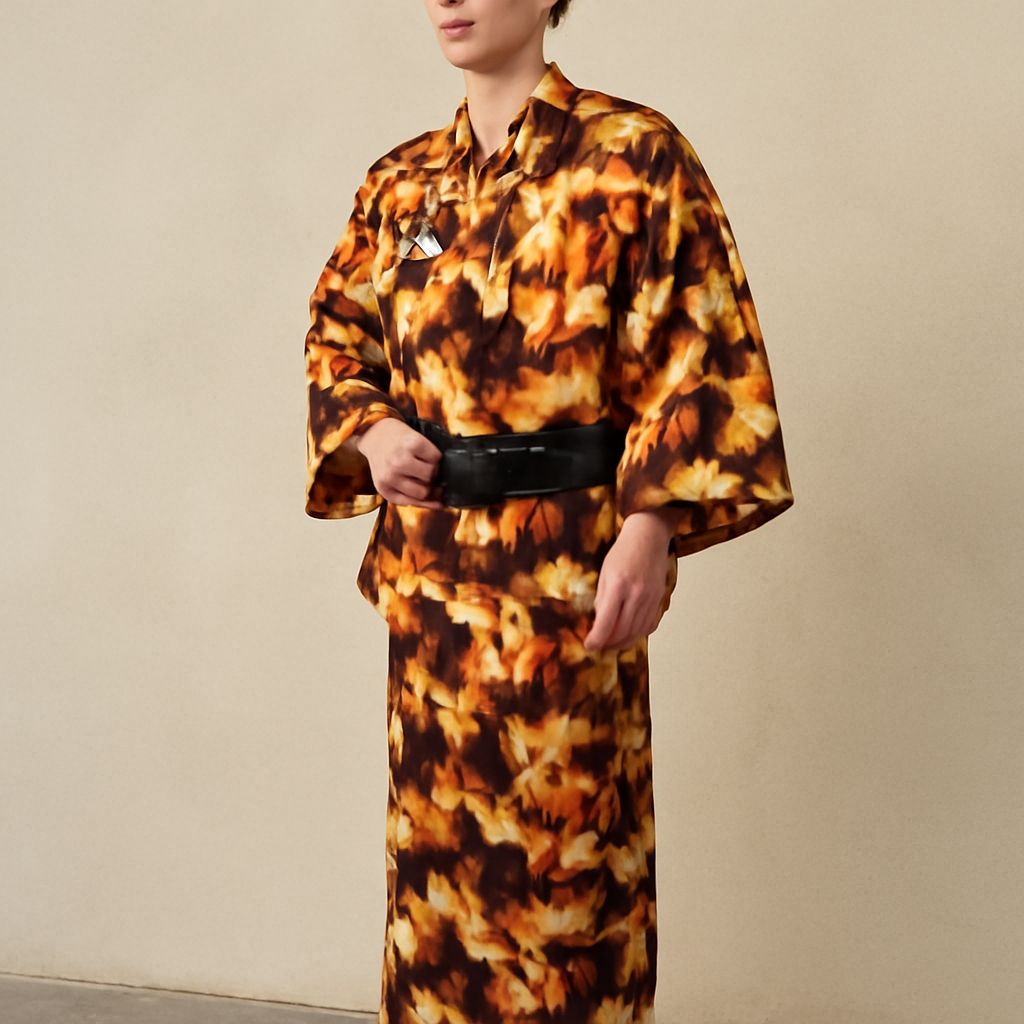
For men’s kimonos, identify the garment from its measurements and construction, not its shop label. A Japanese men’s kimono normally wraps left over right, has a straight T-shaped body, and may be lined or unlined. The fit is adjusted with folds and an obi, so a close measurement check matters.
Start with the actual garment. Confirm its fabric, layers, closures, and condition before choosing accessories or assuming it is formalwear. A robe with a kimono print is not equivalent to a traditional kimono.
Men’s kimonos: check length, width, sleeves, layers, and condition
Measure the kimono flat. Record the length from the shoulder seam to the hem, the sleeve length from shoulder to cuff, and the yuki: the distance from the centre-back neck point over the shoulder to the sleeve edge. Also record the body width across the back or front panel. If a seller gives a half-chest measurement, double it before comparing it with your body.
For a wearable fit, the hem usually falls around the ankle, the collar sits neatly at the nape, and the sleeves end near the wrist. The front panels should overlap without pulling open. A little extra length can be folded beneath the obi, but body width and sleeve reach are harder to correct.
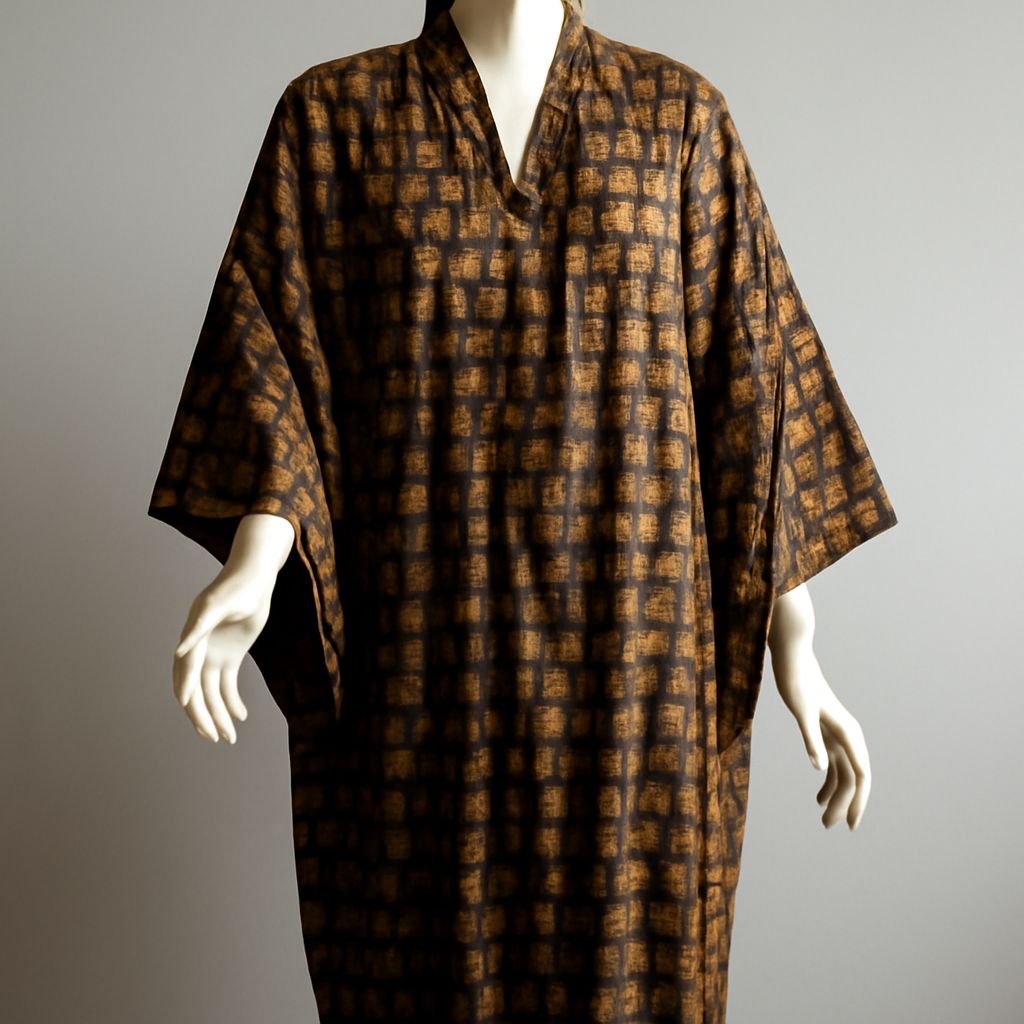
Check the weave, lining, seams, collar, cuffs, and inner hem. Look for moth holes, stains, persistent odour, brittle silk, water marks, and faded crests. Silk is common for formal garments; cotton, linen, wool, and synthetics suit less formal use. A lightweight kimono may be unlined, while colder-weather versions often include a lining. A juban or other underlayer prevents the outer garment from sitting directly against the skin.
Obi, haori, and hakama: build the outfit
A men’s kaku obi is a firm, rectangular sash, commonly about 8–10 centimetres wide and 3.5–4 metres long. It is wrapped several times around the waist and secured with a knot at the back. A soft heko obi is easier to tie and works well for relaxed wear, but it looks less structured.
A haori is a jacket worn over the kimono. It usually reaches the hips or thighs and is worn open, making it a practical extra layer. Hakama are pleated, skirt-like trousers or divided trousers worn over the kimono. A haori with hakama creates a more formal silhouette; a crested black kimono, haori, and hakama is associated with highly formal dress.
Japanese men’s kimono versus yukata, samue, and jinbei
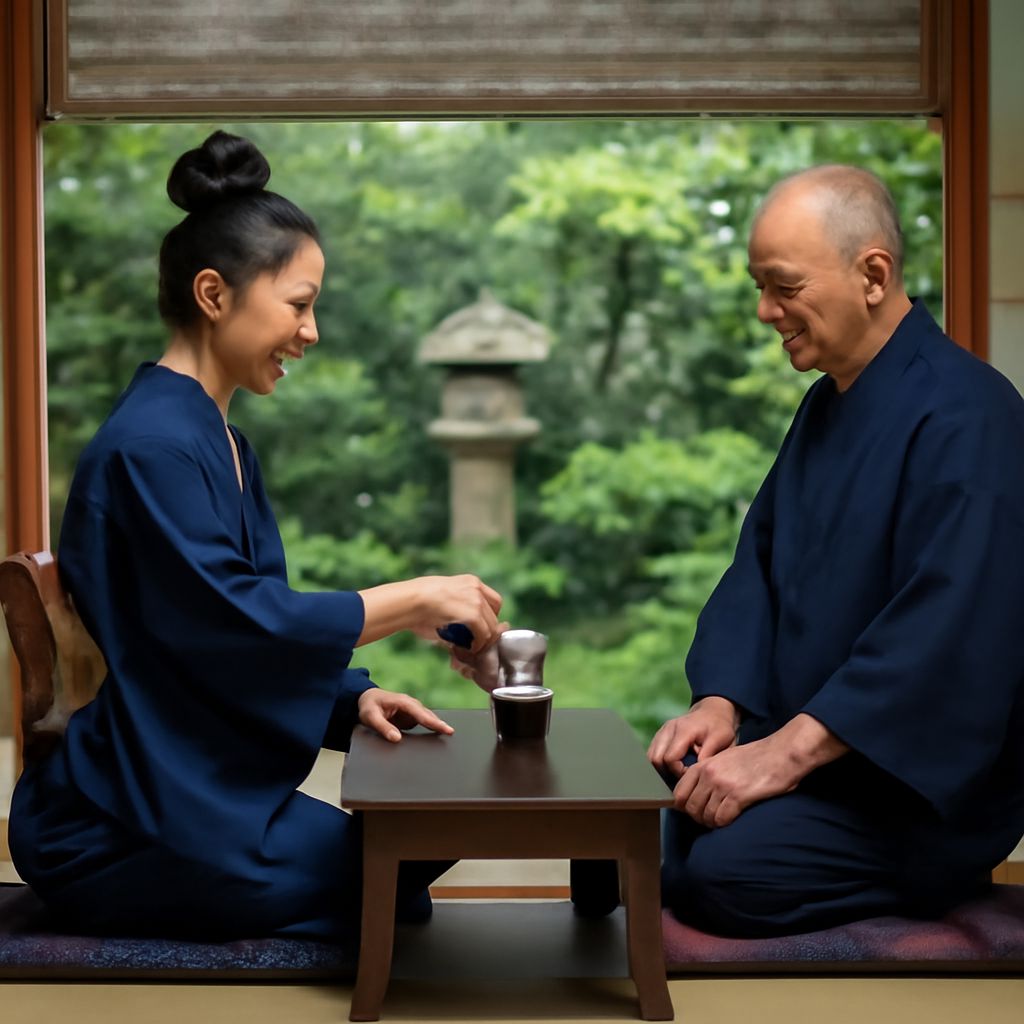
A kimono is a panel-built wrap garment with a collar, long sleeves, and an obi. It may be lined and made from silk or other fabrics. A yukata is usually an unlined cotton summer robe, commonly worn at festivals, resorts, or informal gatherings. It needs fewer layers and normally uses a simpler obi.
Samue consists of a tie-front jacket and separate trousers. Its practical construction suits work, gardening, meditation, and home wear. Jinbei pairs a short-sleeved wrap top with shorts or loose trousers, making it especially useful in hot weather. Neither is a kimono, even when a store groups them under traditional Japanese clothing for men.
Traditional Japanese clothing for men: match casual, festival, and formal use
- Casual wear: Choose cotton, linen, wool, or washable synthetic fabric with a relaxed pattern. Pair it with a simple kaku obi or heko obi and informal footwear. Prioritise comfort, body width, and easy care over crests.
- Festival use: A cotton yukata is usually more suitable than a lined silk kimono. Check that it is genuinely unlined, breathable, and long enough to wrap securely. Add a festival obi and geta rather than copying a formal layered outfit.
- Formal dress: Look for silk or high-quality formal fabric, a correct underlayer, coordinated obi, tabi, and zori. Haori and hakama add formality, while family crests can indicate a specific ceremonial level. Verify the weave, lining, measurements, and number of crests instead of relying on “formal” in a product title.