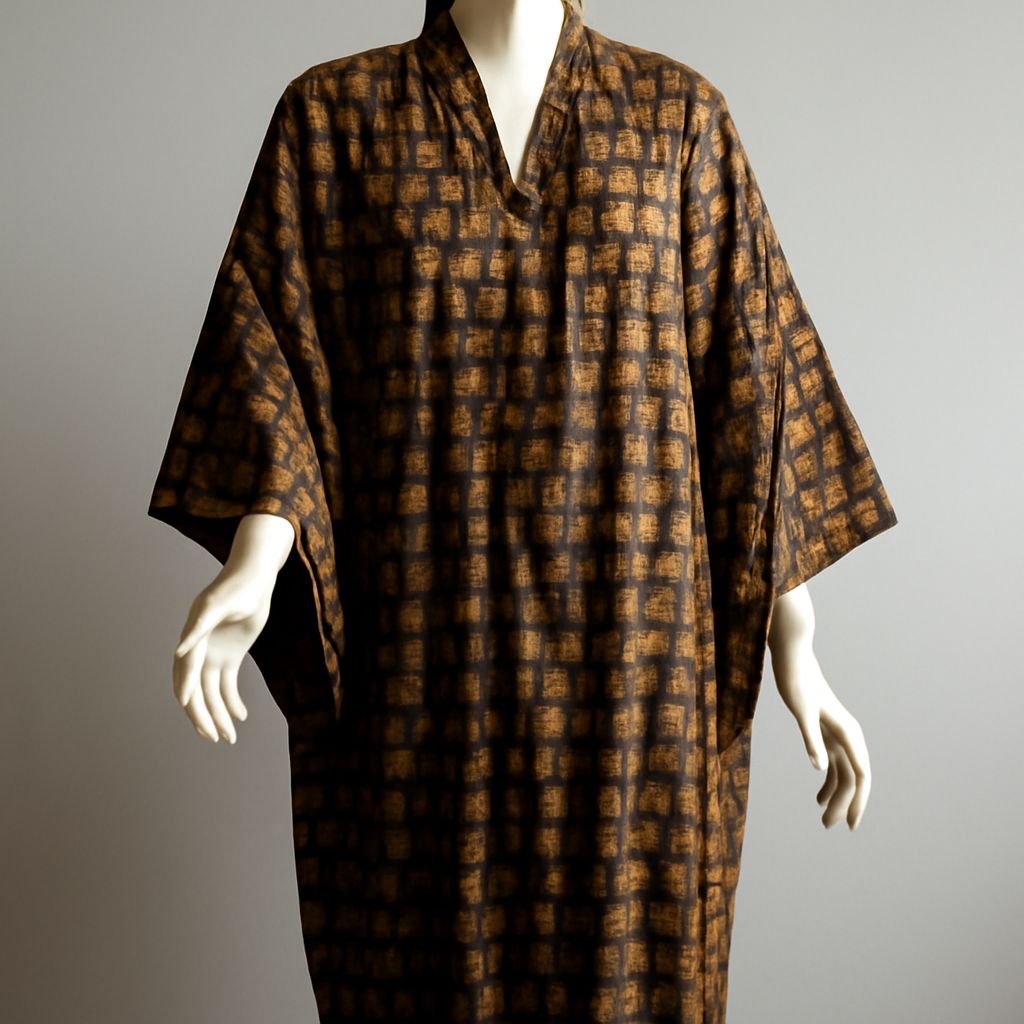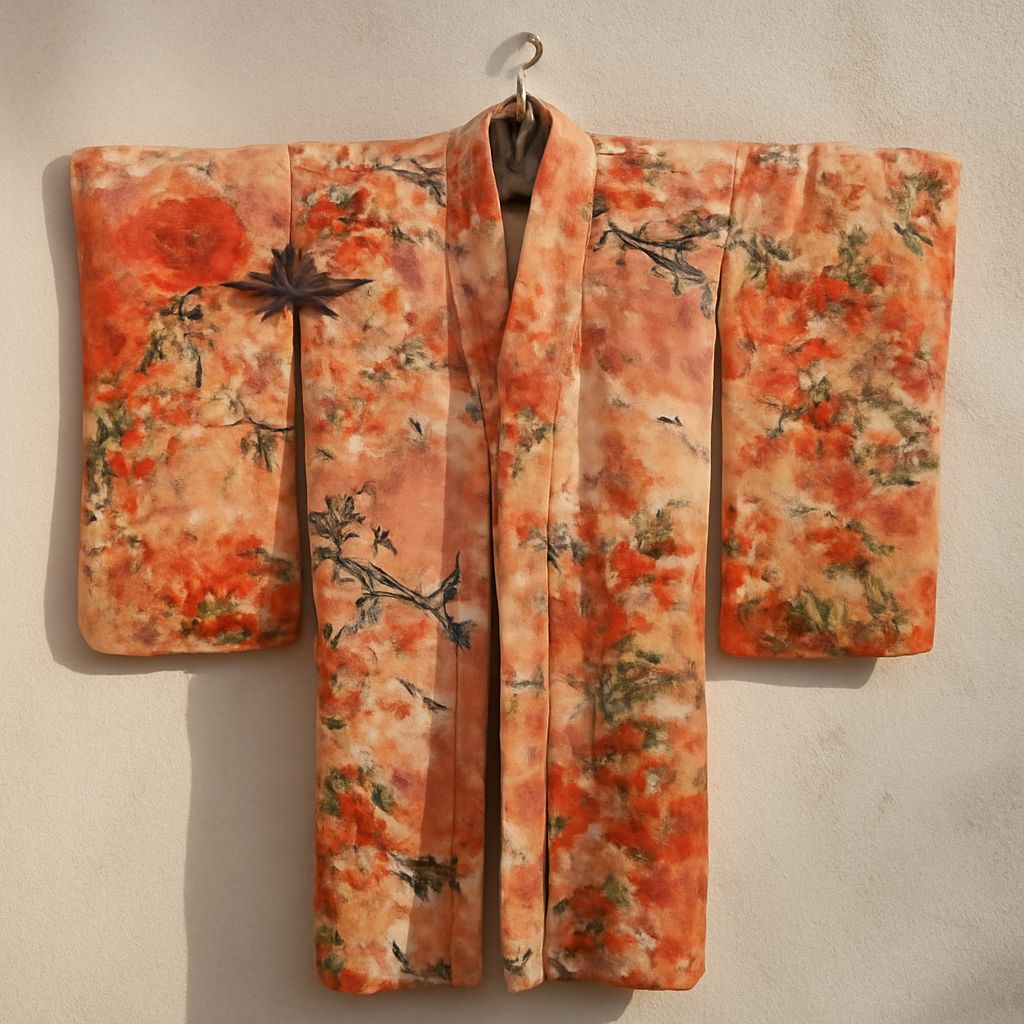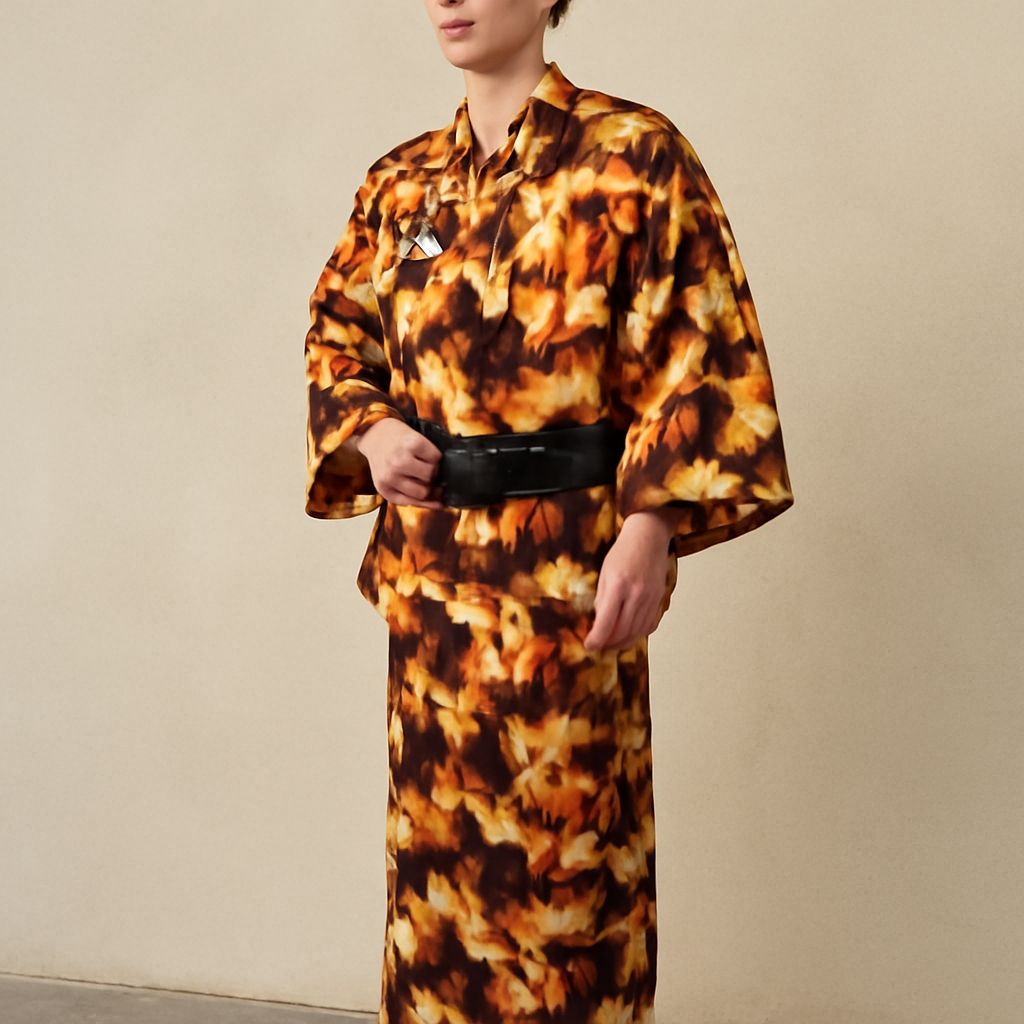
Traditional Japanese kimono are T-shaped, ankle-length garments made from straight panels. The classic silhouette has a flat front, an overlapping body, wide sleeves and an obi belt. Unlike a generic robe, cardigan or wrap dress, a kimono is a specific constructed garment with established proportions and ways to wear it.
Kimono patterns complete that structure. Motifs can suggest season, celebration, longevity, status or personal taste, but no symbol has one universal meaning. Read each motif alongside its scale, placement, color, fabric and the occasion.
What Makes a Traditional Kimono? Silhouette and Visible Parts
A traditional kimono is built from mostly rectangular pieces, so its outline remains vertical rather than following the waist and hips. The front panels cross left over right for ordinary wear; right over left is reserved for dressing the dead. A high collar frames the neck, while the hem reaches the ankles.
Visible parts include the eri (collar), migoro (main body panels), okumi (narrow overlapping front panels), sode (sleeves) and suso (hem). The obi is the broad sash wrapped around the waist. Its knot and supporting accessories are part of the finished appearance, not merely decoration.
How Kimono Shape and Construction Work
Kimono fabric is cut into lengths that preserve the textile’s width, then joined with long vertical and horizontal seams. This method allows a garment to be taken apart for cleaning and repaired or reassembled. It also creates broad, quiet surfaces where a design can continue across seams.
The front overlap, collar, sleeve shape and obi establish the visual order. Long sleeves can signal a style such as furisode, worn by unmarried women for formal celebrations; shorter sleeves suit other kimono types. A lining, under-kimono and padding help create the smooth, upright silhouette. Construction therefore affects how patterns are seen: a motif may align across the shoulder, travel down a sleeve or gather attention near the hem.
Kimono Patterns: Floral and Seasonal Meanings
Floral motifs often work as seasonal references, though designers may combine flowers to extend the wearing period.
- Plum blossoms (ume) suggest late winter, resilience and renewal.
- Cherry blossoms (sakura) evoke spring and the beauty of a brief moment.
- Chrysanthemums (kiku) can indicate autumn, longevity and refined status.
- Cranes, often paired with pine or tortoise-shell forms, express good fortune and long life rather than a single season.
A motif’s meaning remains contextual. A bride may wear auspicious cranes, while the same bird on a casual textile may simply reflect taste. Realistic flowers, scattered buds and restrained colors often feel lighter; large blossoms in saturated color create stronger visual impact.
Geometric and Auspicious Motifs: Formality and Occasion
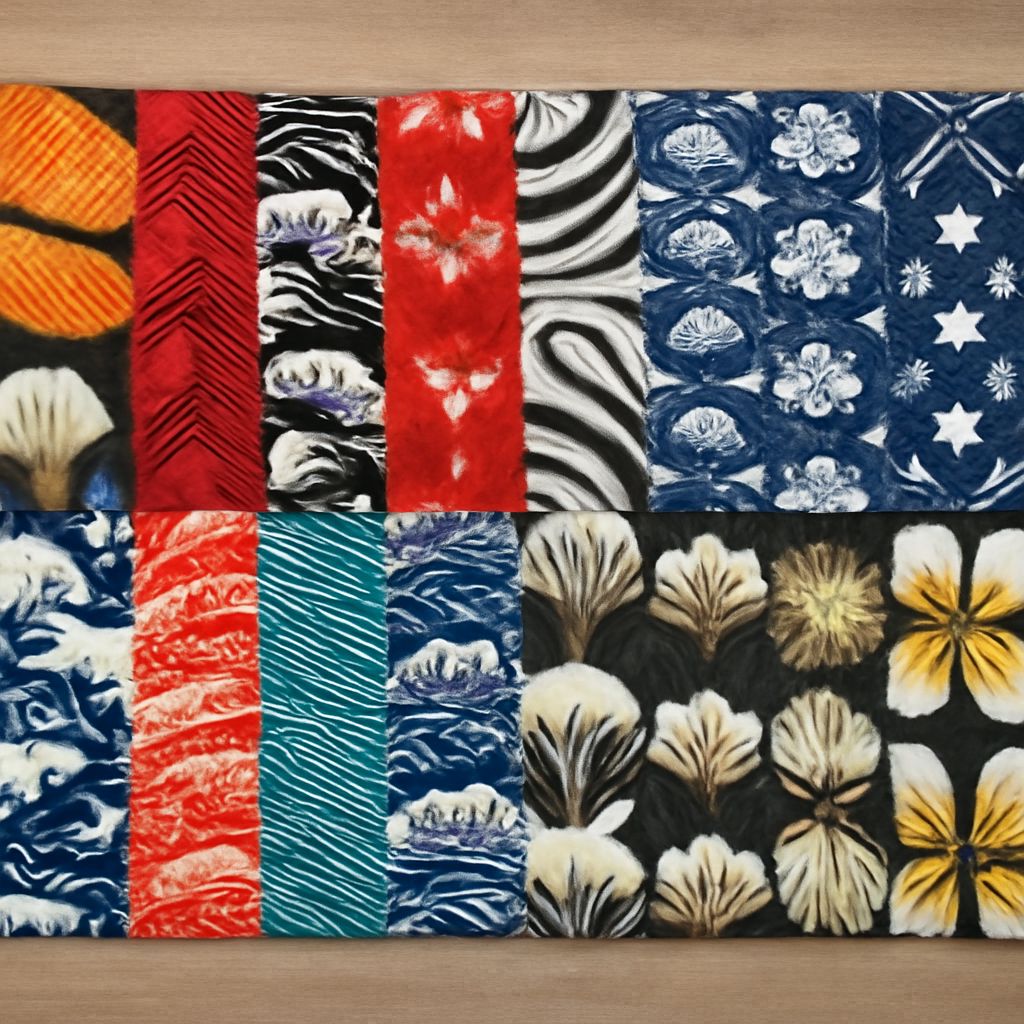
Geometric kimono patterns provide especially clear examples of symbolic design. Seigaiha repeats wave arcs and is associated with calm seas, continuity and enduring peace. Asanoha, the hemp-leaf pattern, uses sharp radiating shapes linked with growth and strength. Kikkou repeats six-sided tortoise-shell units, suggesting longevity and protection.
Formality depends on more than the motif. Dense, precise patterning that covers the hem and lower sleeves, rich silk and auspicious combinations suit weddings or other formal events. Smaller motifs, more open ground, softer contrast and a less elaborate obi can suit visits, festivals or everyday wear. Placement matters too: a concentrated hem design can appear formal, while wide empty space creates restraint. Color also shifts the message—deep black, white, gold and vivid jewel tones often heighten ceremony, while muted or natural colors can make the same pattern quieter. Read these choices together before assigning a meaning.