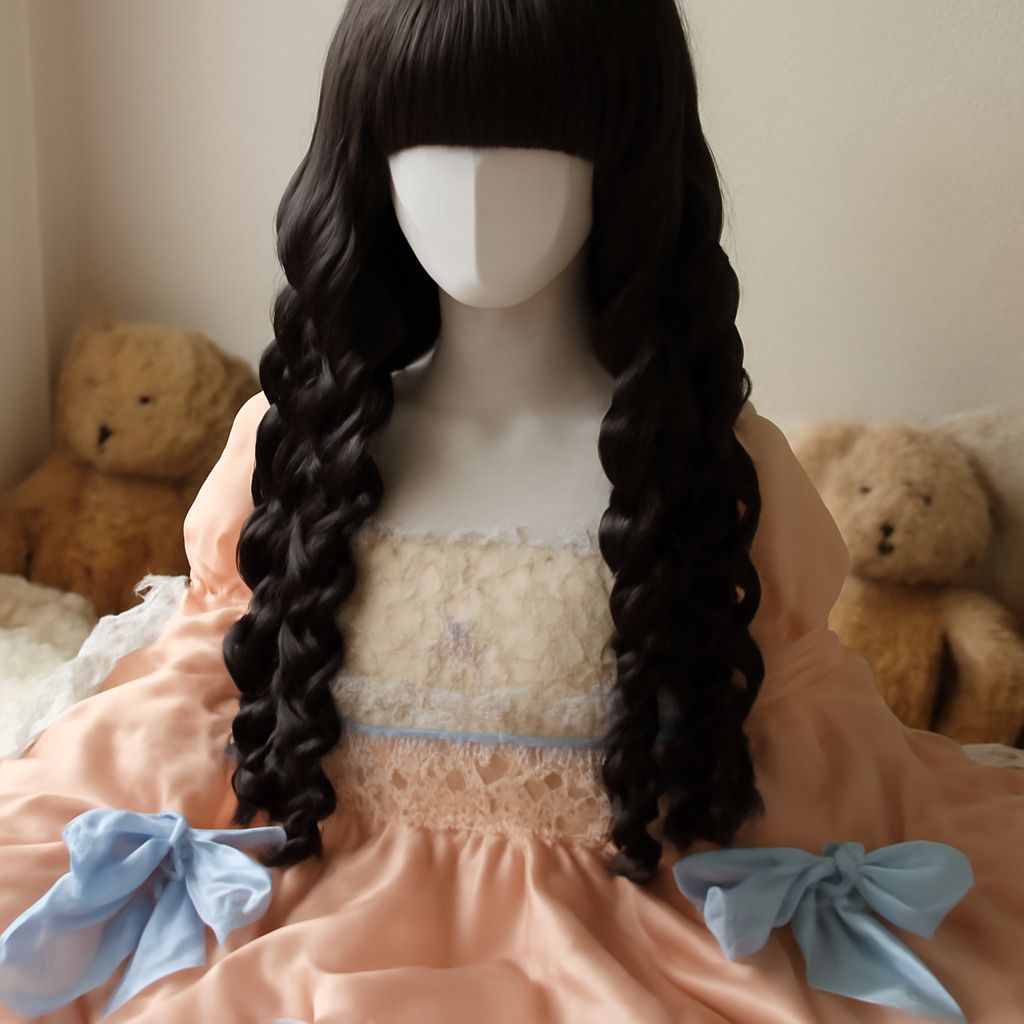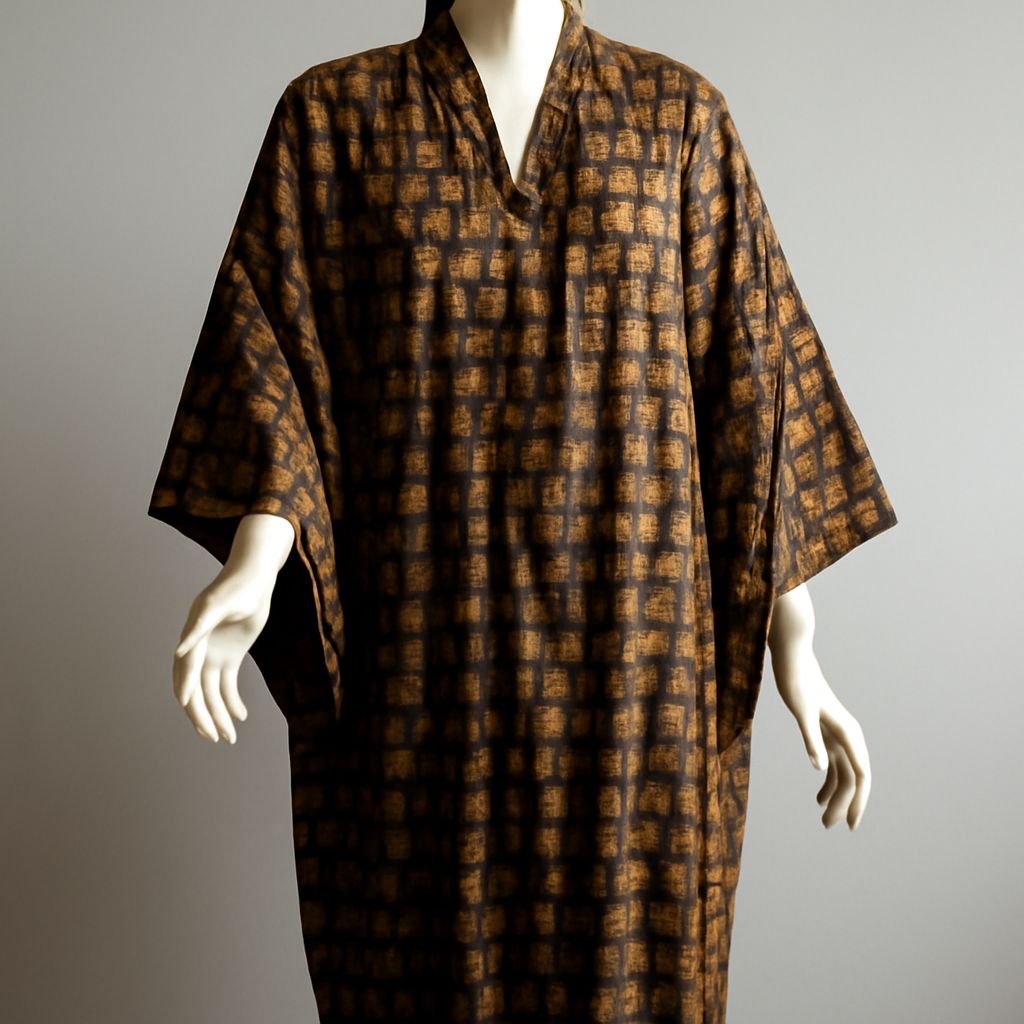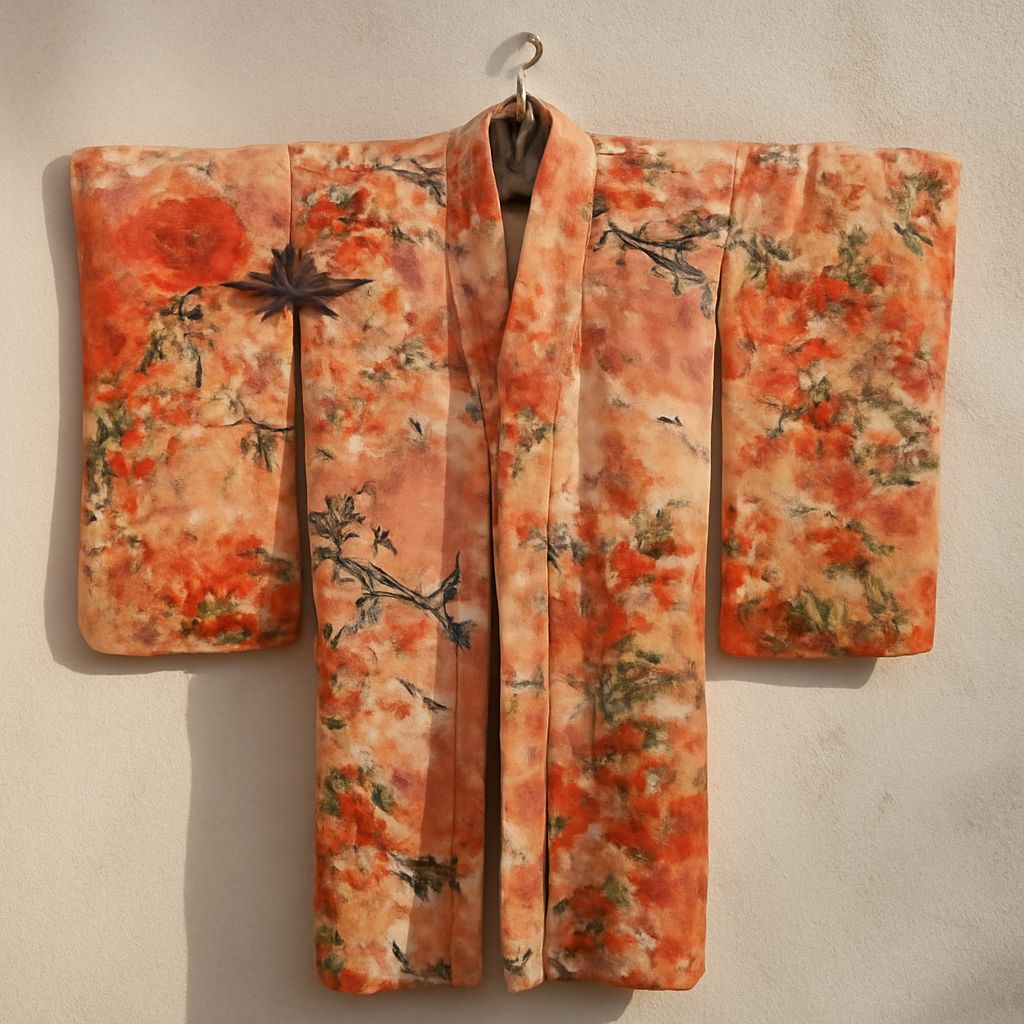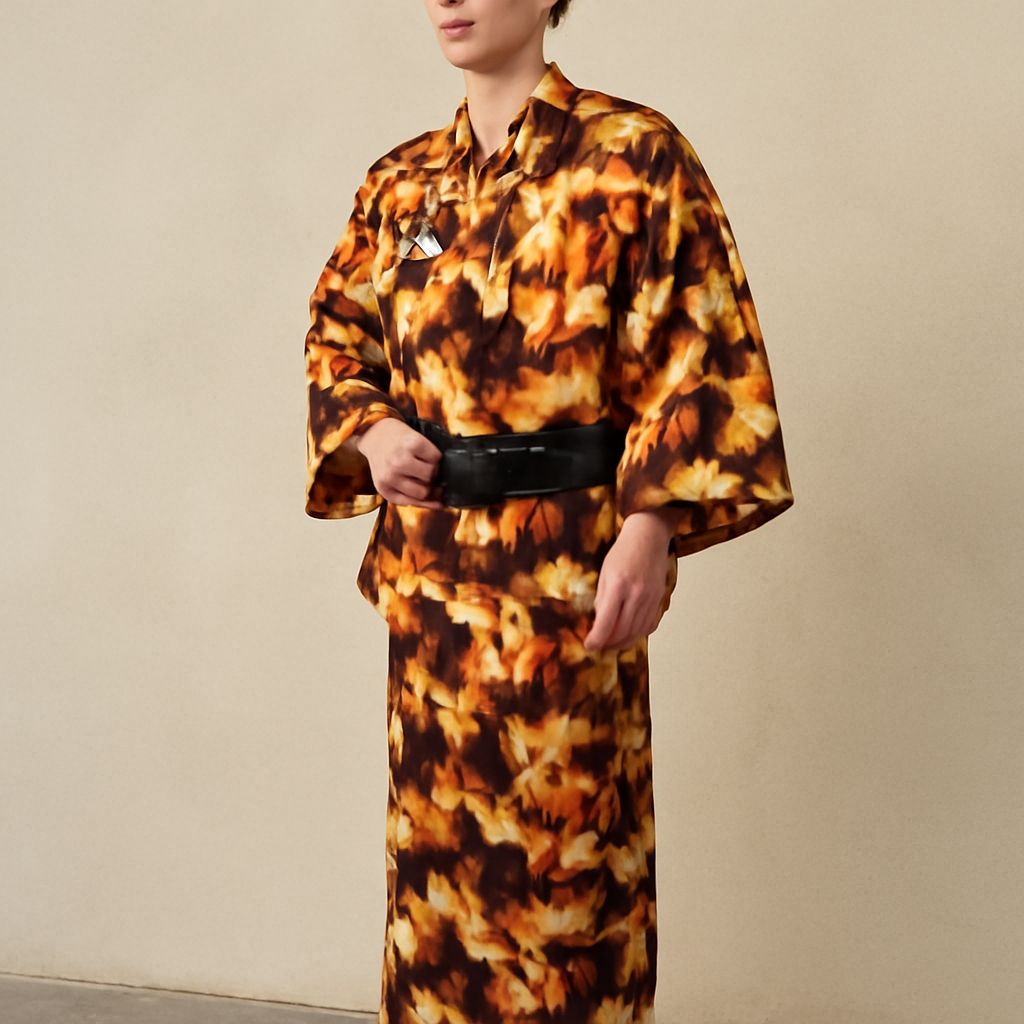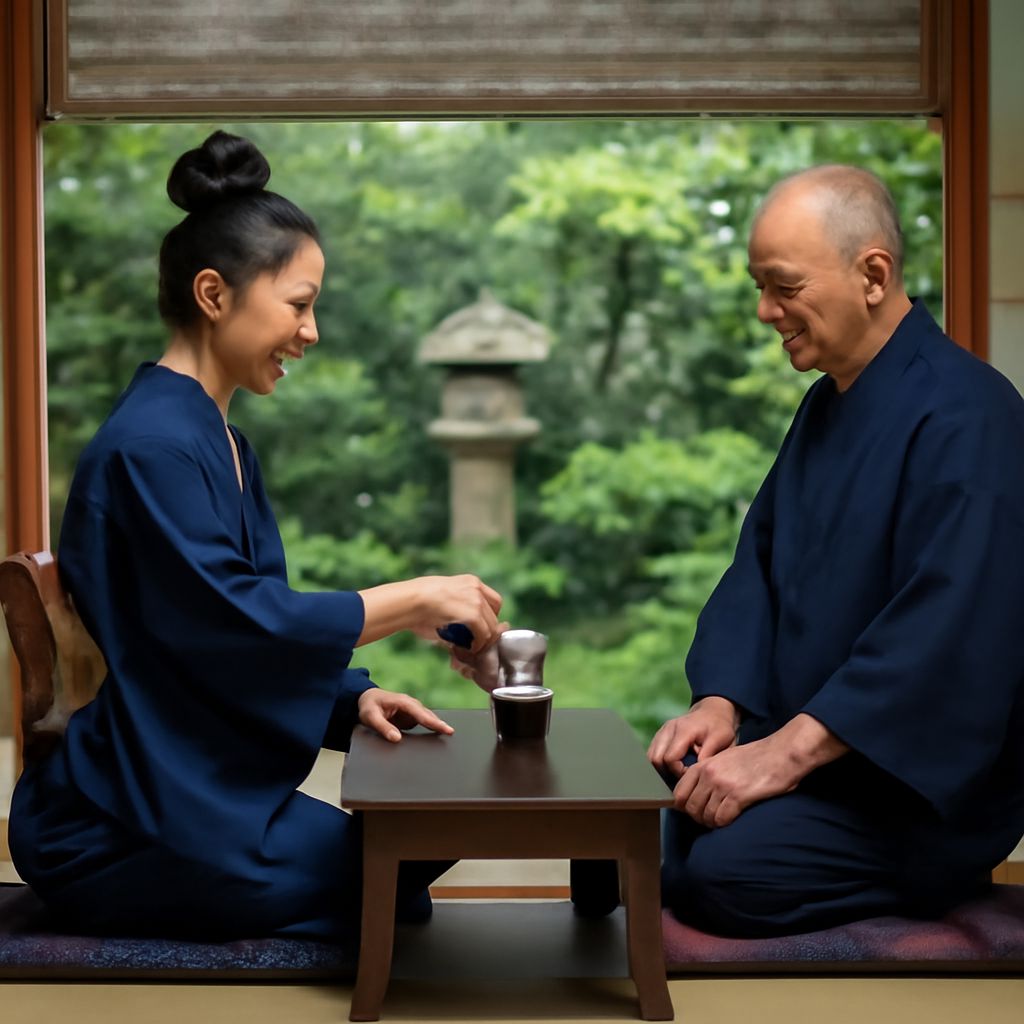
Japanese women’s kimono and men’s kimono use the same basic garment architecture: straight panels, a left-over-right wrap, and a separate obi. Differences usually appear in sleeve length, obi width, layering, and common colors or motifs—not in a rule that identifies the wearer. The phrase Japanese kimono dress is less precise. It may describe a traditional kimono outfit, a kimono altered into a dress, or a Western dress borrowing kimono details.
Japanese Women’s Kimono: Shared Construction
Both garments are built from long, mostly rectangular fabric panels joined with straight seams. The body creates a T-shaped silhouette, with broad sleeves and a collar that continues down the front. The wearer wraps the left front over the right and secures it with ties, then an obi. Right over left is reserved for dressing the dead.
Traditional construction leaves the waist and sleeve shape relatively unshaped. A juban or other underlayer can sit beneath the outer kimono, while accessories such as an obiage, obijime, tabi socks, and sandals complete some outfits. A kimono is therefore more than a loose robe: its panels, wrap direction, and separate sash work together as a system.
Common Women’s Kimono Conventions
Common women’s kimono conventions include sleeves that widen and may extend dramatically from the wrist. Furisode have especially long, swinging sleeves and are associated with formal young women’s wear. Tomesode have shorter sleeves and a more restrained formal appearance. Yukata are lighter, informal cotton garments, often worn without the full layered arrangement used for formal dress.
Women’s obi are generally broader and tied in more elaborate shapes, often positioned high on the torso. Formal outfits may add an obiage, obijime, decorative collar, and coordinated footwear. Floral, seasonal, landscape, and celebratory motifs are common, but a flower or bright color does not prove that a garment belongs to a woman. Cut, styling, and the complete outfit provide better evidence.
Common Men’s Kimono Conventions
Men’s kimono commonly use shorter, squarer sleeves and a narrower obi tied in a compact knot around the waist. Dark navy, black, gray, brown, stripes, and understated woven patterns are frequent in conventional examples. Formal men’s wear may include a black montsuki, haori jacket, or hakama trousers. Casual wear may be a simple yukata with an obi.
These are conventions, not absolute boundaries. Men may wear vivid colors or decorative textiles, and women may wear subdued designs or adapted garments. The sleeve construction, obi treatment, and accompanying layers matter more than a single motif.
What Sellers Mean by Japanese Kimono Dress
Retailers use Japanese kimono dress for several different products. One may be a complete traditional kimono outfit. Another may be a vintage kimono reshaped into a Western dress. More often, it is a modern one-piece with wide sleeves, a wrap-inspired front, a loose body, or a sash. Some listings also use kimono for a robe or cover-up.
A Western dress is not automatically a Japanese kimono because it overlaps at the front or has flowing sleeves. Look for mostly rectangular panels, a continuous traditional collar, left-over-right closure, and a separate obi. Check whether the full presentation includes an under-collar, coordinated obi, tabi, sandals, haori, or hakama. A shaped waist, darts, zipper, buttons, skirt pattern, or attached belt points toward a modern dress.
Before choosing a label, describe the object first: traditional kimono, kimono-inspired dress, altered kimono, yukata, or robe. Do not identify it from the model’s appearance. The garment’s panels, overlap, obi, closures, and complete outfit tell you more than the wearer’s color, styling, or gender presentation.