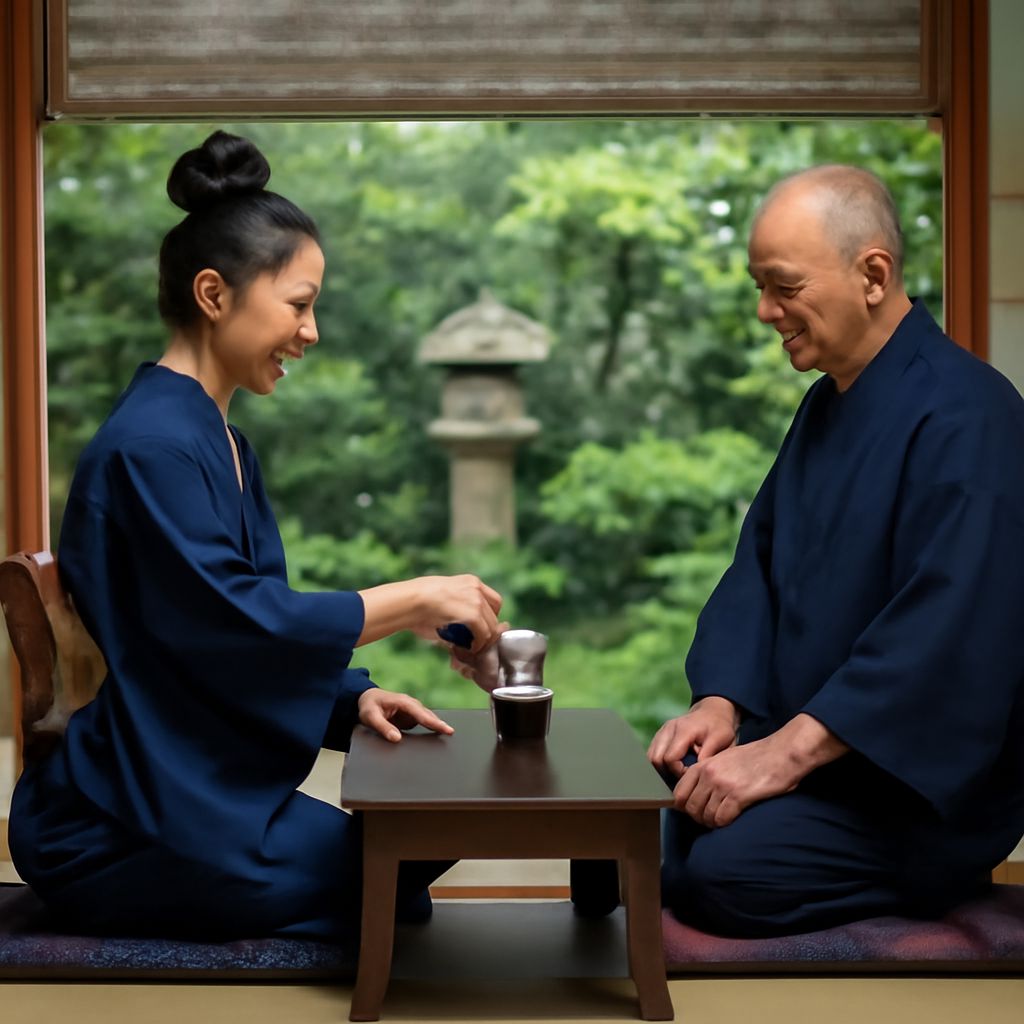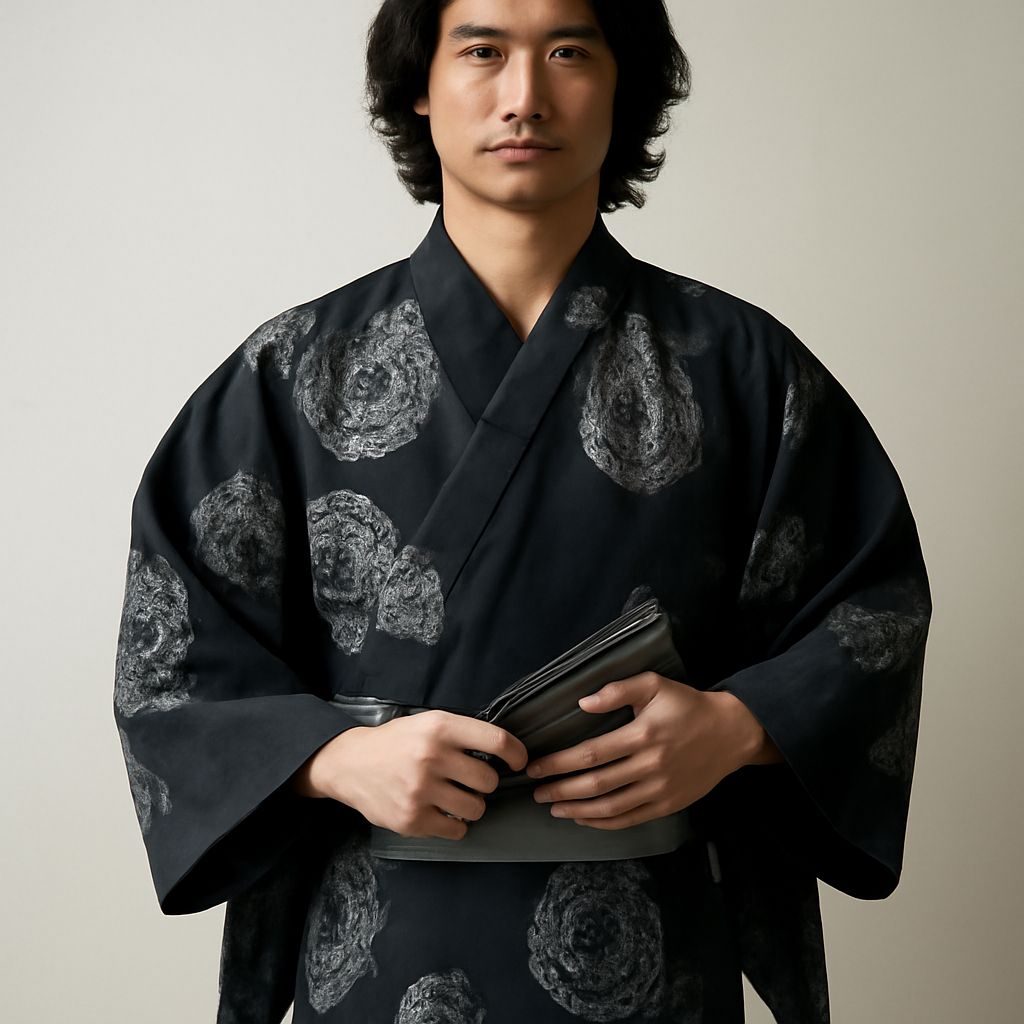
Among Japanese male clothing, the most recognizable formal combination is a kimono with an obi and, when required, hakama. The kimono provides the wrapped base, while the obi secures it and hakama adds a pleated lower layer.
Not every men’s kimono outfit includes hakama. The combination is mainly associated with formal ceremonies, selected traditional arts, and some martial disciplines, each with its own dressing conventions.
Men’s Kimonos: Key Garment Terms
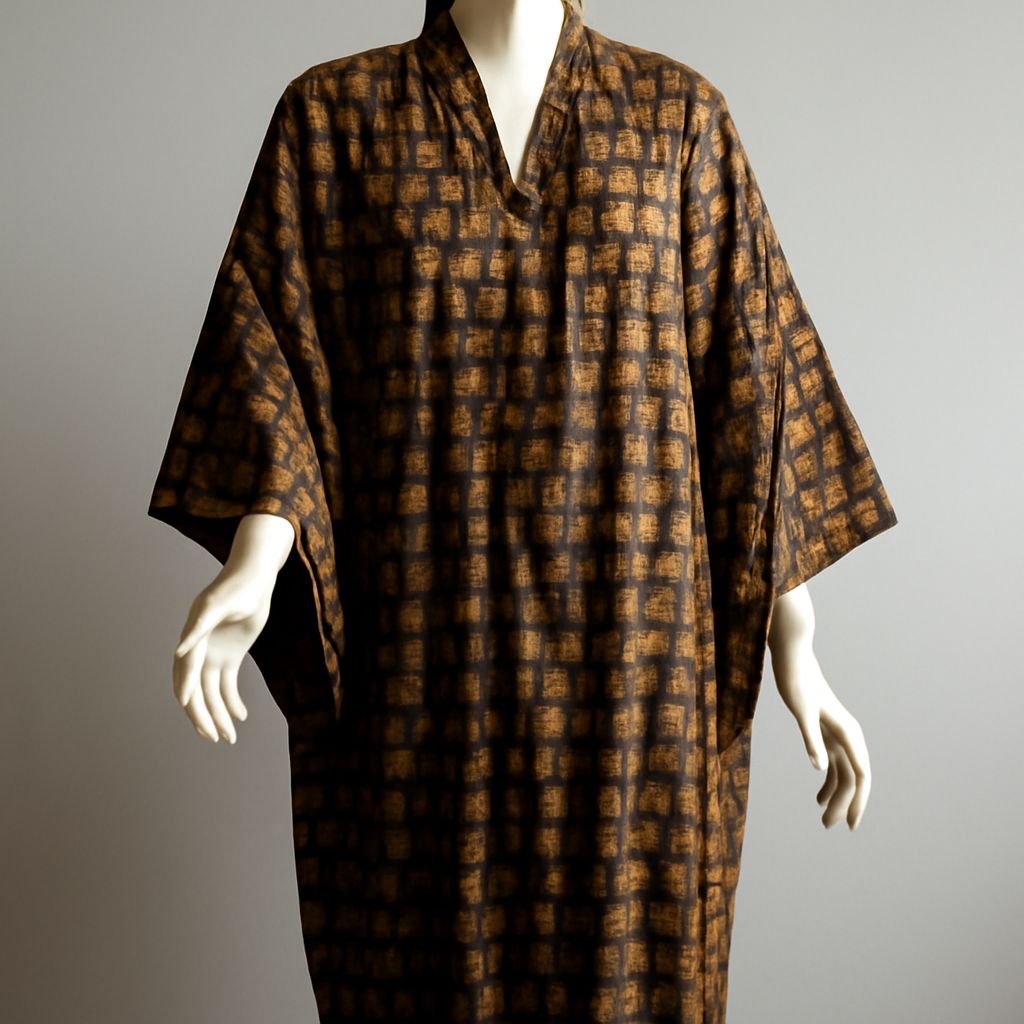
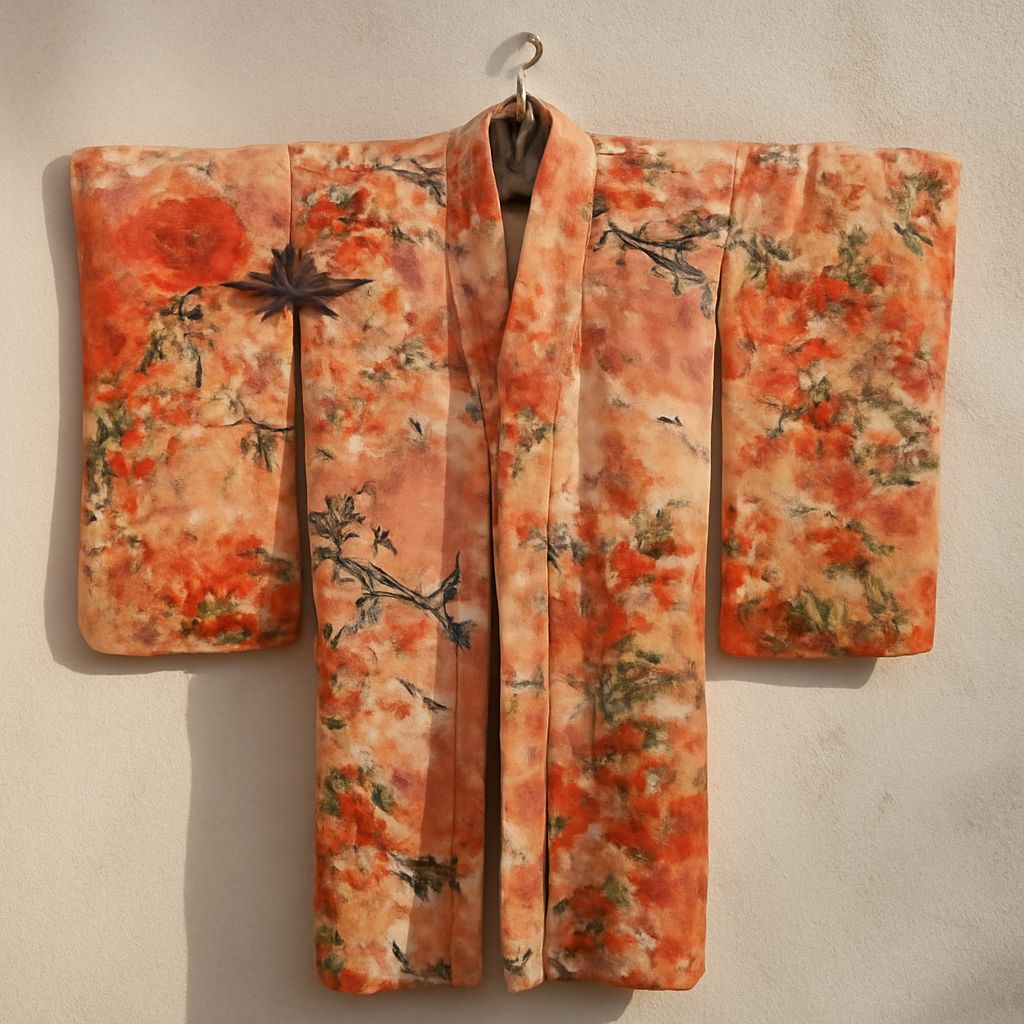
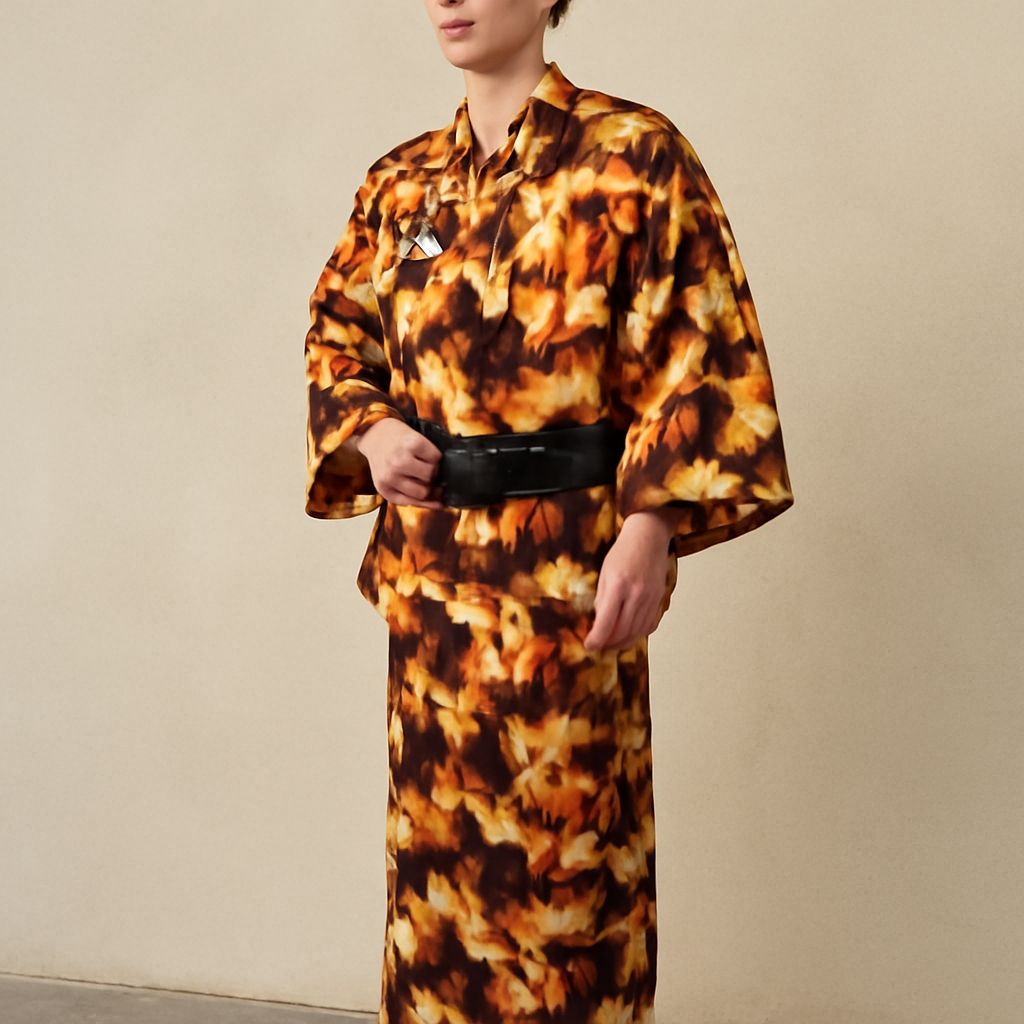
A men’s kimono is a T-shaped robe with straight seams, wide sleeves, and a front opening that wraps across the body. The left panel crosses over the right for living wear. A narrow-to-medium obi holds the robe closed around the waist.
Men’s kimonos usually use relatively subdued colors and patterns, although formal, summer, theatrical, and fashion versions vary. A complete outfit may also include a haori jacket, footwear, and accessories, but these are separate from the kimono itself.
Layers Beneath and Around the Kimono
Juban and Inner Layers
The juban is an under-kimono worn between the body and the outer kimono. It protects the main garment from sweat and helps create a clean collar line. A full nagajuban has sleeves and a body, while a simplified han-juban may cover only the upper portion.
Underneath, the wearer may use a light undershirt and traditional or modern undergarments. The visible juban collar should sit neatly inside the kimono collar without bunching.
Obi and Outer Layers
The obi wraps around the waist over the kimono. Men’s obi are generally narrower than women’s obi and sit lower, around the waist or upper hips. The knot is usually positioned toward the back. Its tension should hold the robe securely without restricting breathing or movement.
When a haori is worn, it goes over the kimono and obi. Hakama are added over this base rather than replacing the kimono.
How Kimono and Hakama Fit Together
Hakama are pleated trousers or a skirt-like lower garment worn over a kimono. Their upper edge generally sits at the waist, though some formal styles rise higher on the torso. The front ties pass around the body and secure over or near the obi; the rear ties fasten separately around the back.
The hakama’s pleats should fall vertically from the waist. The garment should cover much of the kimono’s lower half while leaving the upper kimono, collar, and obi arrangement visible. The rise must allow comfortable sitting, walking, and kneeling without pulling the kimono out of place.
Divided and Undivided Hakama
Divided hakama, called umanori, have separate trouser legs. They suit riding and active movement. Undivided hakama, called andon, hang like a wide skirt and are common in formal or less mobile settings.
The choice is not determined by gender alone. The event, school, art, and movement requirements usually matter more. Pleat counts, fabric, waistband shape, and tying methods can also vary between traditions.
When the Outfit Is Worn
A kimono and hakama combination is common for men’s formal wear, including some weddings, coming-of-age celebrations, graduations, and ceremonial appearances. The kimono may be paired with a formal haori and hakama, while colors and family crests signal the level of formality.
Traditional arts may use hakama for tea practice, dance, calligraphy, or other disciplined settings. Martial arts such as iaido, kyudo, aikido, and kendo may also use hakama, but their cuts, ties, and fitting preferences differ. In each case, the wearer should follow that practice’s established method rather than assume one universal dressing sequence.