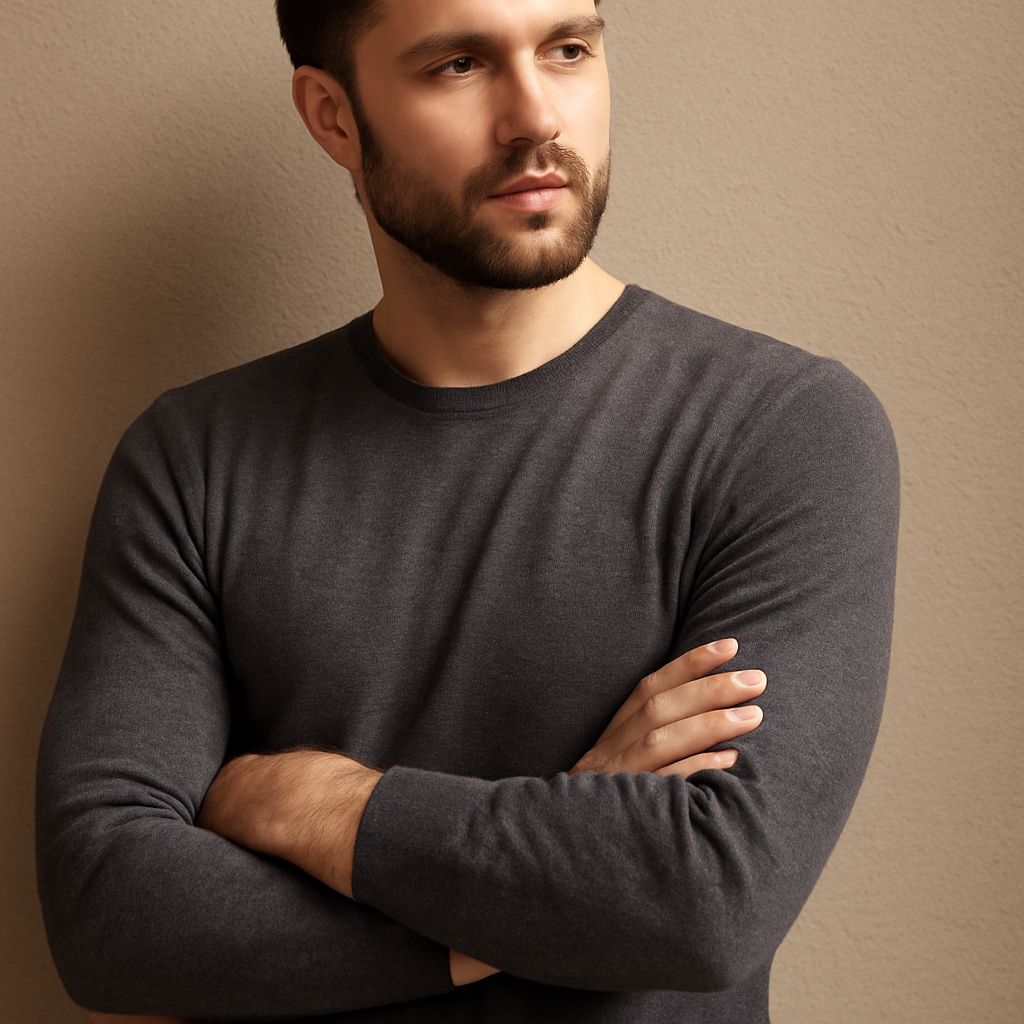
Male fashion photography works best when posing serves the clothes rather than distracting from them. Each frame should reveal something useful: the garment’s cut, its movement, the styling, or the attitude of the collection.
Start with a clear clothing story, then direct controlled changes in posture, hands, expression, and movement. This approach creates variety without losing visual consistency.
Plan male fashion photography around the clothing story
Prepare every garment before the model arrives. Steam jackets, check collars, remove temporary stitching, and confirm how trousers break over the shoes. Photographing a wrinkled or poorly fitted garment weakens even a strong pose.
Let the cut determine your direction. A sharply tailored suit benefits from clean lines, an upright torso, and a measured stance. Oversized outerwear needs space around the body, while knitwear may look better with relaxed shoulders and visible folds. Slim trousers often need a longer leg line; wide trousers need enough separation to show their volume.
The publication or brand mood matters equally. A luxury editorial may call for restraint and stillness. A youth-focused campaign can use asymmetry, crouching, direct eye contact, and sharper movement. Keep the model’s body type in mind, too. Adapt the pose instead of forcing every person into one rigid masculine position.
Direct model poses for fashion photography by garment cut
Begin with reliable standing variations, then adjust one element at a time:
- Tailored jacket: Ask the model to stagger the feet, place weight on the back leg, and turn one shoulder slightly away from the camera. One hand can adjust the lapel while the other remains relaxed.
- Structured coat: Keep the torso tall, let the coat hang open, and move one arm behind the body. This exposes the front opening and preserves the outer silhouette.
- Relaxed knitwear: Widen the stance slightly, soften the elbows, and let the shoulders drop. Ask for one hand in a pocket, leaving enough fabric visible around the waist.
- Wide-leg trousers: Separate the feet and shift weight slowly from one leg to the other. Shoot both the balanced stance and the moment one trouser leg swings forward.
A small shoulder angle changes the image substantially. Square shoulders communicate directness, while a turned shoulder creates ease and depth. Weight distribution also controls attitude: equal weight feels composed, while a loaded hip feels casual and dynamic.
Use seated, leaning and walking variations
For a seated frame, place the model near the front edge of a chair, extend one leg slightly, and keep the jacket open if its lining matters. A second option uses crossed ankles and relaxed hands to create a quieter editorial mood. Avoid collapsing the torso, which hides the garment shape.
For leaning poses, use a wall, plinth, or railing. Ask the model to press one shoulder or hip against it while keeping the opposite side free. This gives long coats and layered looks a clear diagonal. Try both a bent supporting knee and a straight-leg version.
Walking should look directed rather than accidental. Ask for a slow step toward the camera, then a profile pass and a glance away. Capture the coat lifting, the trouser break changing, and the hands moving naturally. Expression should match the brief: neutral for product clarity, focused for luxury, or alert and playful for a younger campaign.
Build a complete shot list for men’s fashion photography
Use this sequence to cover the essential views before experimenting:
- Full-length front: Show the complete outfit, footwear, stance, and overall silhouette.
- Full-length three-quarter: Turn the body slightly to reveal depth, layering, and shoulder shape.
- Seated or leaning frame: Demonstrate how the clothes behave in a relaxed position.
- Waist-up portrait: Focus on collar, lapels, expression, and shoulder angle.
- Detail frames: Photograph buttons, cuffs, texture, belt, watch, footwear, and hand placement.
- Movement frames: Capture walking, turning, coat swing, and fabric response at different steps.