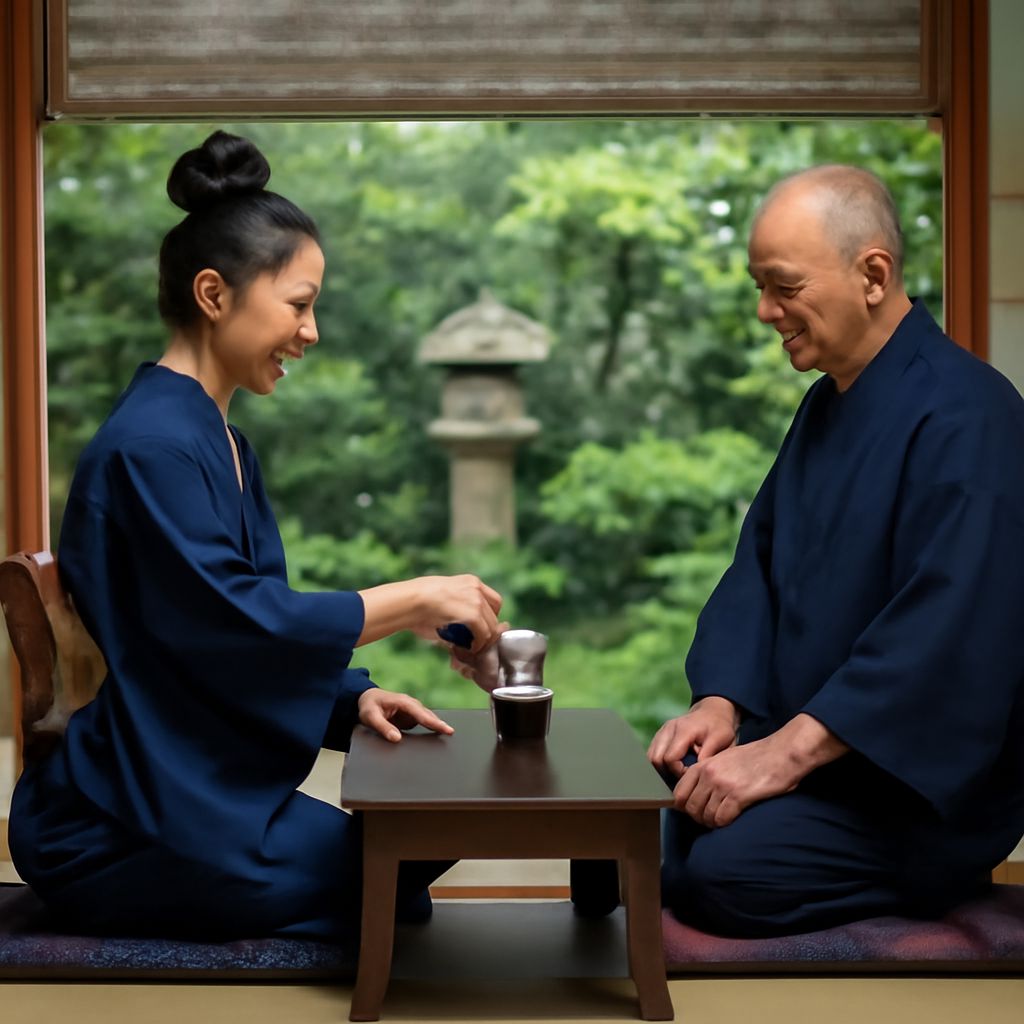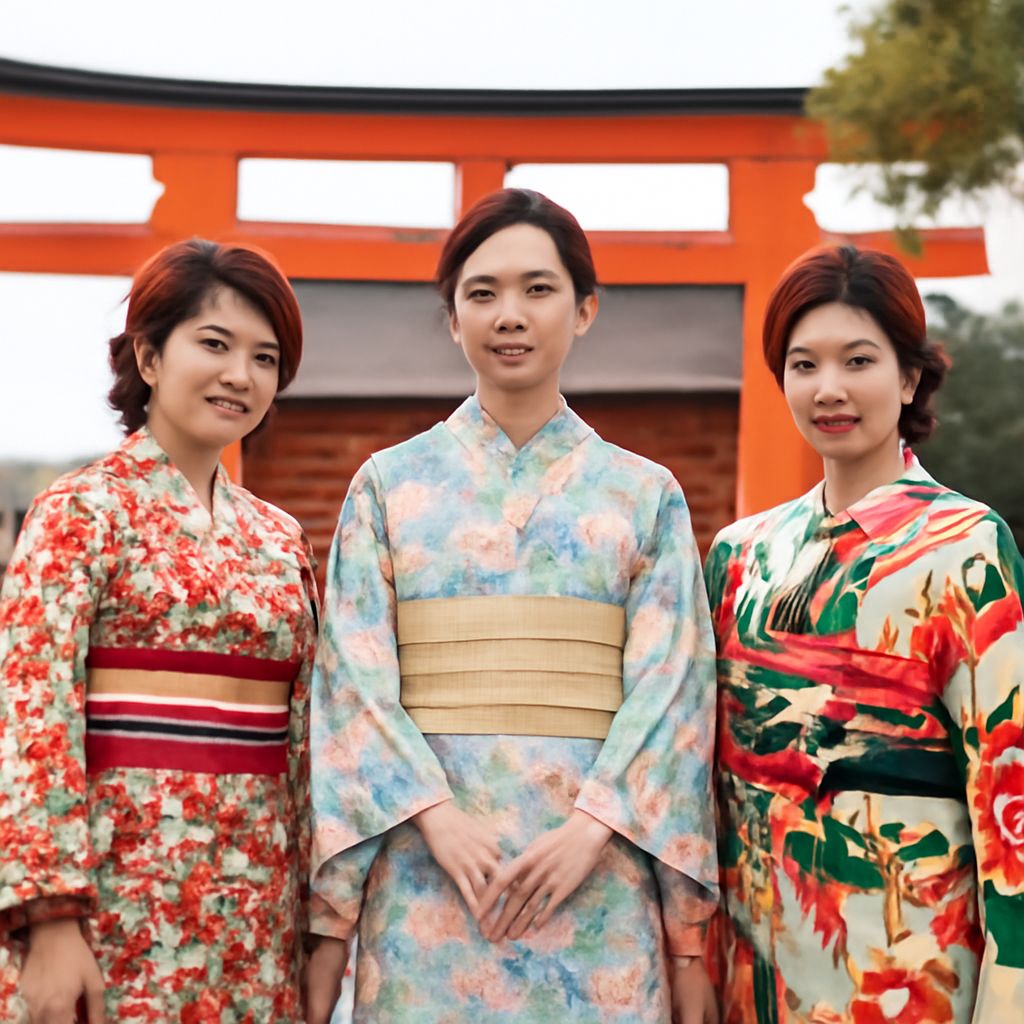
A Japanese yukata is an unlined, usually cotton summer garment within the broader kimono family. Its light construction makes it suitable for hot weather, festivals, garden events and relaxed indoor wear. The main differences from more formal kimono involve fabric, lining, dressing layers, occasion and accessories—not simply sleeve length.
To identify one, look for a single breathable layer, a casual obi and commonly worn geta. Its surface often features repeating flowers, waves or geometric forms that make the fabric instantly recognizable.
What Is a Japanese Yukata?
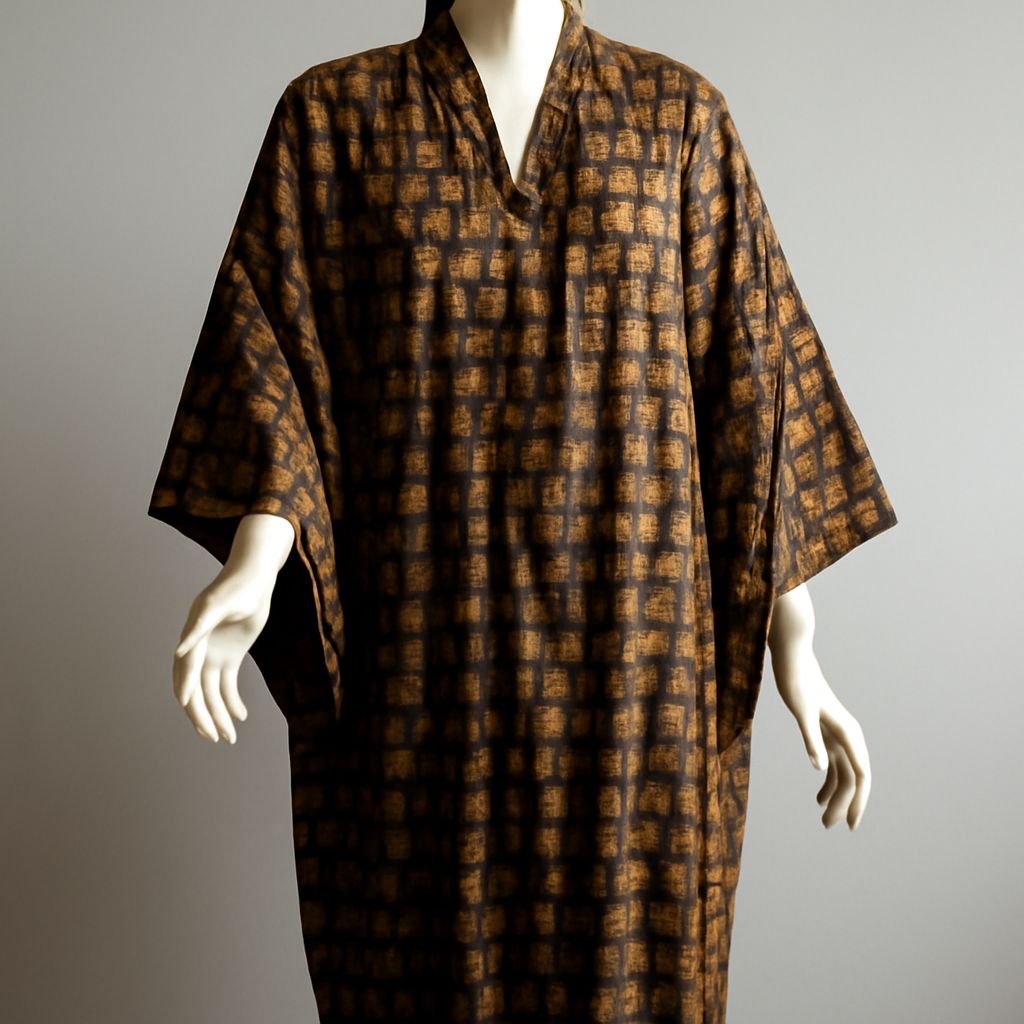
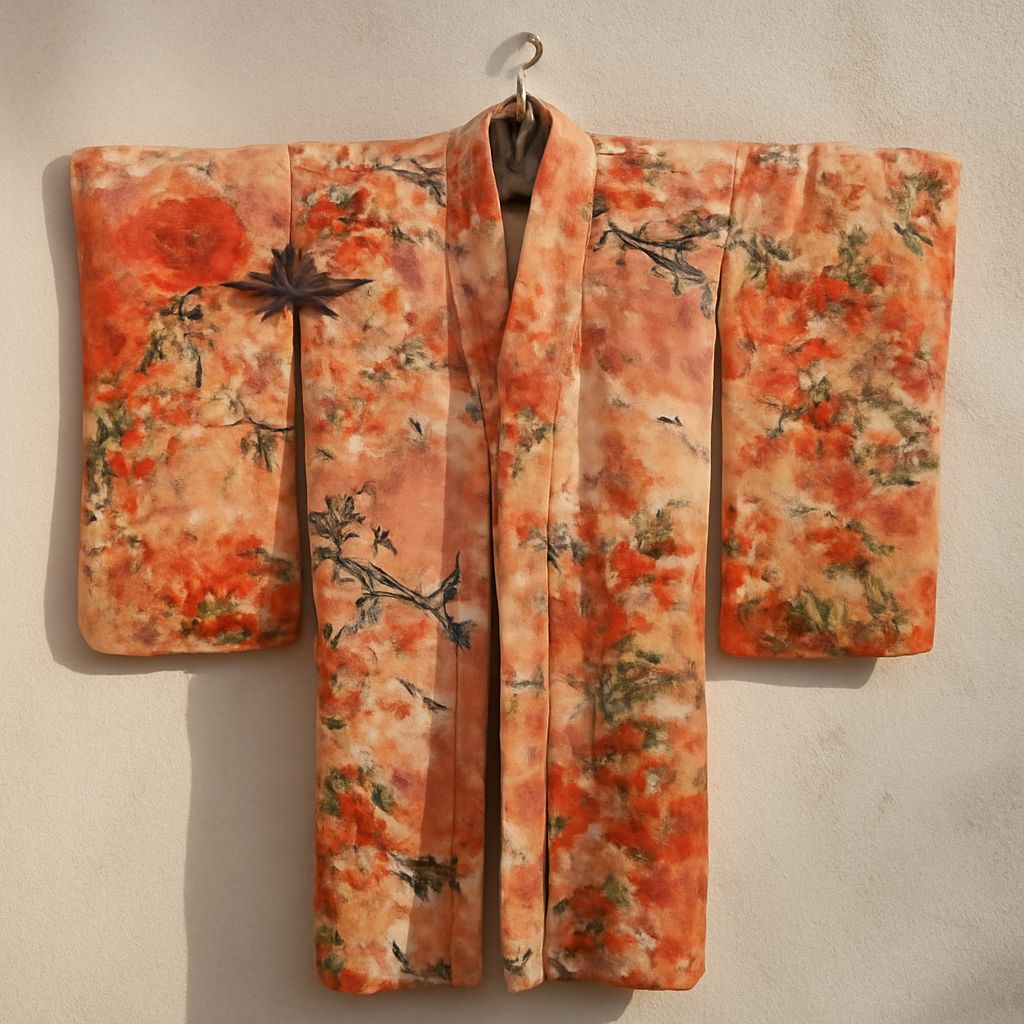
A yukata is a robe-shaped garment made from cotton, cotton blends or, in some modern versions, synthetic fabric. It has a straight-seamed T-shaped construction, wide sleeves and a wrap front worn left over right. Unlike many formal kimono, it is generally unlined and designed for warm conditions.
Historically associated with bathing and informal home wear, the yukata is now strongly linked with summer festivals, fireworks displays and seasonal hotel or ryokan stays. It is easier to wear than a formal kimono because it normally requires fewer layers and less rigid dressing.
The Difference Between a Yukata and Kimono
The word kimono describes a broad family of traditional Japanese garments, so a yukata is technically one type of kimono. In everyday comparisons, however, “kimono” often means a more formal, lined style.
- Material: Yukata are usually cotton or another lightweight fabric. Formal kimono may use silk, wool or carefully finished synthetic textiles.
- Construction: A yukata is typically unlined and worn over the body with minimal layers. Formal kimono commonly require a nagajuban undergarment, collars and additional securing pieces.
- Occasion: Yukata suit casual summer events. Lined kimono range from everyday wear to highly formal ceremonies, depending on their pattern, fabric and accessories.
- Accessories: Yukata use relaxed styling. Formal kimono generally require more structured obi, formal footwear and carefully coordinated undergarments.
Fabric, Lining, Seasons and Accessories
Cotton gives a yukata a lighter, more practical feel than many formal kimono. It may be woven with a slightly textured surface, printed with color, or finished using techniques that create subtle variation. The lack of a full lining helps heat escape, making the garment especially comfortable in summer.
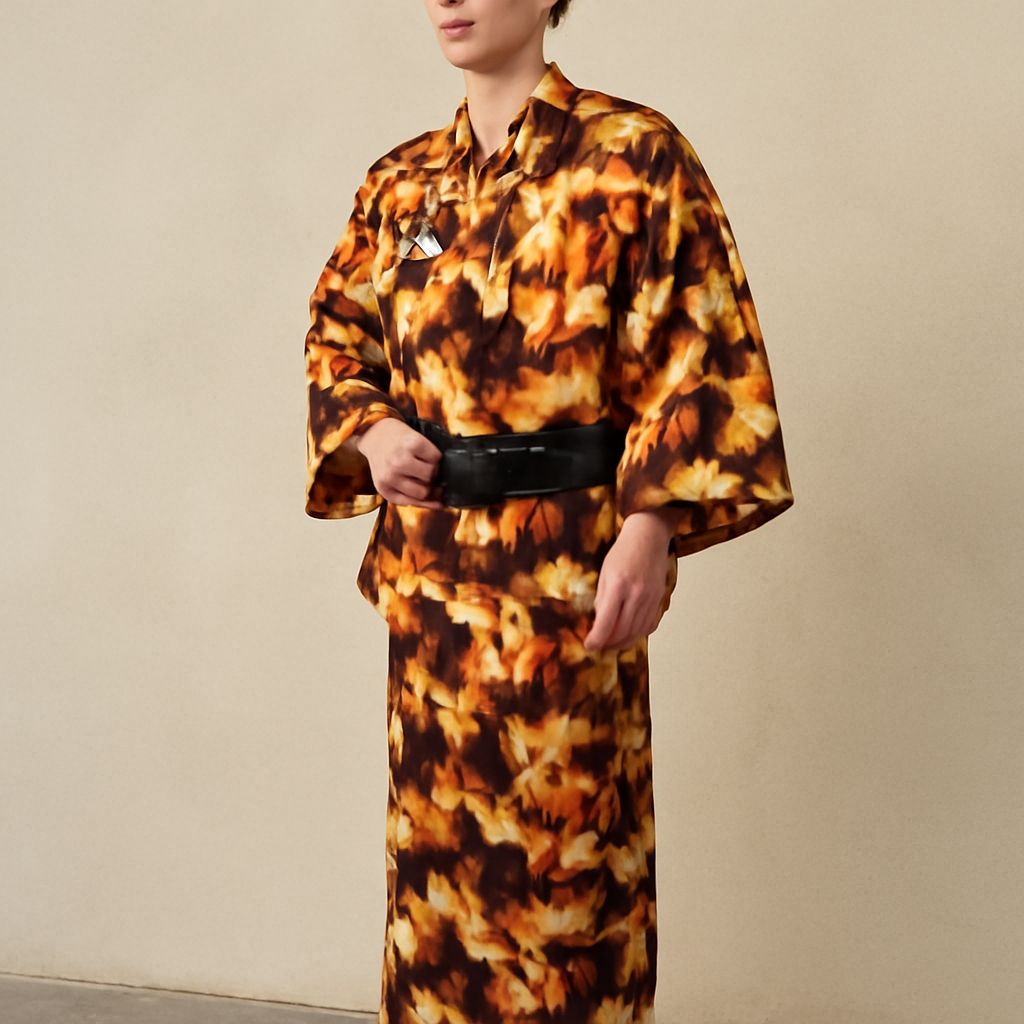
A casual hanhaba obi, usually narrower and less formal than an obi for ceremonial kimono, commonly completes the outfit. It is tied around the waist over the wrapped yukata. A soft heko obi may also suit informal styling.
Geta, wooden Japanese sandals, are the traditional footwear choice. They are often worn with bare feet for a yukata, unlike formal kimono, which are commonly paired with tabi socks and zori sandals. A small drawstring kinchaku can carry essentials without disturbing the clean silhouette.
Japanese Textile Patterns in Yukata Design
Japanese textile patterns give a yukata much of its visual character. Floral motifs include morning glory, hydrangea, chrysanthemum and cherry blossom. Seasonal images such as fireworks, fans, flowing water, maple leaves and goldfish help connect the garment to summer or another time of year.
Geometric designs create a different effect. Asanoha, based on hemp leaves, suggests vitality through repeated pointed shapes. Seigaiha uses overlapping wave arcs, while shippo forms linked circles associated with continuity and good fortune.
Repetition controls the fabric’s rhythm. Large motifs make a bold statement and can emphasize the wearer’s movement, while small repeats create a quieter, more even surface. Designers may spread a pattern across the whole garment or concentrate it near the hem and sleeves, changing how the yukata looks when wrapped and belted.