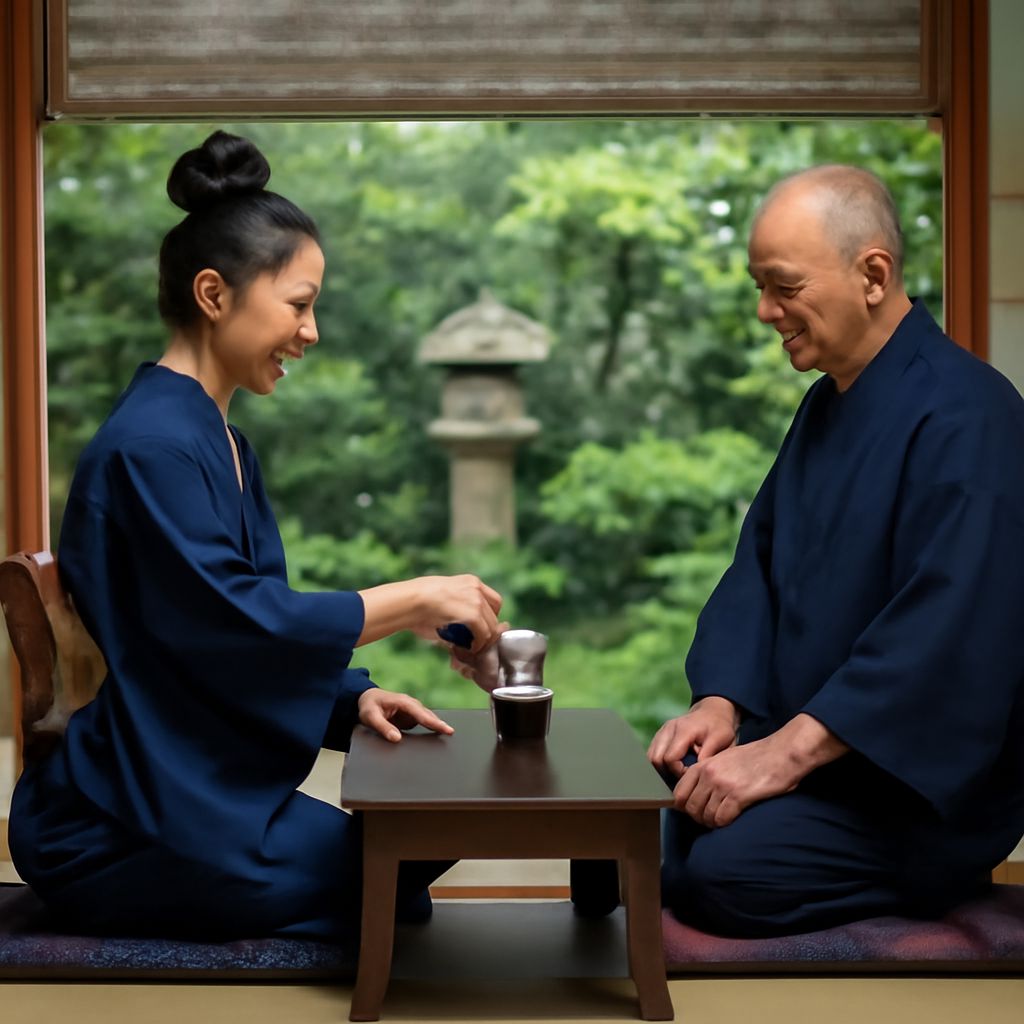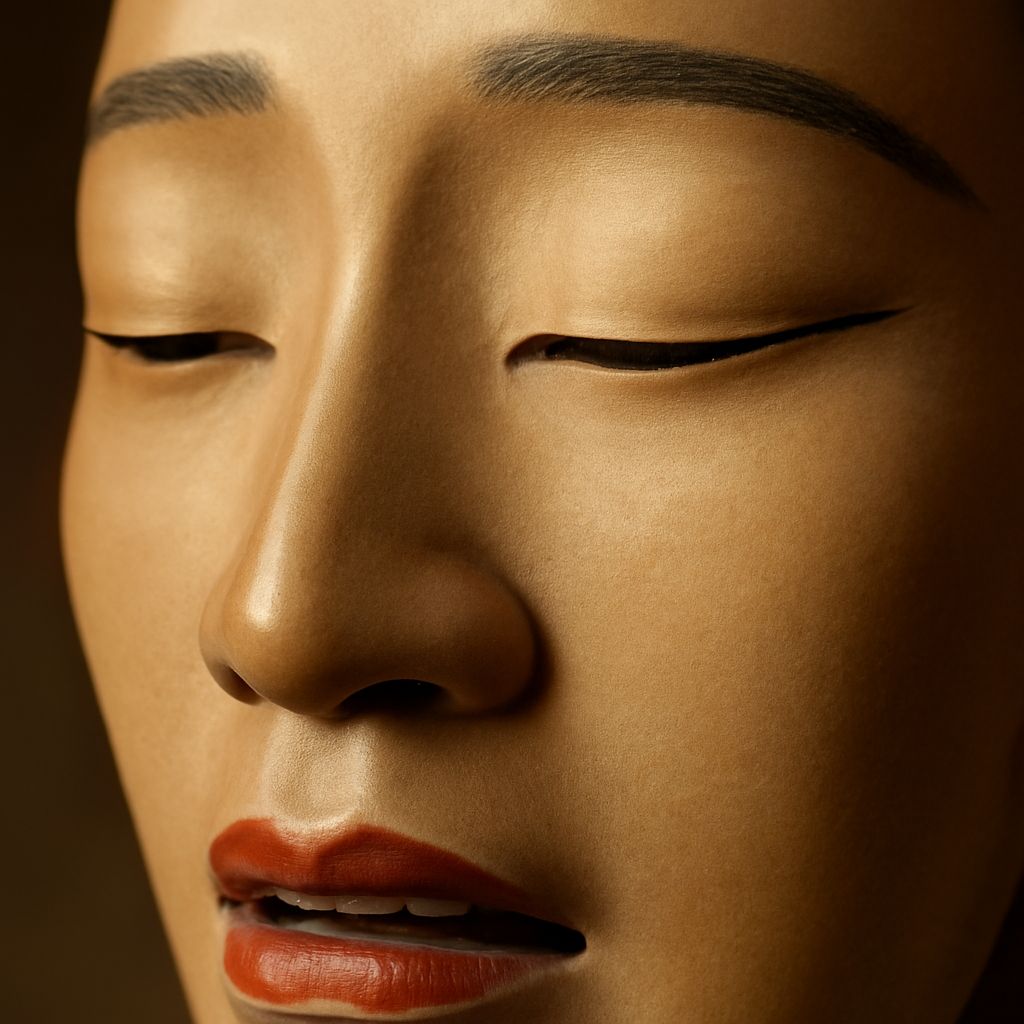
The phrase japanese kabuki mask is often misleading: traditional Kabuki usually does not place a carved mask over an actor’s face. Kabuki character design relies on painted features, facial expression, wigs and costume, while Noh is the Japanese theatre tradition most closely associated with carved masks. Many online “Kabuki masks” are actually Noh, demon, fox, festival or decorative designs.
The useful distinction is simple: identify the performance tradition before trusting the product title. A painted red-and-black face suggests Kabuki’s kumadori makeup. A small carved face with restrained features points toward Noh.
Does a Japanese Kabuki Mask Actually Exist?
As a commercial label, a japanese kabuki mask exists; as a defining traditional object, usually not. Kabuki actors perform bare-faced or wear oshiroi, a white foundation, with dramatic kumadori lines. Their faces remain exposed so expression, eye movement and posture can carry the performance.
Some Kabuki productions use masks as props, and modern artists create plaques or souvenirs inspired by Kabuki faces. Those exceptions do not make a carved mask the standard Kabuki performance object. The actor’s changing face is central to the effect.
How Kabuki Creates a Masked Effect
Kumadori is a painted system that exaggerates facial structure. Red lines commonly suggest heroic strength, vigor or righteous power. Blue or indigo can signal a villain, spirit or dangerous supernatural character, while black defines features such as the eyebrows and eyes.
The design works with movement. An actor can widen the eyes, tense the mouth, turn the head or alter the posture, changing the character’s emotional force instantly. A tall wig and highly structured costume complete the silhouette. Because a painted Kabuki face can look masklike in photographs, sellers sometimes turn that image into a wooden, resin or ceramic “mask.”
What Defines Japanese Noh Masks?
Authentic japanese noh masks are carved performance objects, traditionally made from lightweight hinoki cypress. The maker hollows the back, cuts narrow eye openings, paints the surface and adds cords so the mask can sit securely on the performer’s face. Its fixed features are intentionally subtle rather than broadly expressive.
Noh masks are grouped by character and age: okina represents an old sacred figure; jō masks show older men; onna masks represent women; and kishin or spirit masks portray gods, demons and other supernatural beings. Hannya is a specific Noh demon mask, showing a woman transformed by jealousy, with horns, metallic eyes and fangs. It is not a synonym for every Noh mask.
The performer controls the mask’s apparent mood through tiny changes in angle. Tilting it slightly upward catches light and can make the face appear brighter or happier. Tilting it downward casts shadows across the eyes, suggesting sorrow, anger or grief. This controlled expression is one of Noh’s defining techniques.
Why Japanese Kabuki Masks Get Mislabelled: Visual Clues
Listings titled japanese kabuki masks often use a familiar name for visibility, even when the object belongs to another tradition. Check these details:
- Noh: a proportioned human or supernatural face, carved contours, narrow eye openings and a hollow back for wearing.
- Hannya: horns, fangs and gold or metallic eyes. It is a particular Noh demon design.
- Kitsune: a pointed fox muzzle, upright ears and animal features. These masks belong mainly to folk, festival or popular decorative traditions.
- Festival masks: bright colors, exaggerated shapes, glossy finishes and lightweight construction, often with an elastic band rather than performer’s cords.
- Kabuki-inspired: painted red, blue or black facial lines without eye holes or a wearable carved form. This usually represents kumadori makeup, not a traditional Kabuki mask.