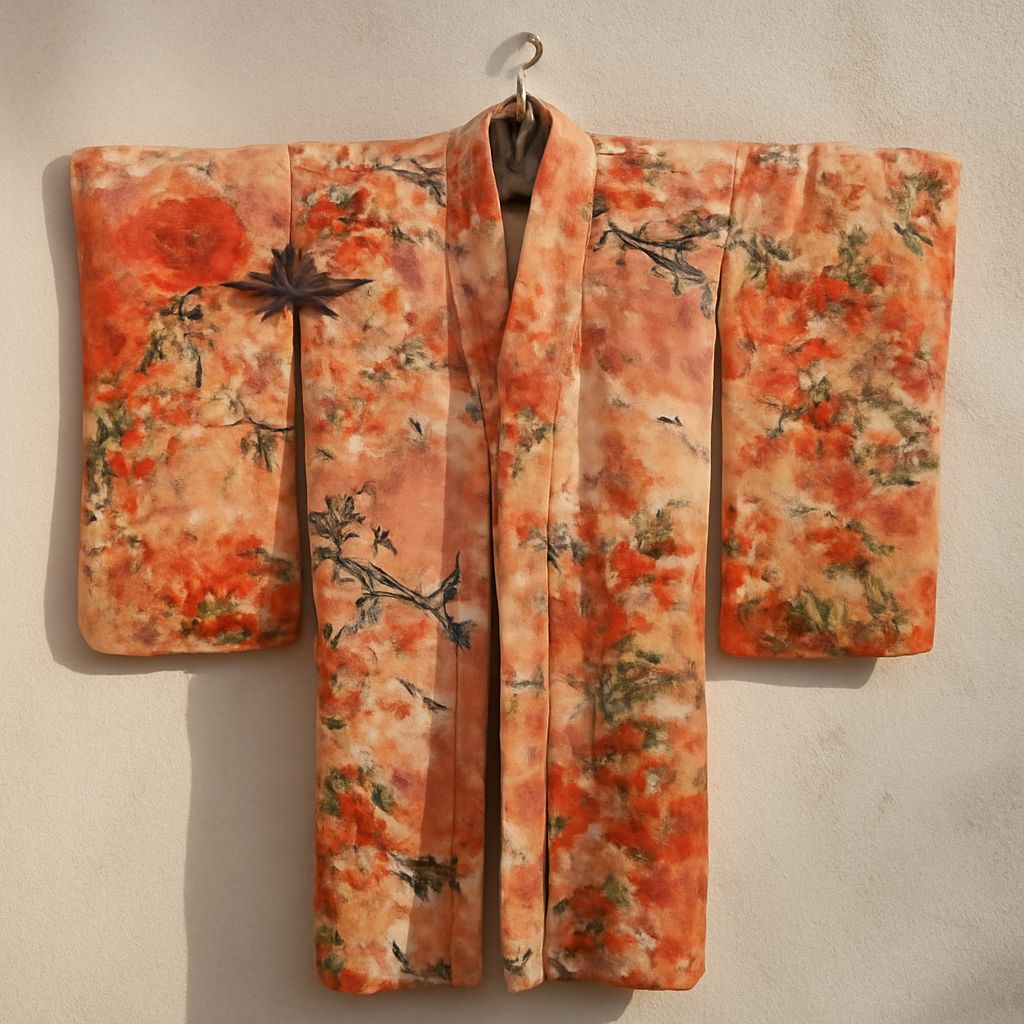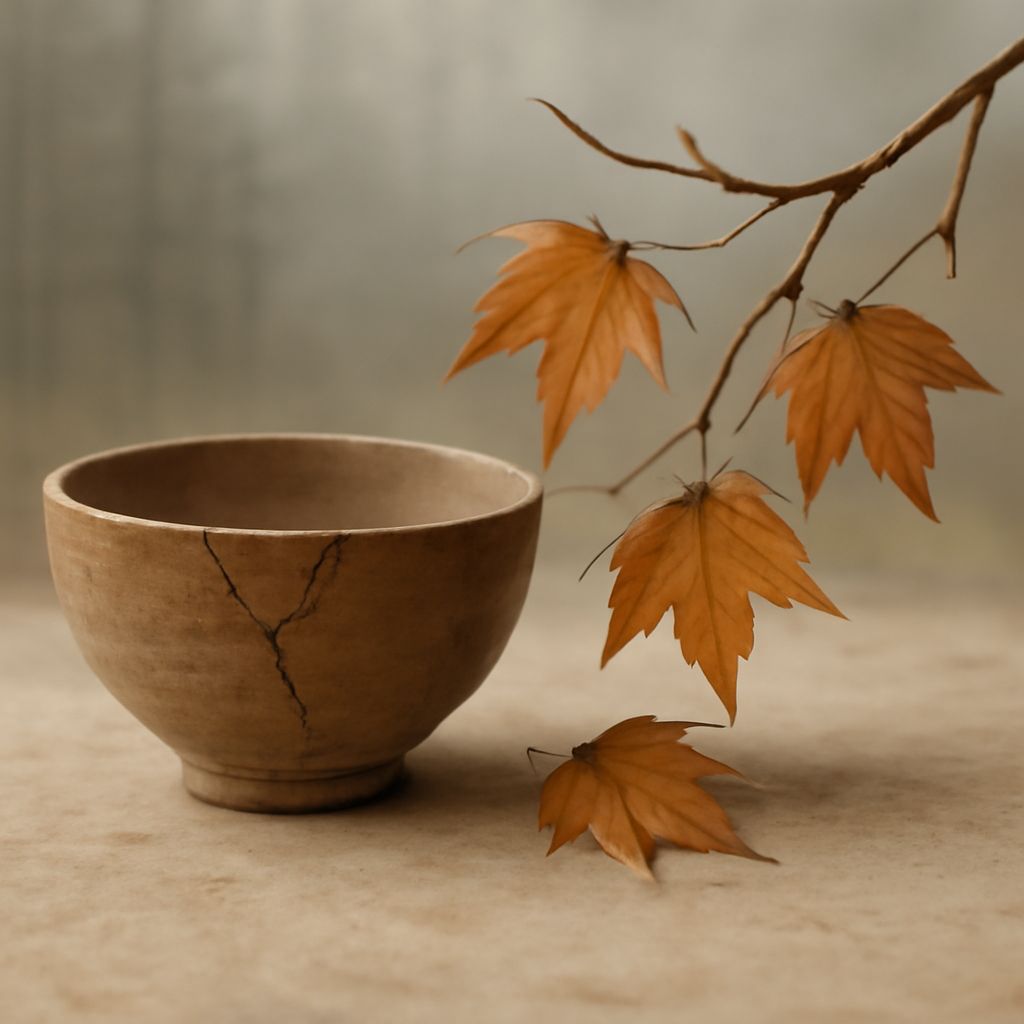
In practice, wabi sabi photography finds beauty in change rather than polish. It attends to cracked plaster, fading paint, a bowl altered by years, or a brief patch of light.
Wabi-sabi is an aesthetic of impermanence, incompleteness, irregularity, restraint, and material change. It does not make damage beautiful automatically. Instead, it asks what age, use, and natural variation reveal.
What Wabi-Sabi Means: Impermanence, Incompleteness, and Restraint
Wabi-sabi values things that show time without pretending to be permanent or perfect. Its visual language is quiet rather than decorative.
- Impermanence: Faded fabric, fallen leaves, and drying flowers acknowledge that conditions will change.
- Incompleteness: An unfinished edge or partly obscured form leaves room for attention and imagination.
- Irregularity: Uneven lines, asymmetrical shapes, and small variations resist mechanical sameness.
- Restraint: Limited color, modest scale, and uncluttered composition keep material qualities visible.
- Material change: Rust, patina, scratches, and smoke marks record contact between an object and its environment.
Wabi-Sabi Photography: Four Ways to Notice Change
Weathered surfaces and transient light
Begin with surfaces that record exposure: peeling doors, oxidized metal, worn stone, or cloth softened by repeated use. Photograph them in available light when possible. Morning haze, a passing cloud, or reflected light can show texture without forcing drama. Avoid adding a distressed filter; the evidence should come from the subject.
Negative space and unforced asymmetry
Leave room around a solitary object, such as a cup on a bare table or one branch against an empty sky. Let the subject sit slightly off-center if that position feels discovered rather than arranged. A chipped rim, a leaning fence, or an interrupted shadow can provide structure without symmetry. Keep processing restrained: preserve muted tones, natural grain, and uneven detail.
Wabi-Sabi Pottery: Marks, Repairs, and Use
Firing marks and meaningful repairs
In wabi sabi pottery, variation can be part of the making. Ash deposits, flashing, pinholes, warped rims, and shifts in glaze color may reveal the kiln’s heat and atmosphere. A repair can also become legible history. Cracks joined with lacquer or metal may honor an object’s continued life, but a repair is meaningful because it is attentive and functional—not because every break deserves display.
Texture, patina, and use-wear
Finger marks, coarse clay, softened edges, and a darkened area where a thumb rests can connect a vessel to daily use. Choose texture that supports the object’s purpose. A bowl should remain stable, cleanable, and comfortable to hold. In this sense, wabi-sabi pottery accepts wear while respecting the material and the person using it.
How Imperfection Differs from Neglect
Wabi-sabi is not an excuse for poor care. Neglect often appears as dirt, preventable deterioration, unsafe damage, or a random flaw added for effect. Wabi-sabi can include age and accidental change, but it treats those conditions with attention. Ask whether the mark communicates material history, whether the object still works, and whether its irregularity has been observed rather than manufactured as decoration.
Short Wabi-Sabi Quotes and What They Illuminate
Leonard Koren’s definition
In Wabi-Sabi for Artists, Designers, Poets & Philosophers, Leonard Koren defines it as “the beauty of things imperfect, impermanent, and incomplete.” The compact formulation identifies the aesthetic’s three central conditions without turning them into sentimental slogans. It also explains why a finished object can remain visually open and alive.
Tanizaki’s observations on shadow and patina
In In Praise of Shadows, Jun’ichirō Tanizaki observes that subdued light, darkness, and the sheen of aged surfaces create depth. His point broadens wabi sabi quotes beyond praise of broken things: atmosphere, time, and restraint can shape beauty before any obvious flaw appears.