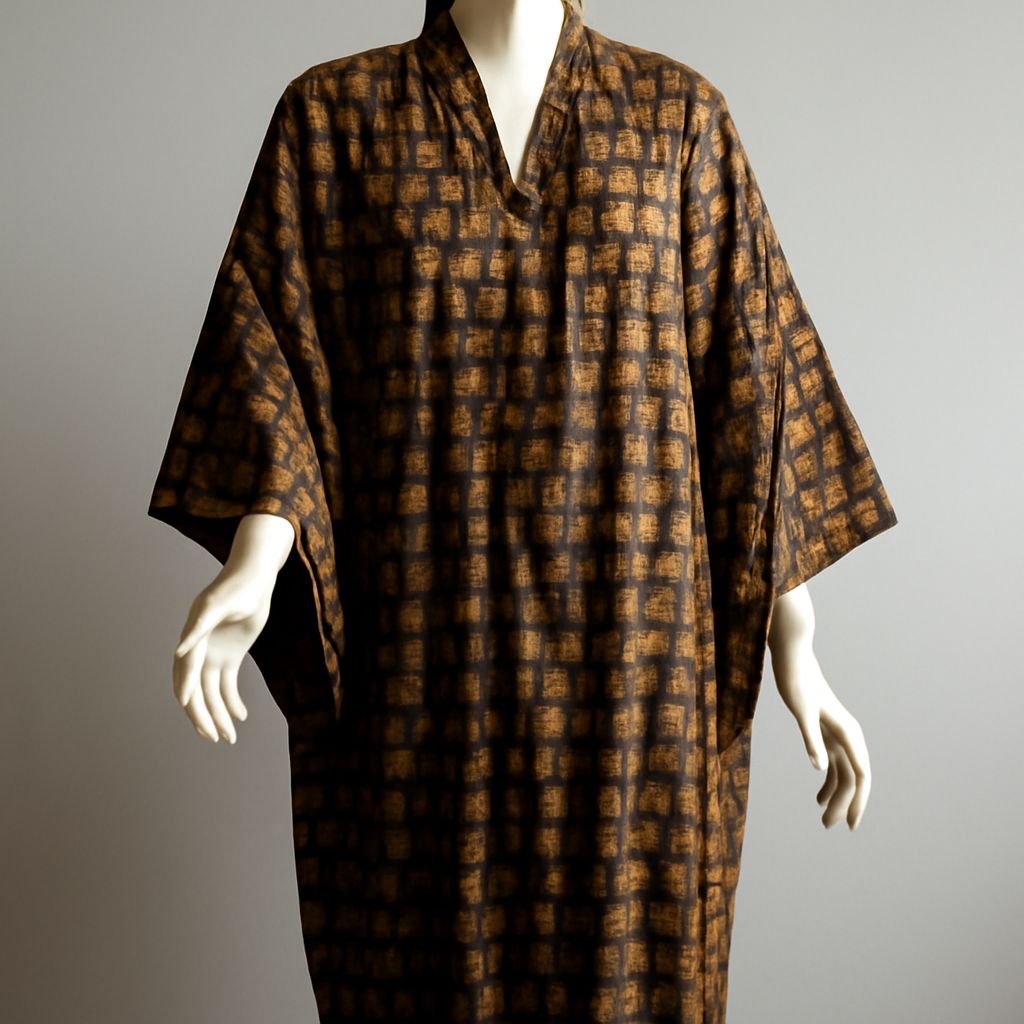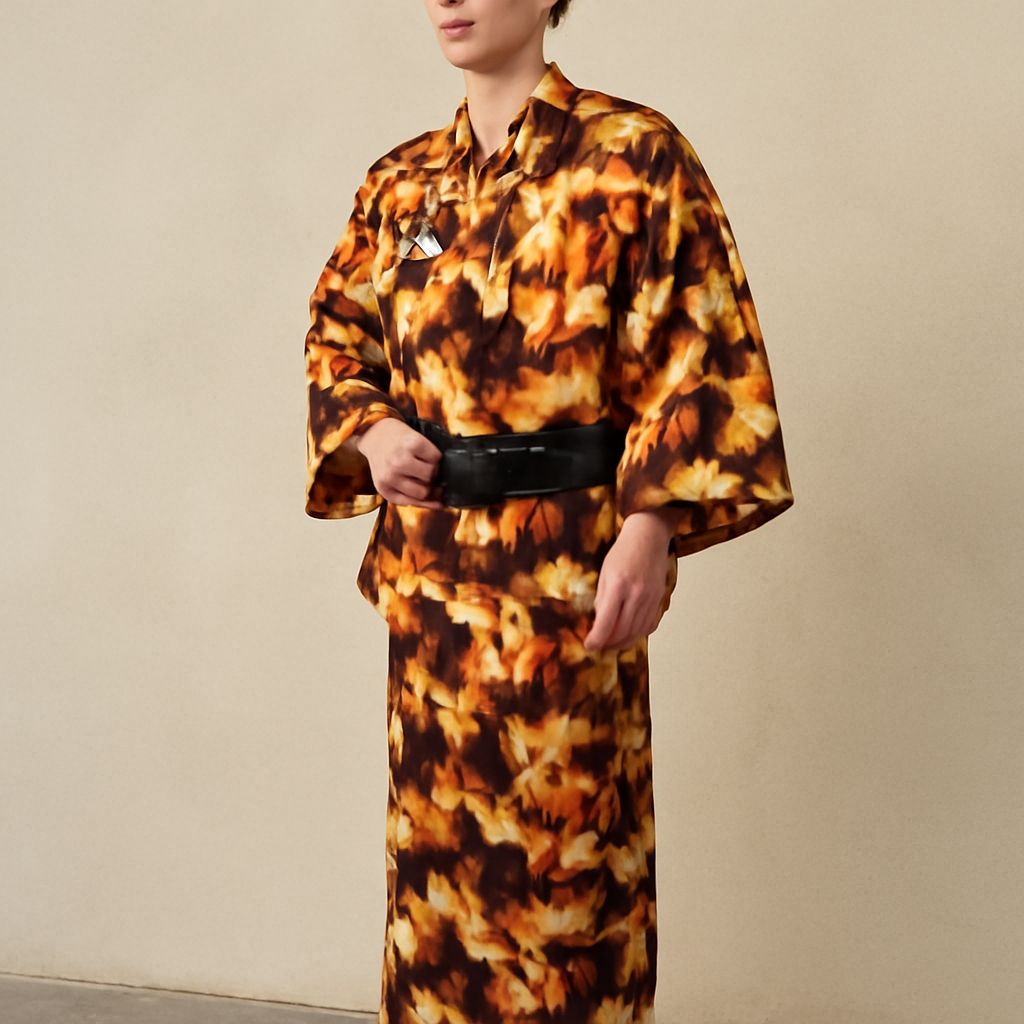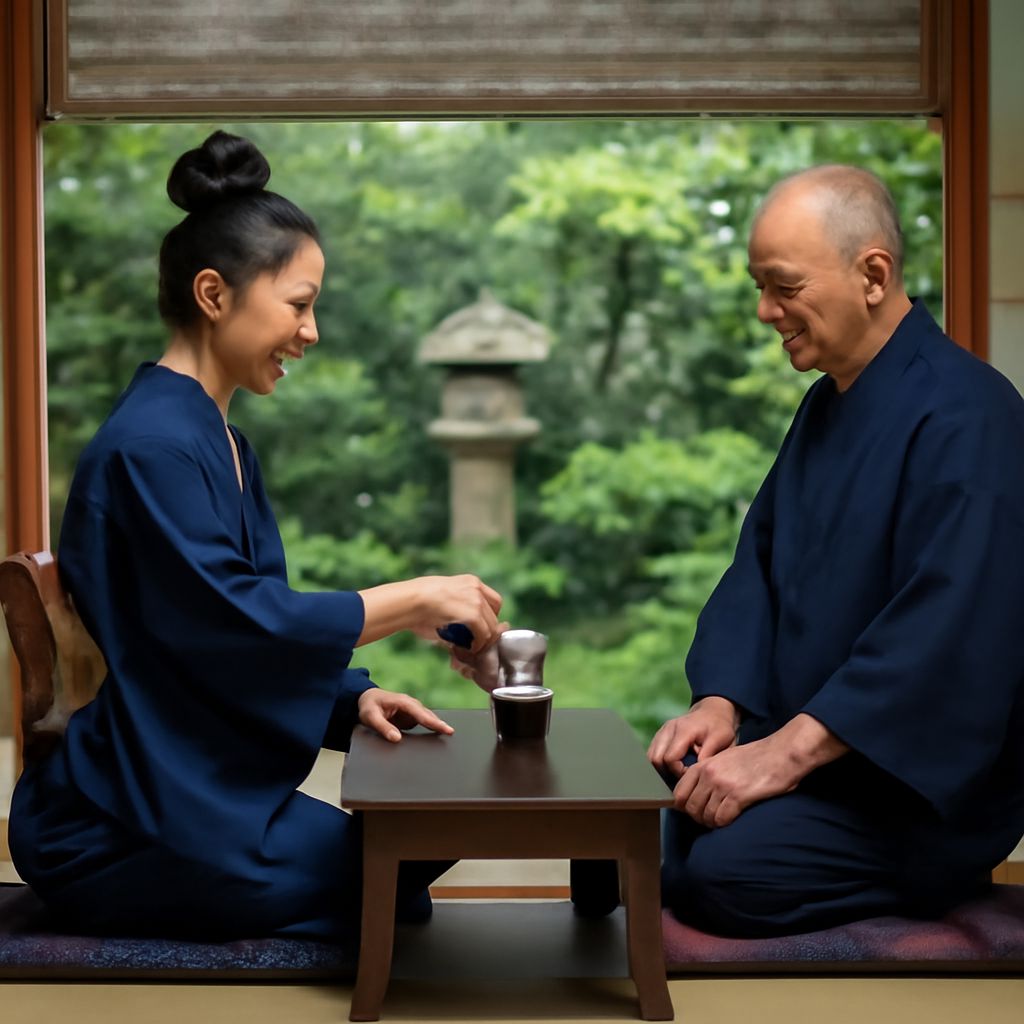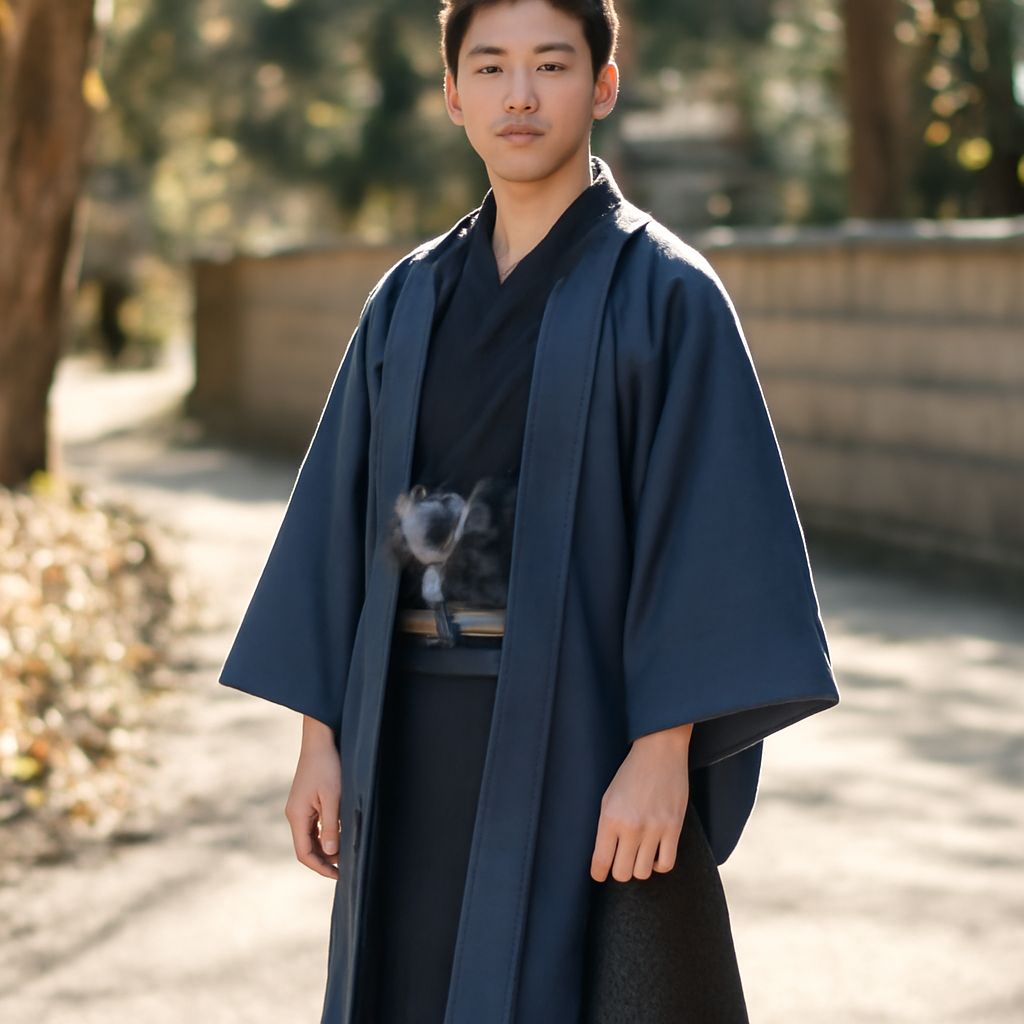
Traditional Japanese men’s clothing is best understood as an outfit system rather than a single robe. The base garment is usually a kimono or yukata; hakama and haori add layers, while samue and jinbei are separate two-piece sets. This map of traditional Japanese clothing for men also explains why not every loose Japanese-style shirt or robe should be called a kimono.
The clearest guide to traditional Japanese male clothing starts with each garment’s position, construction and level of formality.
Traditional Japanese Men’s Clothing: Kimono and Yukata
Kimono: Lined Wrapped Base
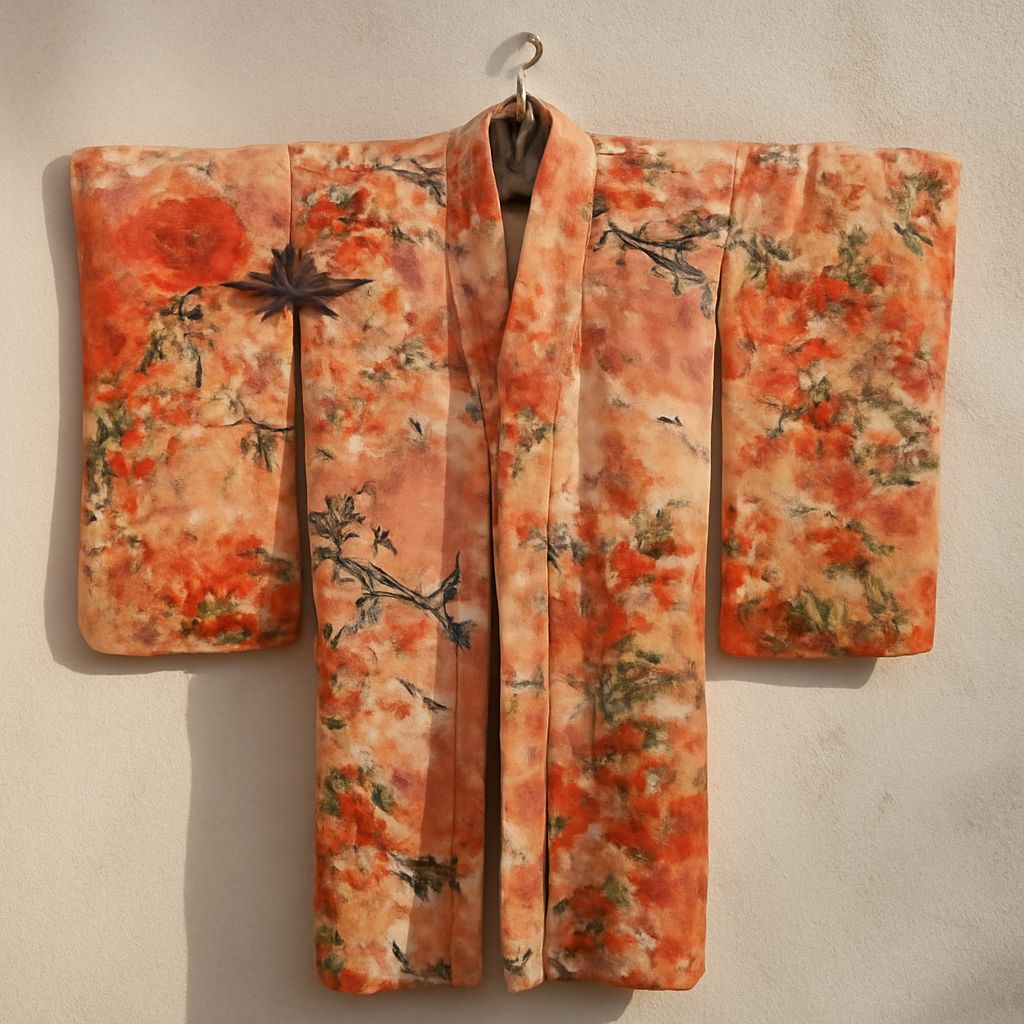
A kimono is the main wrapped garment in a traditional men’s outfit. It has straight fabric panels, wide sleeves and a front opening that crosses left over right, then closes with an obi belt. Men’s kimono are commonly made from silk, wool or cotton, with lining and fabric weight varying by season and formality.
A kimono can be worn as the central robe with an obi, or combined with added layers. Formal versions use restrained colors and patterns, while everyday cotton kimono are simpler. The garment reaches roughly to the ankles and forms the base for hakama or haori.
Yukata: Unlined Cotton Base
A yukata is a lighter, unlined version of the wrapped robe. It is usually made from breathable cotton and worn in warm weather, especially at summer festivals, informal gatherings and traditional inns. Its construction resembles a kimono, but its lack of lining, simpler fabric and relaxed styling make it less formal.
Wear a yukata directly over undergarments and secure it with an obi. Unlike a formal kimono ensemble, it generally does not require elaborate layers or accessories.
Hakama and Haori as Added Layers
Hakama: Pleated Trousers
Hakama are pleated lower garments worn over a kimono at the waist. Some styles have divided legs like trousers, while others resemble a wide, divided skirt. Their structured shape allows greater movement and gives the outfit a formal, ceremonial appearance.
Hakama are associated with ceremonies, martial arts and traditional performing or cultural arts. They change a kimono from a simple robe into a more formal or activity-ready ensemble.
Haori: Short Jacket
A haori is a short jacket worn over a kimono. It opens at the front and usually closes with small cords rather than crossing across the body like the base robe. A haori adds warmth, visual structure and formality without covering the full length of the kimono.
Kimono, hakama and haori can be combined for formal occasions, although the precise pairing depends on the event and dress code.
Samue and Jinbei: Separate Two-Piece Wear
Samue: Tied Work Set
Samue are two-piece garments consisting of a tie-front jacket and matching trousers. Usually made from cotton or hemp, they are designed for practical movement. They suit home wear, gardening, craft work and some traditional occupations. Samue are not one-piece kimono; the jacket and trousers function as a coordinated work set.
Jinbei: Short-Sleeved Summer Set
Jinbei consist of a short-sleeved, wrap-style top and matching shorts or loose trousers. Side ties hold the top closed, while lightweight cotton keeps the set cool. Jinbei are common for relaxed summer wear, at home and at informal festivals.
Choose by Occasion
Formal Ceremonies and Martial Arts
- Ceremonies: Choose a formal kimono, often with hakama and sometimes a haori.
- Martial arts and traditional arts: Hakama are worn over training clothing or a kimono-style top for disciplines such as aikido, kendo and ceremonial arts.
Festivals, Home and Work
- Festivals: Select a cotton yukata for a polished summer look, or jinbei for a more relaxed option.
- Home and workwear: Choose jinbei for casual comfort and samue when you need a practical jacket-and-trouser set.