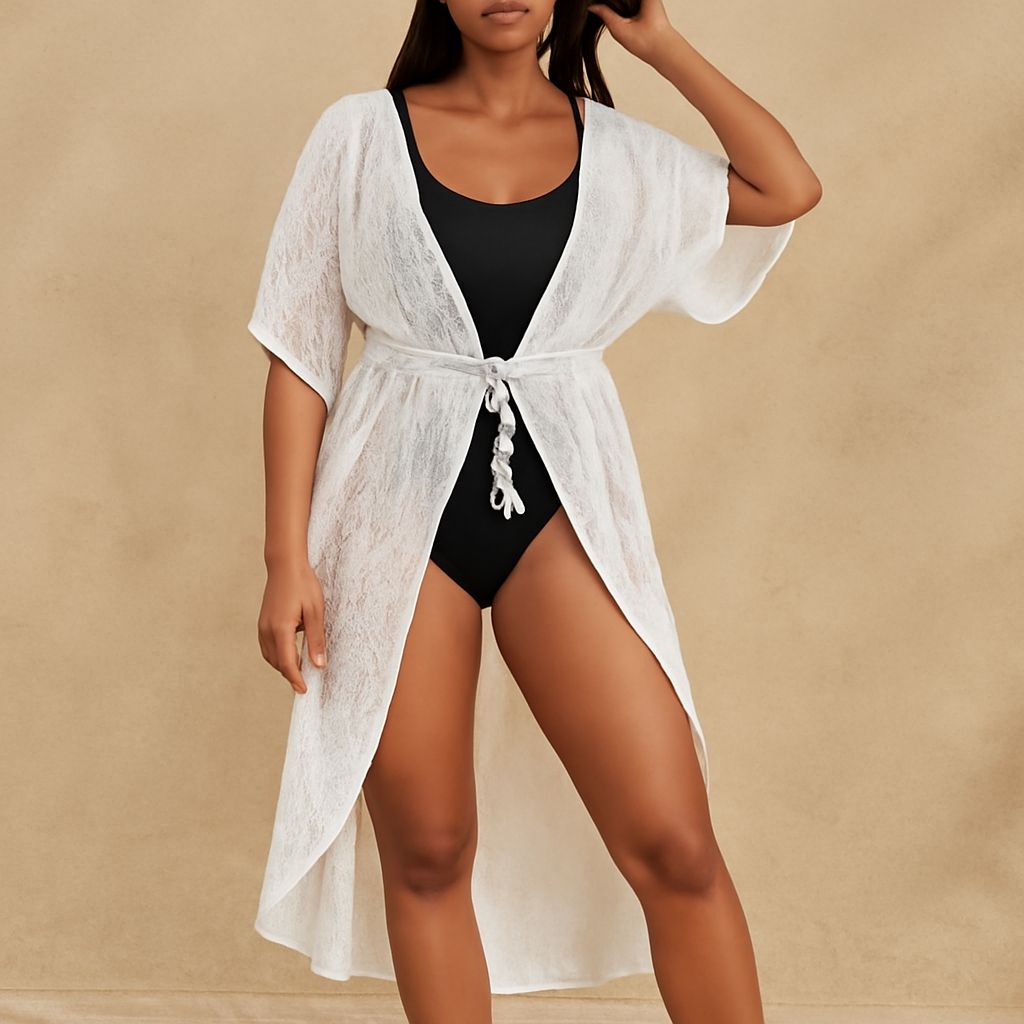
“Kimono jackets” is a broad retail term, not a reliable description of one garment. A listing may show a full traditional women’s kimono, a haori worn over kimono, or a modern robe-style layer. The fastest way to identify the right piece is to check its length, front opening, sleeve construction, collar and whether it uses an obi.
For shoppers researching women’s kimono, those details matter more than a floral print or wide sleeve. Each profile suits a different purpose: traditional dress, a separate outer layer, casual styling or relaxed home wear.
What “kimono jackets” Can Mean in a Listing
One retail label, three garments
Retailers may use “kimono” for garments with only a loose, T-shaped silhouette. Read the product description alongside its photos rather than assuming the label means traditional Japanese dress.
- Full kimono: A long, wrapped garment worn with an obi.
- Haori: A shorter, traditional open jacket worn over kimono.
- Modern layer: A fashion jacket, robe or duster inspired by kimono shapes.
Length and closure provide the quickest clues. A full kimono wraps across the body; a haori remains open; a modern piece may use buttons, a loose belt or no fastening.
Full Women’s Kimono: The Complete Wrapped Garment
Long T-shaped wrap, left over right and obi
A full women’s kimono is a long, T-shaped garment with broad sleeves and a continuous collar. It wraps left over right and is secured with an obi, the wide sash that shapes and holds the outfit. The hem typically reaches the ankles or lower calf.
Its sleeve attachment and seams also look distinctive. The sleeves are broad, rectangular and connected to the body through traditional shoulder and side construction, rather than resembling a standard tailored jacket. The overlapping front creates a clear V-shaped neckline beneath the collar.
Why it is not a jacket
A full kimono is the main garment, not a separate outer layer. It may be worn with other traditional pieces, but it is not designed simply to sit over a shirt or dress. If a product has a short hem, a simple open front and no obi requirement, it is probably not a full kimono.
Haori: The Traditional Open Jacket
Short open front, collar, sleeves and optional himo ties
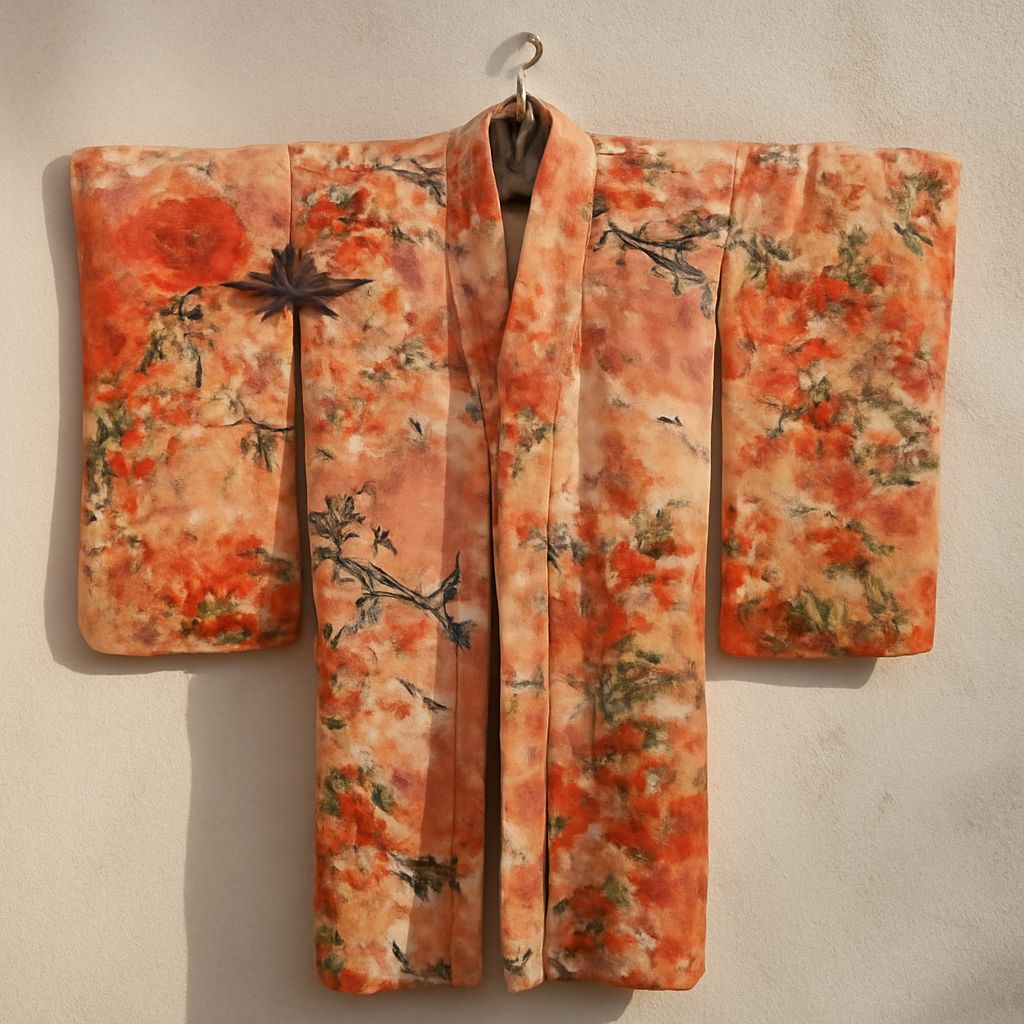
A haori is a shorter traditional jacket worn over a kimono. It usually falls around the hips or thighs and has an open front, so the wrapped kimono underneath remains visible. Unlike a full kimono, it does not need an obi to close it.
Look for a defined haori collar running around the neck and down the front edges. Its sleeves echo kimono construction, with a wide shape and traditional attachment rather than a narrow, fitted armhole. Some haori have himo ties near the chest. These small cords can fasten the jacket, but they are optional rather than equivalent to an obi.
Modern Kimono Jackets, Robes and Dusters
Wide sleeves, prints and open fronts
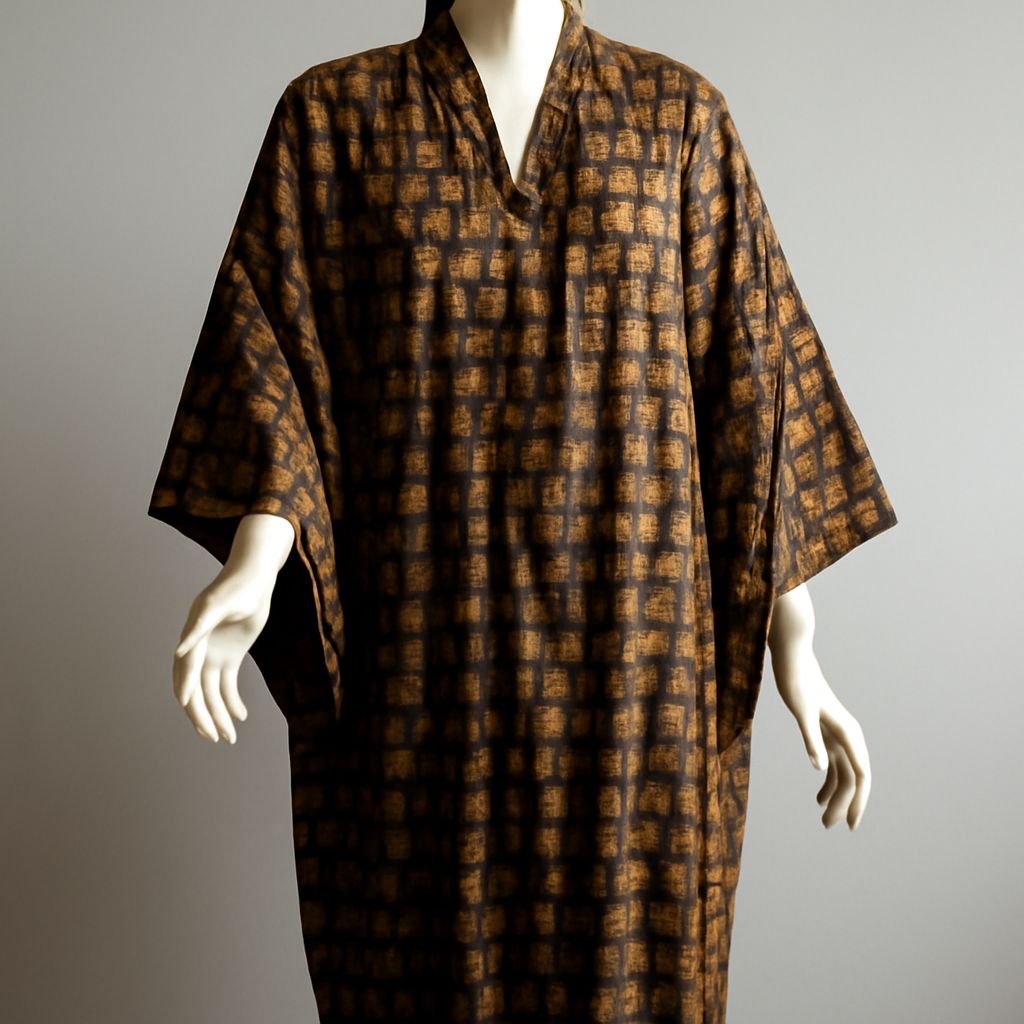
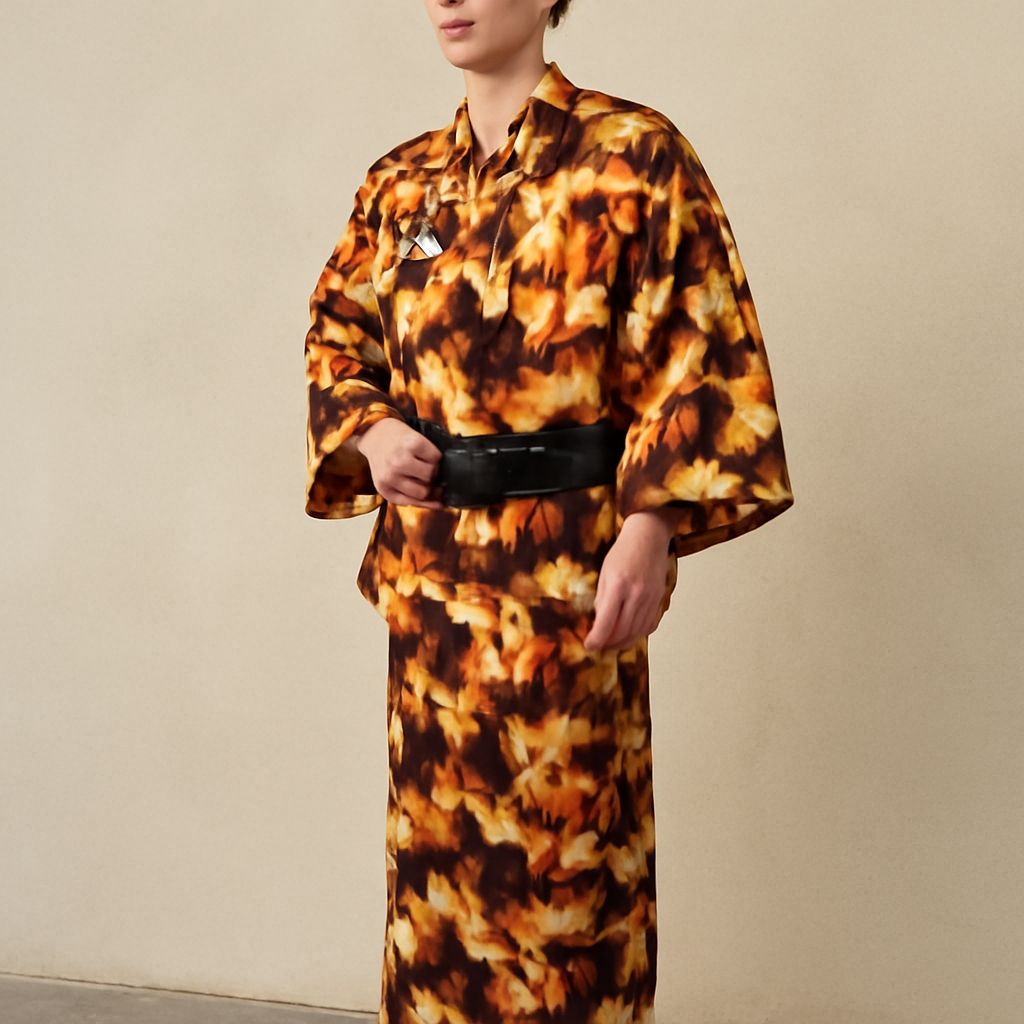
Modern kimono jackets, robe jackets and dusters are fashion categories. They may borrow wide sleeves, dramatic prints, a straight silhouette or an open front without using traditional kimono or haori construction.
Fashion layer without traditional construction
These garments often have sewn-in or dropped-shoulder sleeves, lighter fabrics and varied lengths. Their collars may be shawl-shaped, narrow, hooded or absent. Closures can include a tie belt, button, zip or nothing at all. A floral print and wide sleeve alone do not make a garment traditional Japanese dress.
Choose the Garment That Matches Your Use
- Traditional dress: Choose a full kimono when you need the complete wrapped outfit. Confirm its length, left-over-right overlap, obi requirement and traditional sleeve construction.
- Separate outer layer: Choose a haori when you want a traditional jacket over kimono. Check for the shorter length, open front, collar and possible himo ties.
- Casual fashion styling: Choose a modern kimono jacket or duster for layering over jeans, trousers or a dress. Prioritize the fabric, sleeve comfort, hem length and closure that fit your wardrobe.
- At-home robe use: Choose a robe-style layer designed for comfort. A soft fabric, generous fit and practical belt are more relevant than an obi or historically accurate sleeve construction.