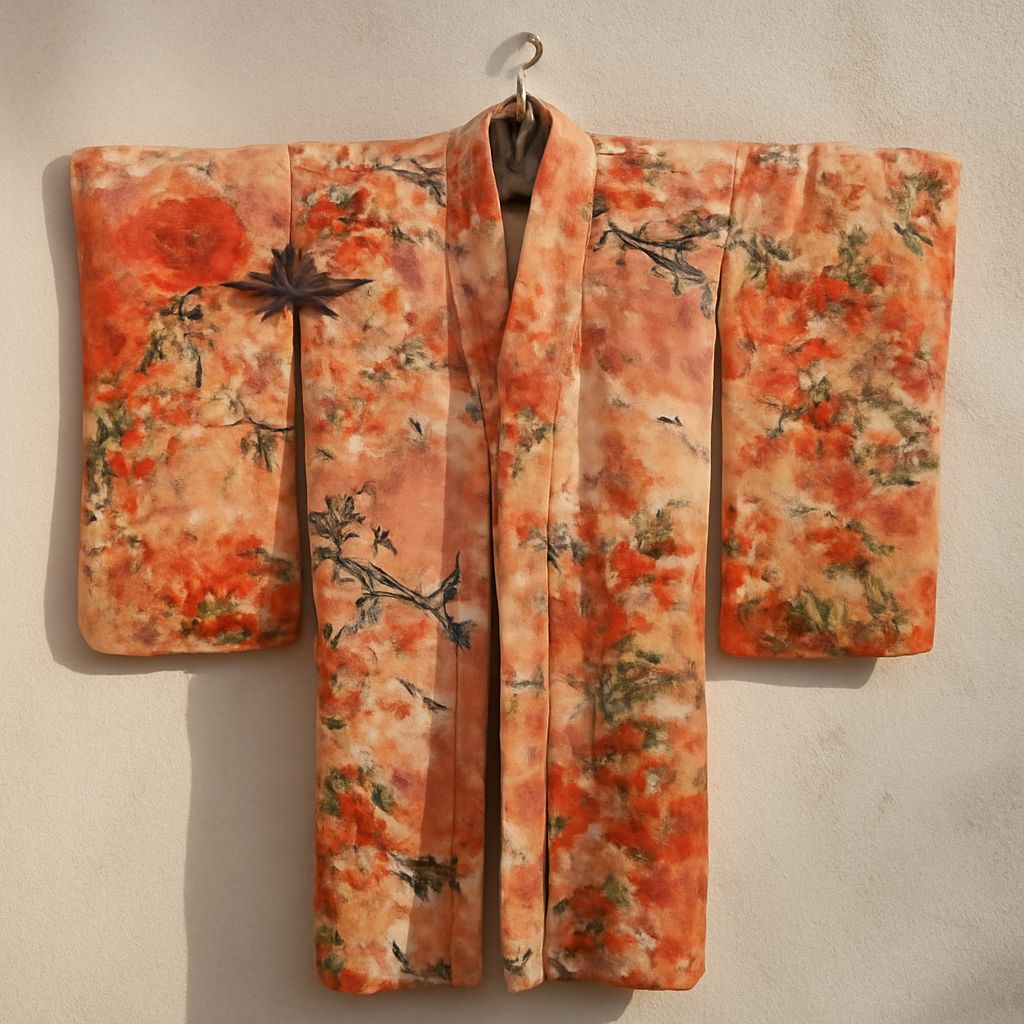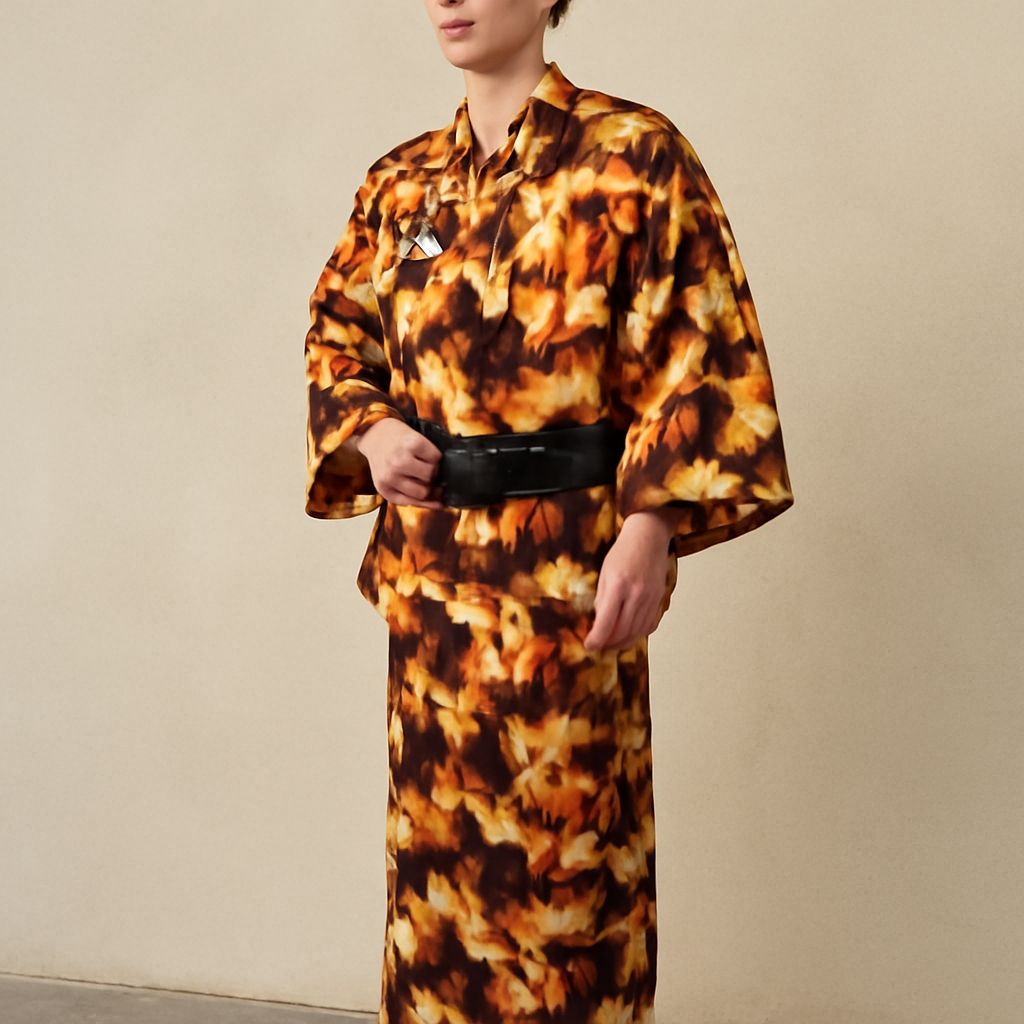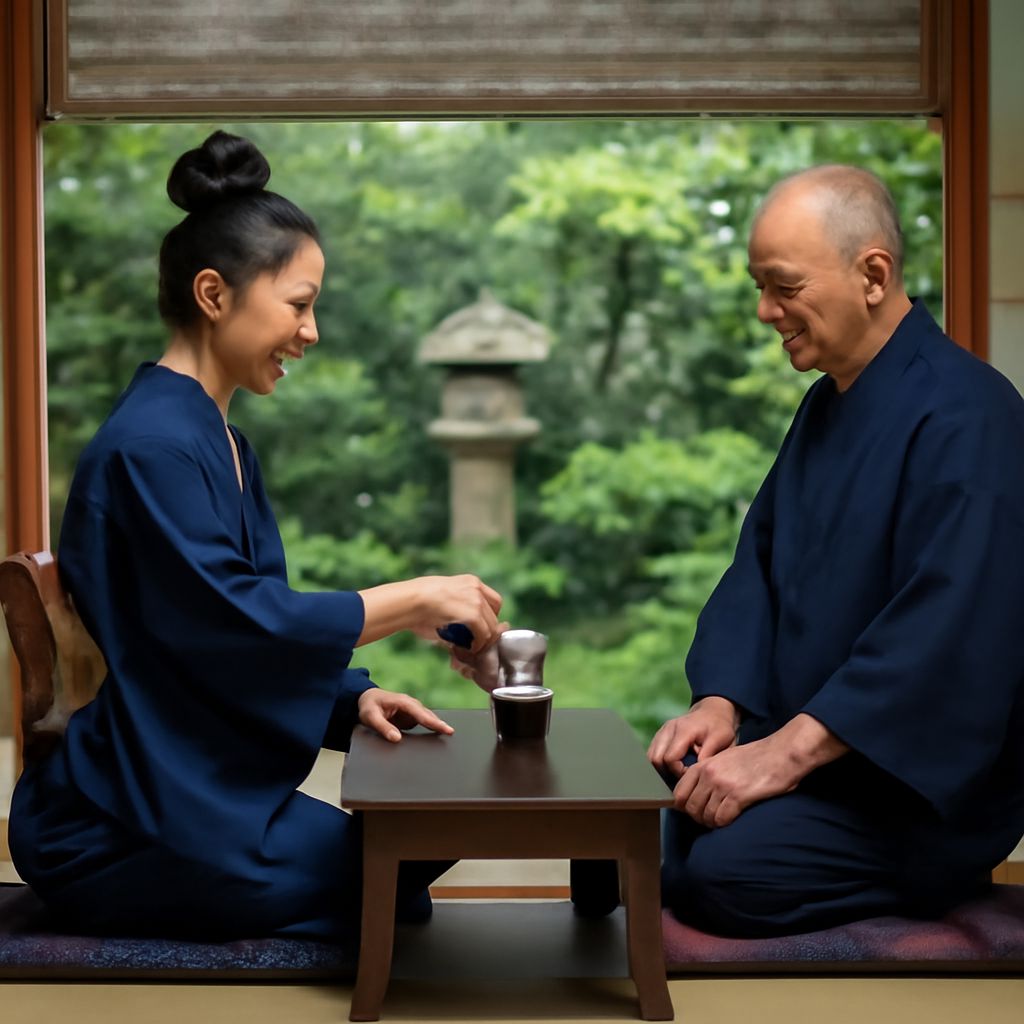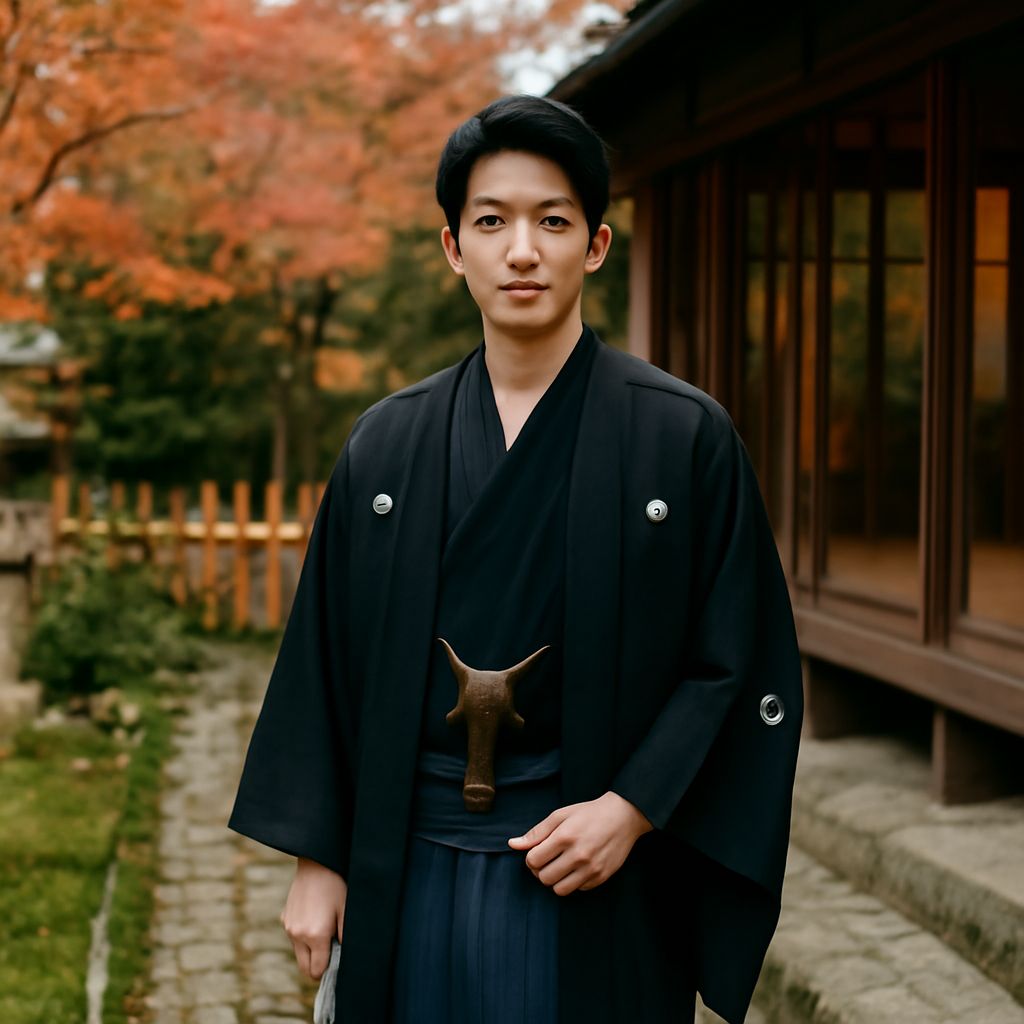
A men’s Japanese kimono is a structured, wrap-front garment with a T-shaped body, straight seams, rectangular sleeves and an obi around the waist. It is one specific category within traditional Japanese clothing, not a label for every Japanese robe or two-piece outfit.
The layers and accessories determine how the outfit looks and when it is worn. A simple kimono can suit relaxed settings, while a haori, hakama, formal fabric or family crests create a more ceremonial appearance.
What Identifies a Traditional Japanese Kimono?
T-Shaped Body and Sleeves
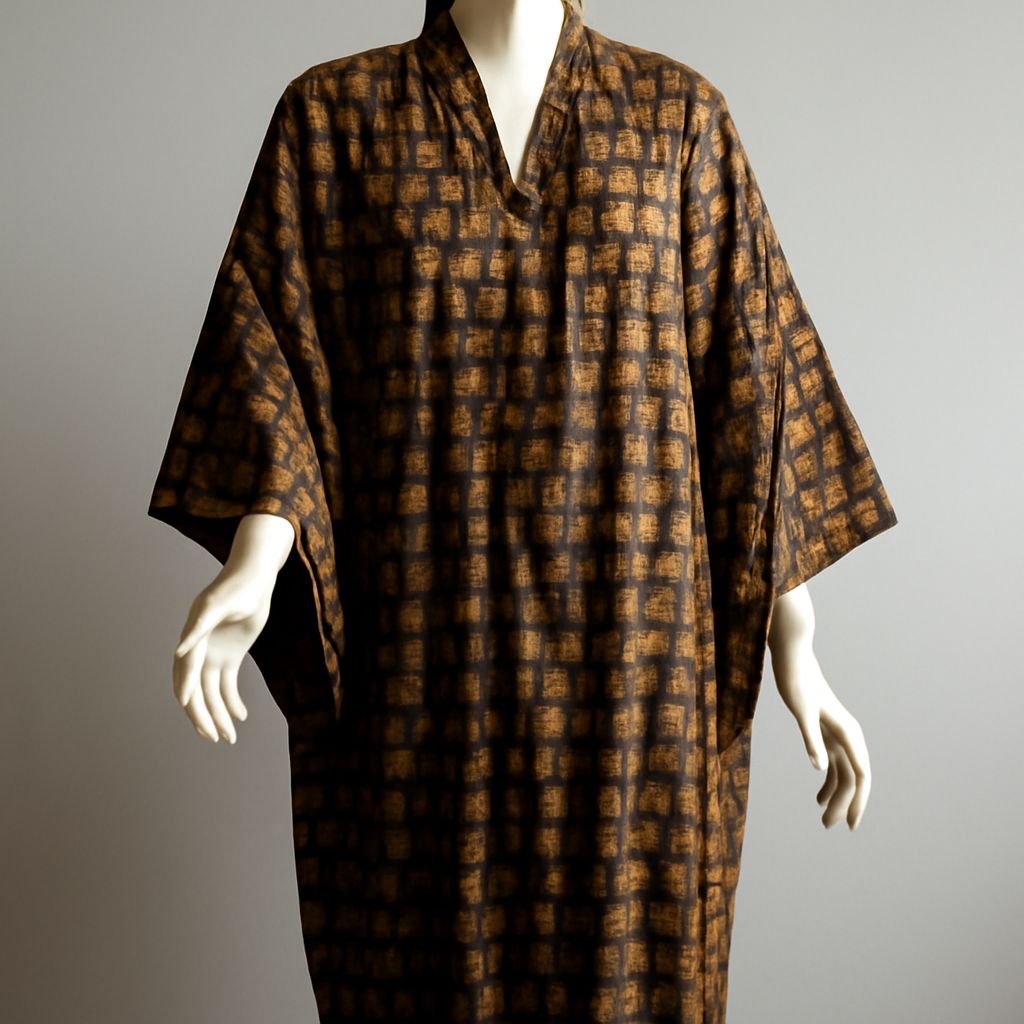
A traditional Japanese kimono is made from long, mostly straight panels. When laid flat, its body and sleeves form a T shape. The garment wraps across the torso and usually reaches the ankles, while the sleeves hang from the shoulders in broad rectangular sections.
Rather than following the body’s contours, the kimono creates a clean vertical silhouette. Excess fabric is adjusted at the waist and secured with an obi. Construction, fabric and decoration vary by season, gender, age and occasion, but the basic wrap-front structure remains recognizable.
Overlap and Obi
The front panels overlap with the left side over the right for living wear. The reverse arrangement is associated with dressing the deceased. A men’s obi is generally narrower and less elaborate than many women’s obi styles. It is tied around the waist or slightly lower, depending on the kimono and the wearer’s proportions.
Japanese Kimono for Men: Underlayers, Obi and Basic Dressing
Juban and Dressing Order
A juban is an undergarment worn beneath the kimono. Its collar may show at the neck, but the juban protects the outer garment from sweat and helps create a smooth fit. For formal dressing, a shirt-like underlayer is followed by the juban, kimono and obi.
The kimono is wrapped left over right, then adjusted so the hem sits evenly. The obi holds the panels closed and provides the main visual break between the upper body and long skirt-like lower section. Footwear and socks are selected to match the level of formality.
Men’s Obi Placement
Men commonly wear a kaku obi, a firm rectangular sash, with formal or semi-formal kimono. A softer heko obi may suit relaxed wear. The knot is usually kept at the back, and the sash sits firmly without creating the pronounced waist shaping often associated with women’s kimono dressing.
Haori and Hakama for Added Formality
A haori is a short jacket worn over the kimono. It adds warmth, visual structure and formality without replacing the inner garment. It is worn open or secured with a small cord, and its fabric, color and crests can signal the occasion.
Hakama are pleated lower garments worn over a kimono and obi. Depending on the style, they resemble divided trousers or a broad pleated skirt. They add a formal, traditional appearance for ceremonies, martial arts, performances and other occasions. A haori and hakama may be worn together, but each is a separate layer with a different role.
Yukata, Samue and Jinbei: Their Place in Traditional Japanese Clothing
Yukata
A yukata is a lightweight, usually unlined cotton garment designed for summer wear. It has the same general wrap construction as a kimono but is more casual, often worn without a juban. Festivals, fireworks events, hot-spring inns and warm-weather relaxation are common settings.
Samue and Jinbei
Samue is a loose two-piece work outfit consisting of a tie-front top and matching trousers. It is associated with practical work, crafts and Buddhist temple wear rather than formal kimono dressing. Jinbei is another casual two-piece set, usually made with a short-sleeved top and shorts. It is popular as summer loungewear and children’s clothing.
These garments belong to the wider field of traditional Japanese clothing, but their construction and use differ from a traditional Japanese kimono. Calling each one a kimono obscures the distinctions that help identify the garment and choose the right outfit for an occasion.