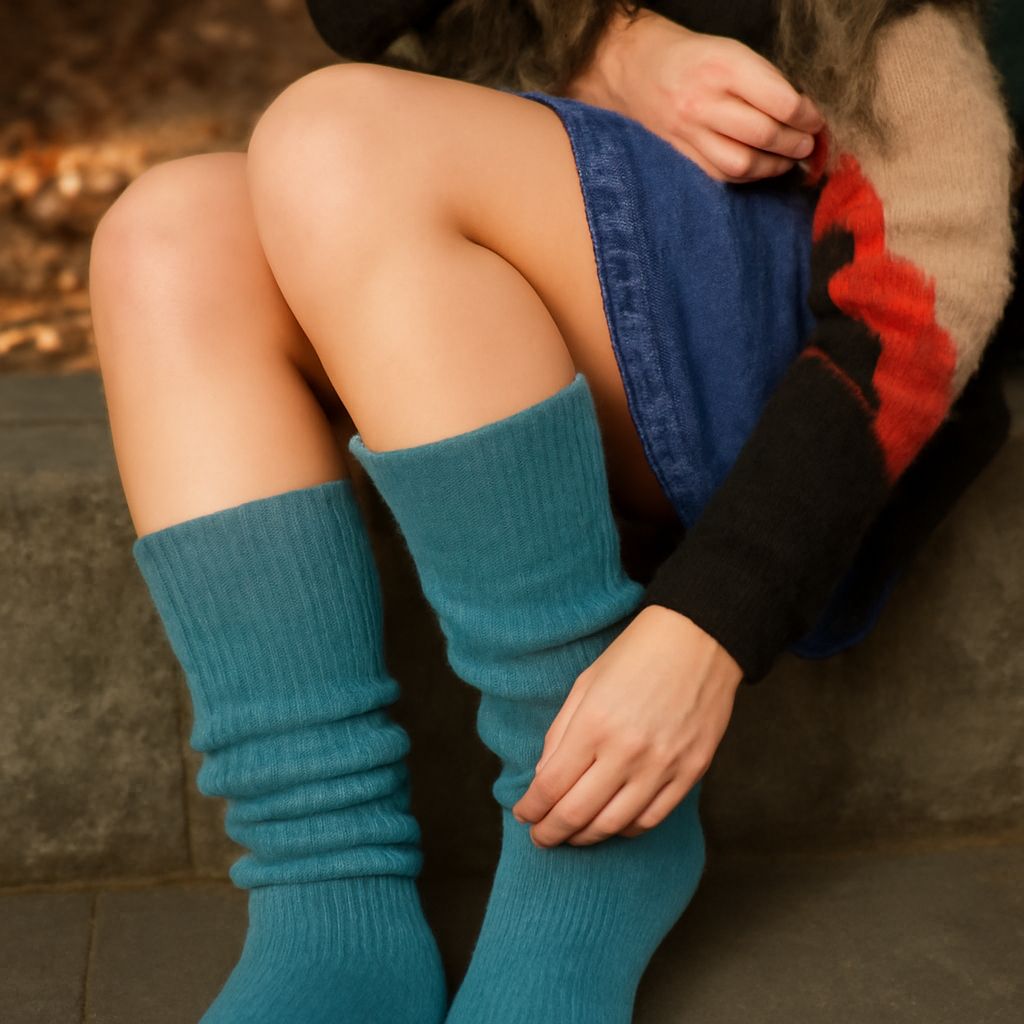
Harajuku socks can anchor a street-fashion outfit when their color and volume connect with the rest of the look. The goal is not maximum randomness. It is a repeated visual idea carried through knitwear, hems, shoes, and accessories.
Harajuku style includes several communities, so a coherent outfit starts with a recognizable reference. Bright accessories may suggest Decora, pastel layers can echo fairy kei, while a dark oversized sweater and striped socks may point toward punk or visual kei. Choose the proportion and motif first, then let each statement piece support it.
Harajuku Style Is Not One Uniform
There is no single checklist for dressing in Harajuku style. Different substyles use color, silhouette, and decoration in distinct ways:
- Decora: Layer colorful accessories, playful graphics, badges, and cheerful contrast.
- Fairy kei: Use soft pastels, nostalgic prints, cropped knits, and rounded proportions.
- Gothic lolita: Balance dark colors with structured skirts, lace details, and polished footwear.
- Punk or visual kei: Combine black, hardware, stripes, distressed textures, and dramatic volume.
These references prevent a random colorful outfit from looking accidental. Pick one as the foundation, then borrow only compatible details from another.
Choose a Color and Motif System
Start with one dominant color, one supporting color, and a small accent. For example, black, cherry red, and silver create a sharper punk palette. Lavender, mint, and pink feel softer and suit fairy-kei styling.
Repeat one motif at least twice. A star on the sweater can reappear on a hair clip or sock, while stripes can connect a shirt, socks, and bag. Keep one area quiet so the statement pieces remain readable.
- Use neutral shoes when the socks carry a bright pattern.
- Match a sock accent to the sweater graphic or an accessory.
- Keep prints at different scales rather than stacking identical busy patterns.
Build the Outfit Around a Harajuku Sweater
A harajuku sweater sets the outfit’s visual weight. An oversized style widens the upper body and works with a short skirt, slim trousers, or visible socks. A cropped sweater raises the waist and suits wide-leg pants or a fuller skirt.
Sleeve shape changes the silhouette too. Balloon sleeves add softness and make a fitted lower half feel balanced. Long ribbed sleeves create a dramatic, layered line over a collared shirt or striped undershirt. For a controlled outfit, expose only one strong layer at the neckline, cuffs, or hem.
Let the hem decide how much sock to show. A mini skirt reveals the full sock design, while a midi hem needs knee-high socks or a deliberate gap above the shoe.
Use Harajuku Socks to Extend the Silhouette in Three Outfit Formulas
Choose socks according to the shoe and hem, not as an isolated accessory.
- Decora pastel: Wear an oversized mint sweater with a lavender pleated mini skirt. Add pink scrunched socks over white crew socks, then finish with white platform Mary Janes. The doubled cuffs echo layered hair clips and add volume below the short hem.
- Fairy-kei proportion: Pair a cropped lilac sweater with a long-sleeve pastel graphic tee and a pale A-line midi skirt. Choose patterned knee-high socks with small stars and chunky white sneakers. The high sock line fills the space between the skirt and shoe without breaking the soft vertical shape.
- Punk or visual kei contrast: Layer a long black harajuku sweater over a red plaid mini skirt and fitted shorts. Wear black-and-red striped socks, with a thin white sock showing above one cuff, and choose platform lace-up boots. The uneven layered socks repeat the stripes while the oversized top balances the heavy footwear.