Can a tailored vest work without a matching suit? Yes: a well-fitting vest can give a shirt and jeans a deliberate shape, especially when the fabric and footwear share the same level of formality. For men styling a vest on its own, the key is to choose a piece that looks comfortable as the visible outer layer.
A waistcoat paired with denim can be neat enough for a relaxed dinner or informal enough for a weekend. The difference lies in the cut, the condition of the jeans, and the layers around it.
Vest With Jeans: Choose the Right Kind of Vest
A vest made as part of a three-piece suit is designed to work with its matching jacket and trousers. Its fine, smooth fabric and contrasting lining at the back may look distinctly formal when the jacket is removed. It can still be styled separately, but the shiny back and precise suiting cloth should be considered as visible parts of the outfit.
A standalone casual waistcoat is often easier to combine with denim. Tweed, corduroy, cotton, and textured wool have enough surface interest to sit comfortably beside jeans. Knit and utility vests are also sleeveless layers, though their softer or roomier shapes create a different effect from a button-front tailored waistcoat.
When considering how to wear a vest, mens stylists often begin with the fit: the piece should accommodate the shirt underneath and stay in place when the wearer moves.
Get the Fit and Buttons Right
The shoulders should lie flat, and the front should close without pulling into horizontal lines. Armholes need enough room for a shirt to move without bunching, while the back should follow the body without squeezing it. If a rear adjustment strap is present, use it for a small change at the waist rather than trying to correct a vest that is too large at the chest.
Length matters when the garment is buttoned. A tailored vest generally looks settled when its front overlaps the trouser waistband, so the shirt does not appear in a narrow strip between them. Low-rise jeans can make that overlap harder to achieve; mid-rise denim or a slightly longer vest provides a more reliable meeting point. Sit down as well as stand, since a comfortable standing fit may pull when seated.
On a traditional single-breasted waistcoat, leaving the bottom button open is a common tailoring convention. Fasten the buttons above it and check how the front points fall. A straight-hem or utility design may close differently. An open vest makes a more relaxed layer but should still fit through the shoulders.
Match the Shirt to the Fabric
A crisp cotton shirt and a smooth wool vest create a clean, tailored front. A soft Oxford button-down, chambray shirt, or brushed cotton shirt works especially well with textured wool or corduroy. The shirt should sit close enough beneath the vest to avoid folds around the chest and armholes, while retaining enough room to reach forward.
A plain T-shirt can make a casual vest feel less formal. Choose a substantial crewneck that lies flat at the neck and is long enough to stay in place. A fine knit or lightweight turtleneck can replace the shirt in cooler weather; try it under the vest before buying, because thicker knits can make the armholes and buttoning feel tight.
For men learning how to wear a vest casually, color is a useful bridge between layers. A charcoal vest over a pale blue Oxford shirt, dark indigo jeans, and brown suede boots has a clear progression from tailored to relaxed. The textured shoes echo the vest, while the dark denim keeps the combination composed.
Build Complete Outfits Around Denim
A mens vest with jeans can be styled in several directions depending on wash and footwear. For a smart casual dinner, combine a navy wool-blend vest, white button-down shirt, dark straight-leg jeans without distressing, and brown leather loafers. Tuck the shirt, overlap the waistband, and choose a vest with a matte finish. The clean denim and polished shoes support the vest’s tailored character.
For a daytime outfit, try a brown tweed vest over a light blue chambray shirt, medium-wash straight jeans, and dark brown lace-up boots. The shirt’s soft surface connects the textured waistcoat to the denim. Roll the shirt sleeves neatly if the setting is informal, and leave enough fabric at the elbow for movement.
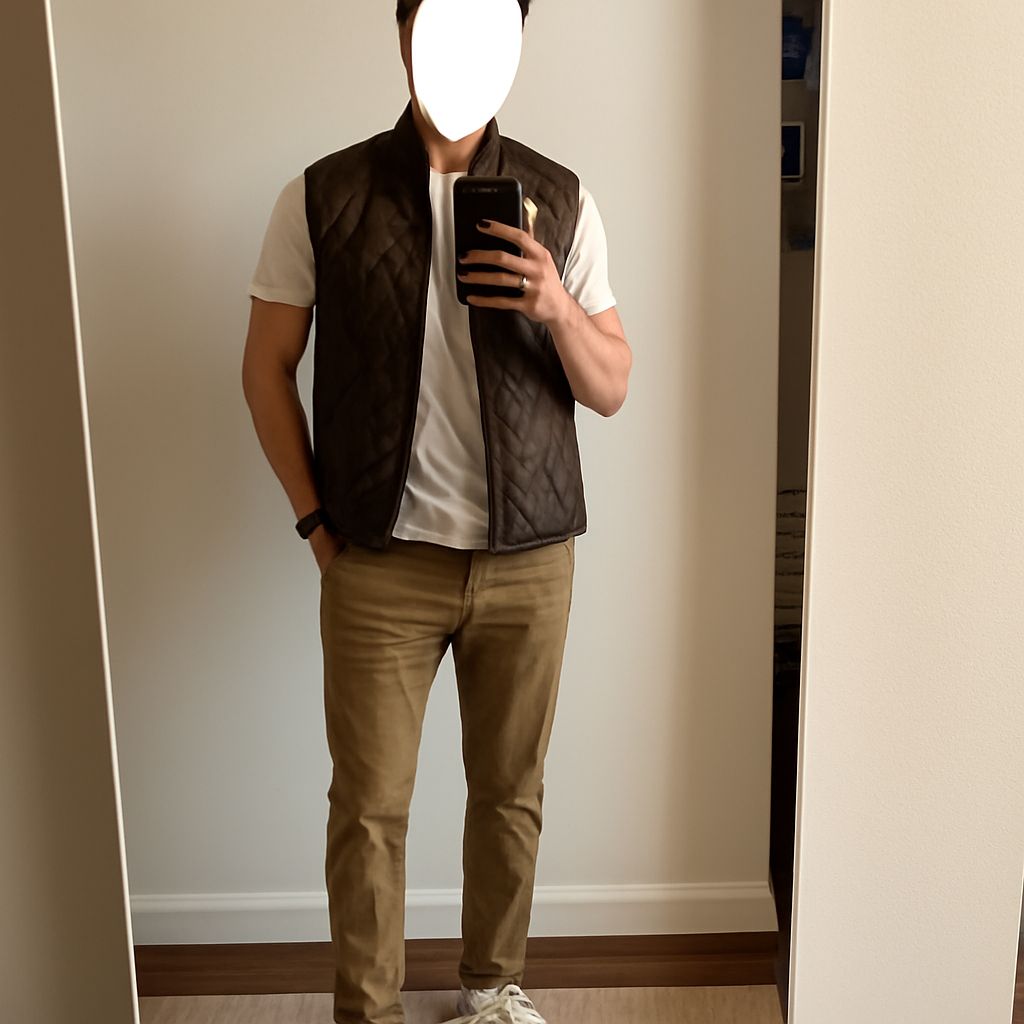
A third combination is a washed cotton vest, plain off-white T-shirt, black jeans, and simple dark sneakers. Here the vest can be worn open over the tee, making the front a visible frame rather than a formal buttoned layer. The colors stay quiet while the contrast between the shirt and dark denim gives the outfit definition.
Wearing a vest with jeans also changes the effect of the jeans themselves. A dark, even wash reads cleaner beside a vest with sharp edges; faded denim and visible texture suit a softer, more casual layer. Heavy distressing draws attention away from tailoring, so it is most coherent when the vest and footwear are similarly informal.
Use a Suit Vest Separately With Care
A suit waistcoat can be worn alone when its cloth, length, and back look intentional. A matte gray vest with a pale shirt and dark jeans may blend well; a glossy satin back and very fine formal cloth will create a stronger contrast. That contrast can be a deliberate styling choice, especially for an evening look, but it is worth seeing from behind as well as from the front.
When deciding how to wear a vest, men can start by looking at the complete outfit rather than the front alone: the shirt hem, vest back, denim rise, and shoes all contribute.
For a more formal result, select a smooth dark vest, an ironed shirt, dark unbroken denim, and leather loafers. For a relaxed result, choose a textured cotton or tweed vest, a soft shirt or T-shirt, medium-wash jeans, and boots or clean sneakers. In either case, the best combination is the one whose fit and materials make the intended level of formality clear.