A bridge of metal can turn two neighboring fingers into one broad line of jewelry. A ring worn across two fingers has to fit each finger separately, while leaving enough room for the hand to close and open. The visible shape matters, but so does the space beneath it: a beautiful bar that presses into the web of the hand will be difficult to wear for long.
Double Finger Ring Construction and Movement
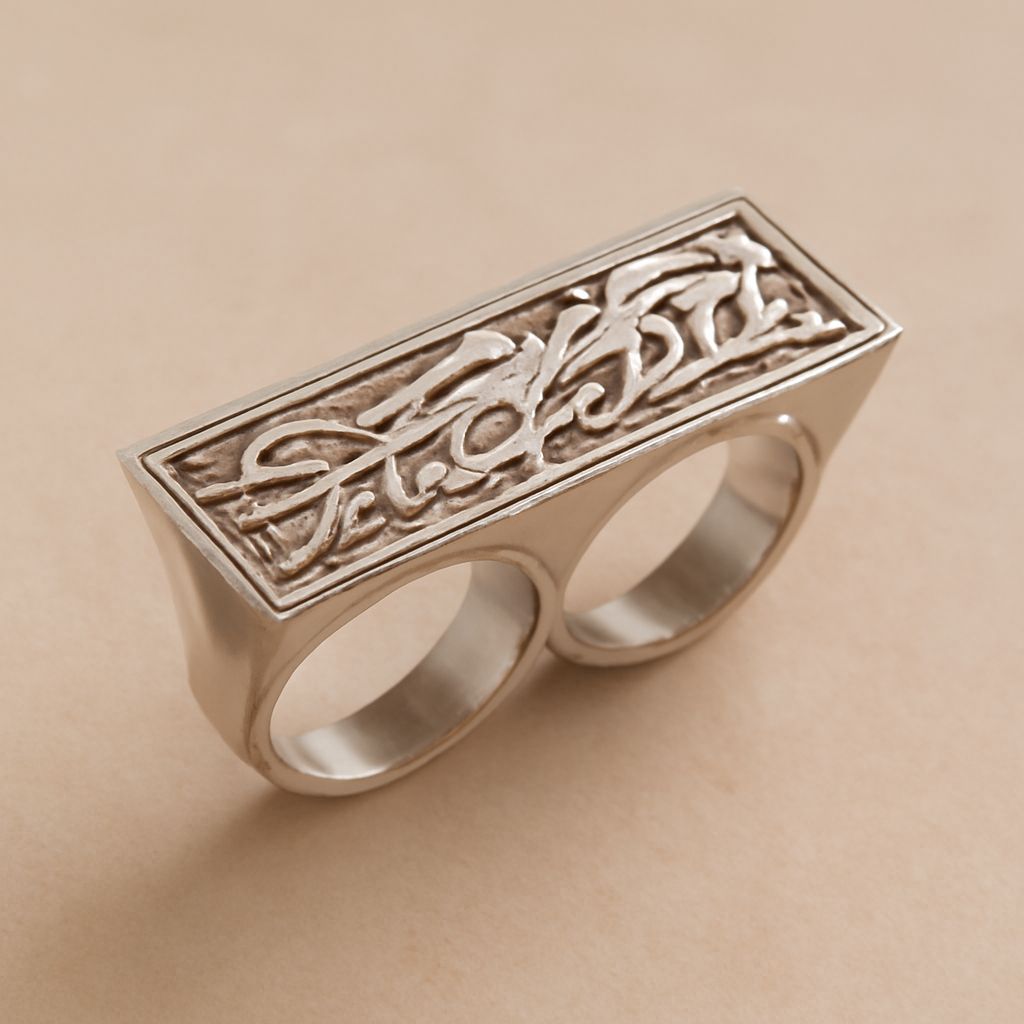
A double finger ring usually joins two bands or loops with a decorative bridge. A rigid bridge holds its shape and gives a clean, continuous silhouette across the hand. Its fixed spacing must suit the wearer’s fingers, especially when they bend. A chain or hinged connection allows more movement, though it can shift position and may catch on fabric more easily.
The 2 finger ring may carry a flat plate, a row of stones, or an open design that follows the fingers. A raised ornament may clear a joint but catch on a sleeve. A low bridge is easier to place under a cuff; its underside still needs clearance when the hand bends.
2 finger rings differ in where the bridge rests. A short bar near the finger bases creates a compact accent, while a longer shape reaching toward the knuckles makes a stronger visual line. If the decoration crosses a joint, that joint must still bend without the edge digging in. Rounded edges and a smooth underside reduce points of pressure; inspect the joints between the bands and the bridge for rough seams.
Measure both fingers and their spacing
The sizes of two adjacent fingers need not match. Measure the intended fingers on the hand that will wear the piece; the same fingers on the other hand may fit differently. A jeweler can measure each finger with a ring-sizing set. For an approximate measurement at home, place a well-fitting ring from each intended finger on a millimeter ruler and measure its inside diameter across the center. Compare each diameter with the seller’s US size chart.
The Gemological Institute of America advises measuring at different times because finger size can change with temperature and activity. The ring must also pass over the knuckle. If the knuckle is noticeably wider than the base, measure there too and use a sizing set to find a band that passes over it without spinning excessively once in place.
For a ring for two fingers, record the spacing as well as the two sizes. Rest the hand flat and relaxed, with the chosen fingers naturally together. Measure from the center of one finger to the center of the next at the height where the bands will sit. For example, a 21-millimeter center-to-center measurement describes the spacing in that resting position; it is a comparison point, not a standard size. Ask the maker whether the stated spacing is measured center to center or between the inner edges of the bands. For two-finger rings, circumferences alone cannot describe that distance.
Try the fit in motion
A 2 finger ring should slide over both knuckles without forcing either finger into an awkward angle. Once seated, the bands should feel secure without pinching. The fingers should be able to separate slightly, and the bridge should clear the skin between them rather than press down on it.
A practical fitting sequence reveals more than a still photograph:
- Rest the hand open, then make a loose fist and straighten it again. Notice whether the bridge pulls either band sideways.
- Hold a pen, lift a phone, and grasp a door handle. The piece should not prevent a natural grip or press sharply against neighboring fingers.
- Turn the hand over and inspect the underside. Check that raised edges stay clear as the hand moves.
- Remove the piece gently. If a band leaves deep pressure marks, causes tingling, or requires force to come off, the fit needs attention.
Two-finger rings with open or adjustable bands may offer some flexibility, but each design has its limits. Repeated bending can strain a band or a stone setting; adjustment is best made by the maker or jeweler using the construction’s intended method. A double finger ring made to order can accommodate different band sizes and spacing, which is especially useful when ready-made proportions pinch one finger while the other feels loose.
Choose a line, finish, and role in the outfit
A horizontal bar draws the eye across the hand. With a tailored jacket or a plain sleeve, a polished bar can provide a deliberate point of light. A darkened or matte finish makes the same shape quieter and brings its outline forward rather than its reflection. A curved bridge can echo a draped cuff, while an angular plate can repeat the lines of a structured collar or bag.
For a stage look, scale changes how the piece reads at a distance. A broad silhouette may be visible under lighting where fine details disappear; a reflective surface can flash as the hand moves. In a close photograph, the finish and edge become more prominent, so a piece with an interesting texture may work without a large ornament. Clothing should leave the jewelry visible and usable.
Two-finger rings also compete with nearby bracelets and cuffs for attention. A long sleeve that ends just above the wrist leaves the bridge exposed, while a wide cuff can frame it. A ring for two fingers may serve as the main accent, with other jewelry kept smaller; alternatively, matching metal tones can connect several pieces without making their shapes identical.
Care for the connection
Set the piece down separately so the bridge and any stones do not scrape against other jewelry. A soft cloth removes surface dust and oils. For gemstones and treatments, cleaning depends on the material: GIA’s care guidance notes that ultrasonic cleaners can damage some stones or treatments and can loosen settings. A ring for two fingers with an unfamiliar finish or glued decoration needs the maker’s cleaning instructions before it is immersed.
Choose the piece that seats comfortably on both fingers and leaves the hand free to bend, grip, and open without pressure from the bridge.