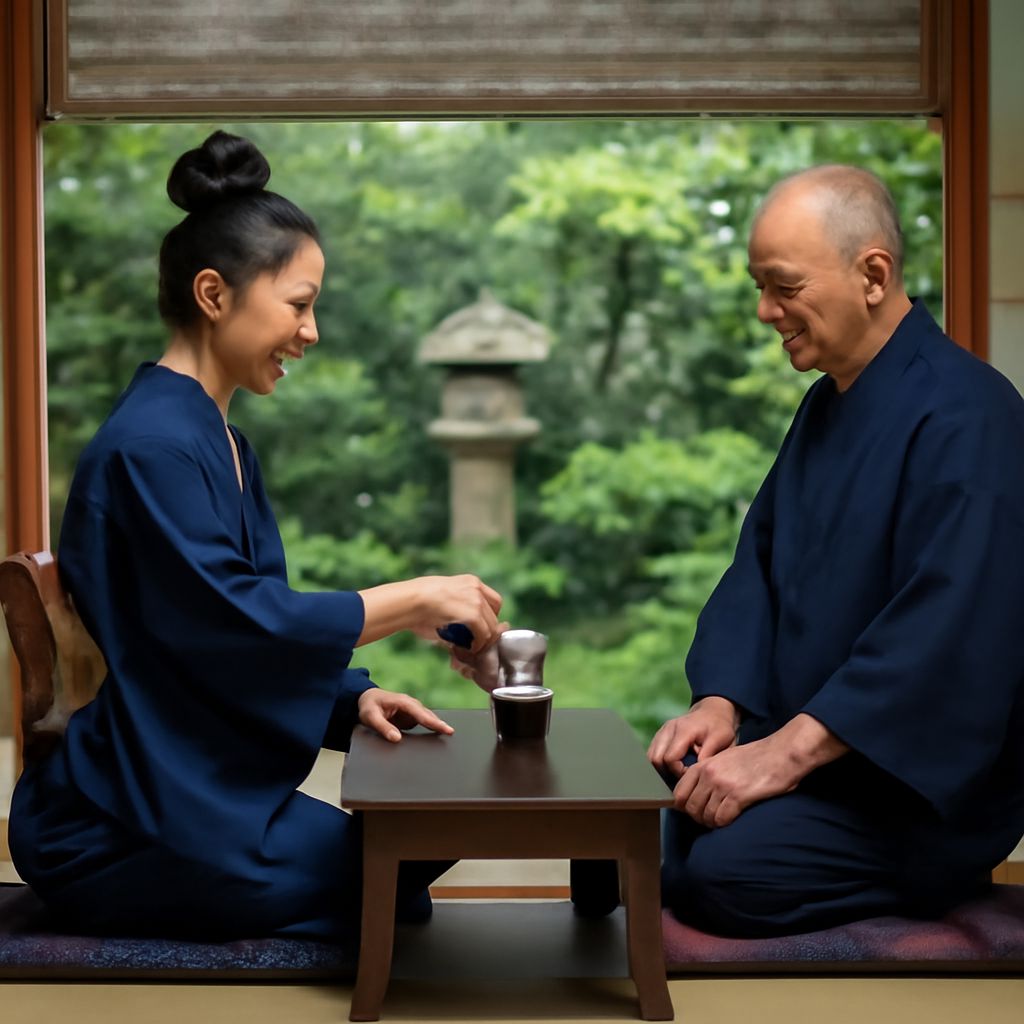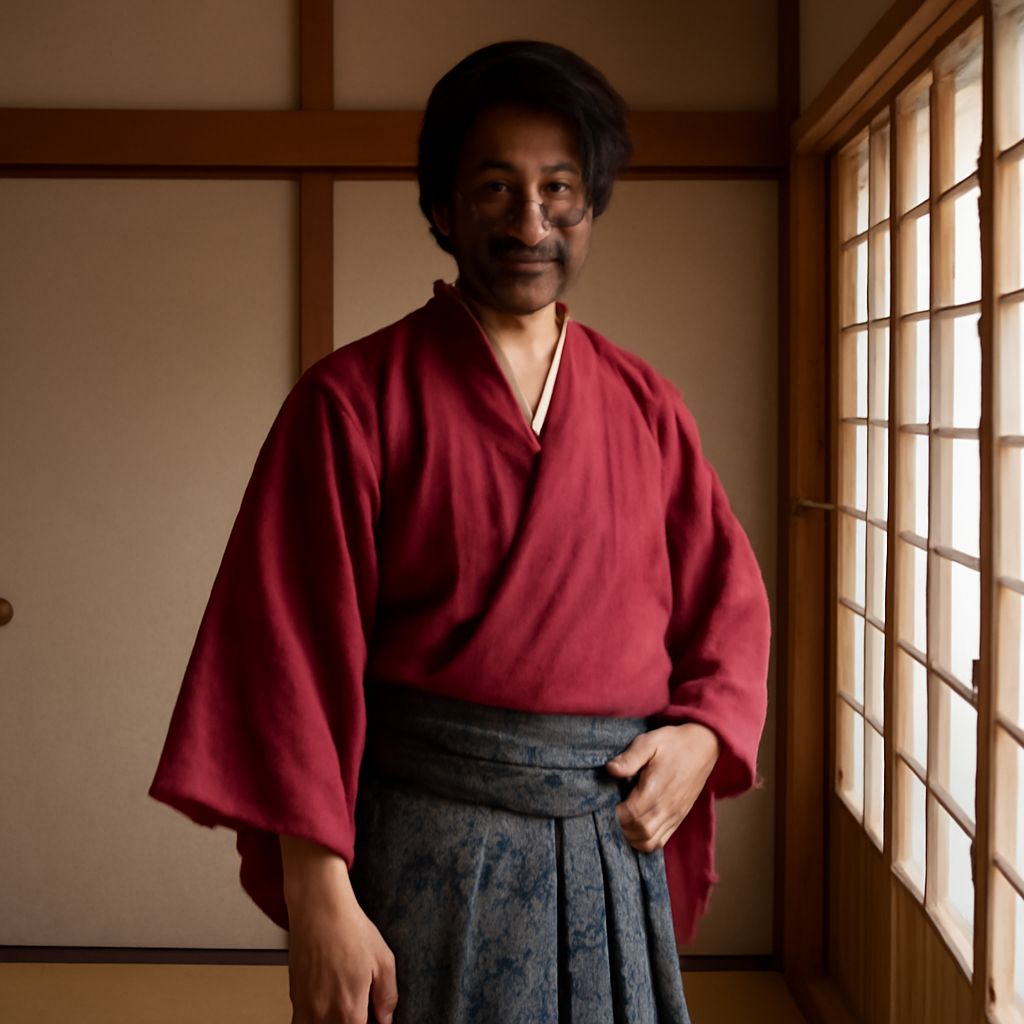
A japanese male kimono is easiest to identify and assemble when fit and layers come first. Choose by measured shoulder-to-hem length, wrap width and sleeve reach—not by a seller’s small, medium or large label. Then use the juban, obi, haori and hakama to match the occasion.
For a men’s japanese kimono, the goal is a clean, comfortable wrap rather than a close, tailored fit. Check the garment’s actual measurements before buying.
Japanese Male Kimono: T-Shaped Construction and Men’s Styling
T-shaped construction and proportions
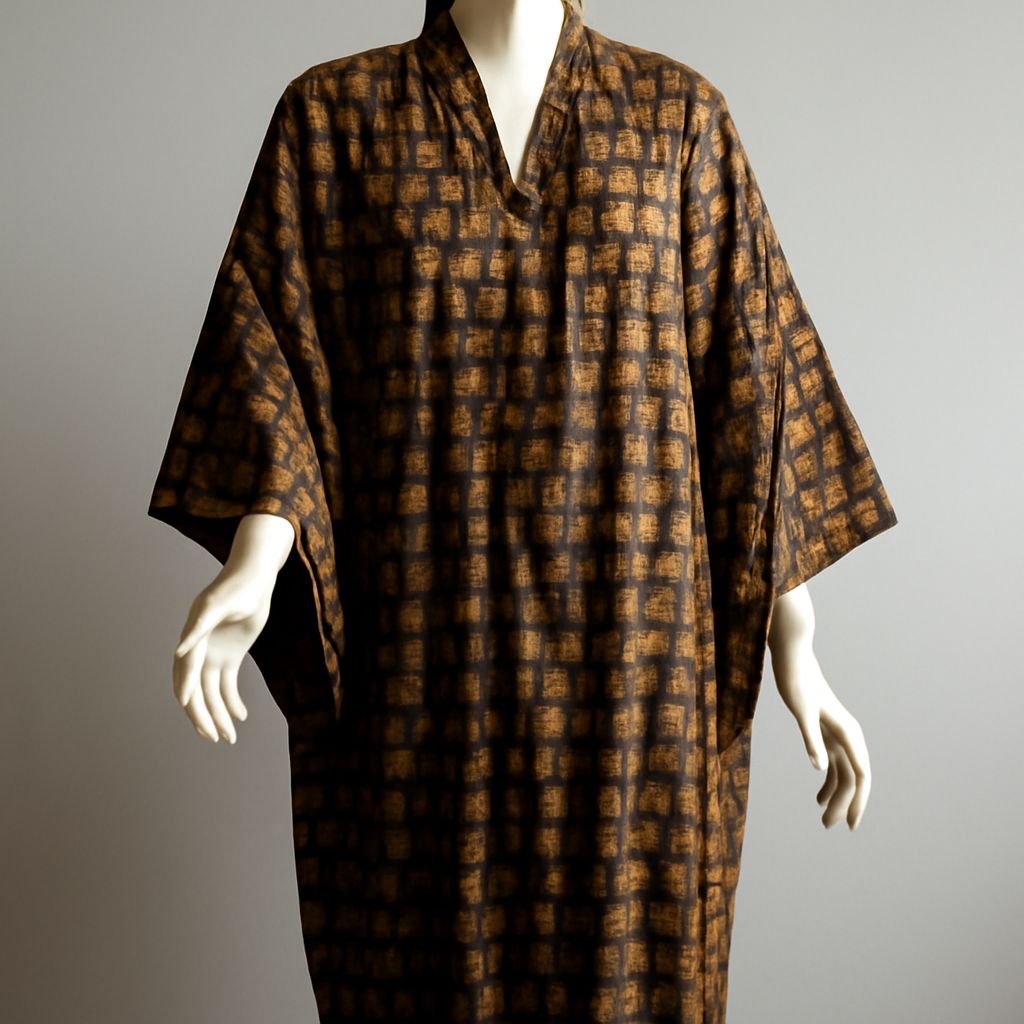
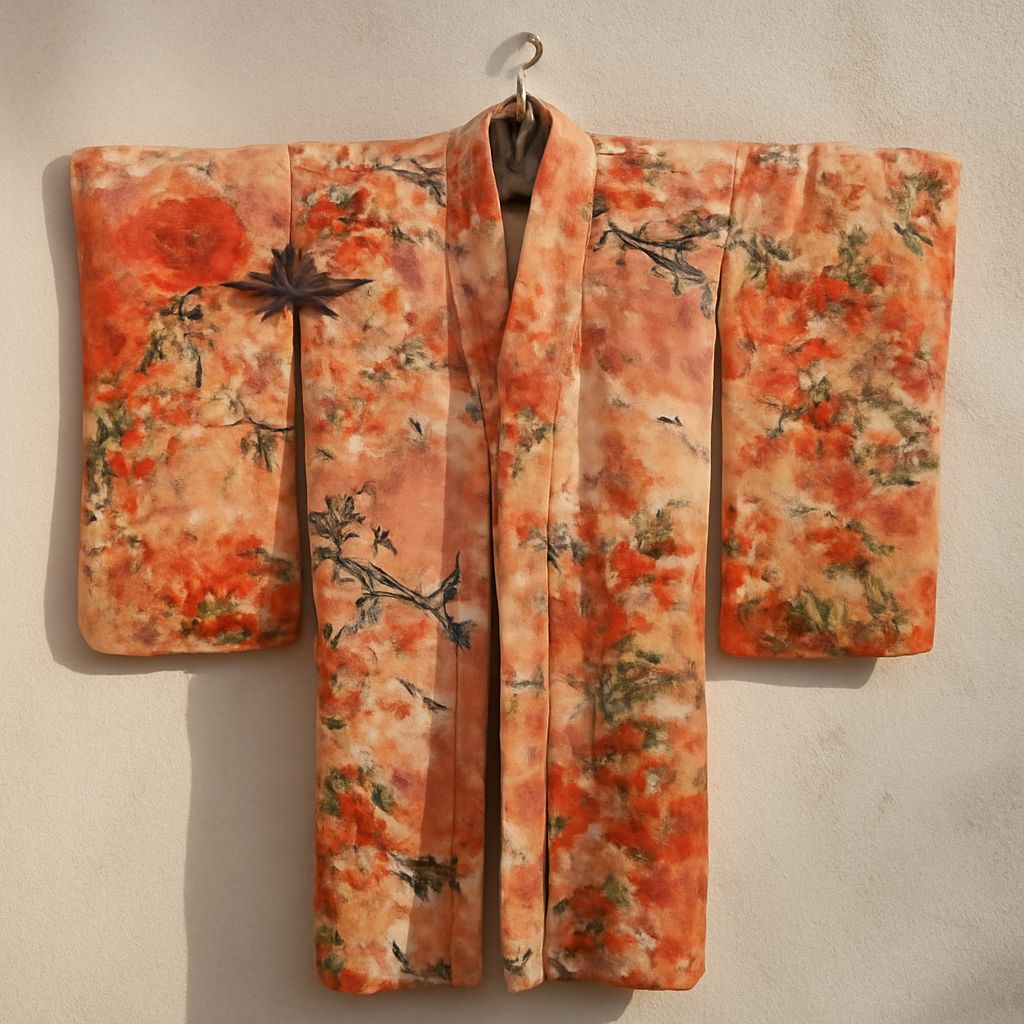
A kimono uses a simple T-shaped construction: straight body panels meet straight sleeves, with little shaping at the waist. The front overlaps right over left, and a sash holds the garment closed. The body should hang vertically, without pulling across the chest or hips.
How men’s styling often differs
Men’s styling commonly uses shorter sleeves, a lower and narrower obi, and a straighter silhouette. The kimono is usually worn at its full length, without the pronounced waist fold used in many women’s outfits. Darker colors and subdued patterns are also common, but modern male kimonos can use brighter fabrics and varied styling.
Measure Male Kimonos by Length, Width and Sleeve Fit
Take measurements with light clothing on. Compare them with the garment’s stated dimensions, not just its size name.
- Length: Measure from the shoulder near the neck to the hem. For men, the hem normally falls at or slightly above the ankle, with no bulky pooling.
- Wrap width: Compare the full panel width with your hip or seat measurement. The fronts should close comfortably and leave roughly 10–15 cm of overlap.
- Shoulders and sleeves: Compare shoulder width across the back. With arms relaxed, the sleeve should reach around the wrist, while the underarm remains loose enough for layering.
When between measurements, prioritize enough width for the overlap and enough length to cover the body. A small amount of extra sleeve room is easier to manage than a short hem or exposed front.
Layer a Men’s Japanese Kimono with Juban and Narrow Obi
Dressing order
- Put on a light underlayer, such as a hadajuban, if desired.
- Wear the juban or nagajuban and secure it with a thin tie.
- Put on the kimono, keeping the right front beneath the left, then secure it temporarily.
- Wrap the obi around the waist or hips and tie the knot securely at the back or slightly to one side.
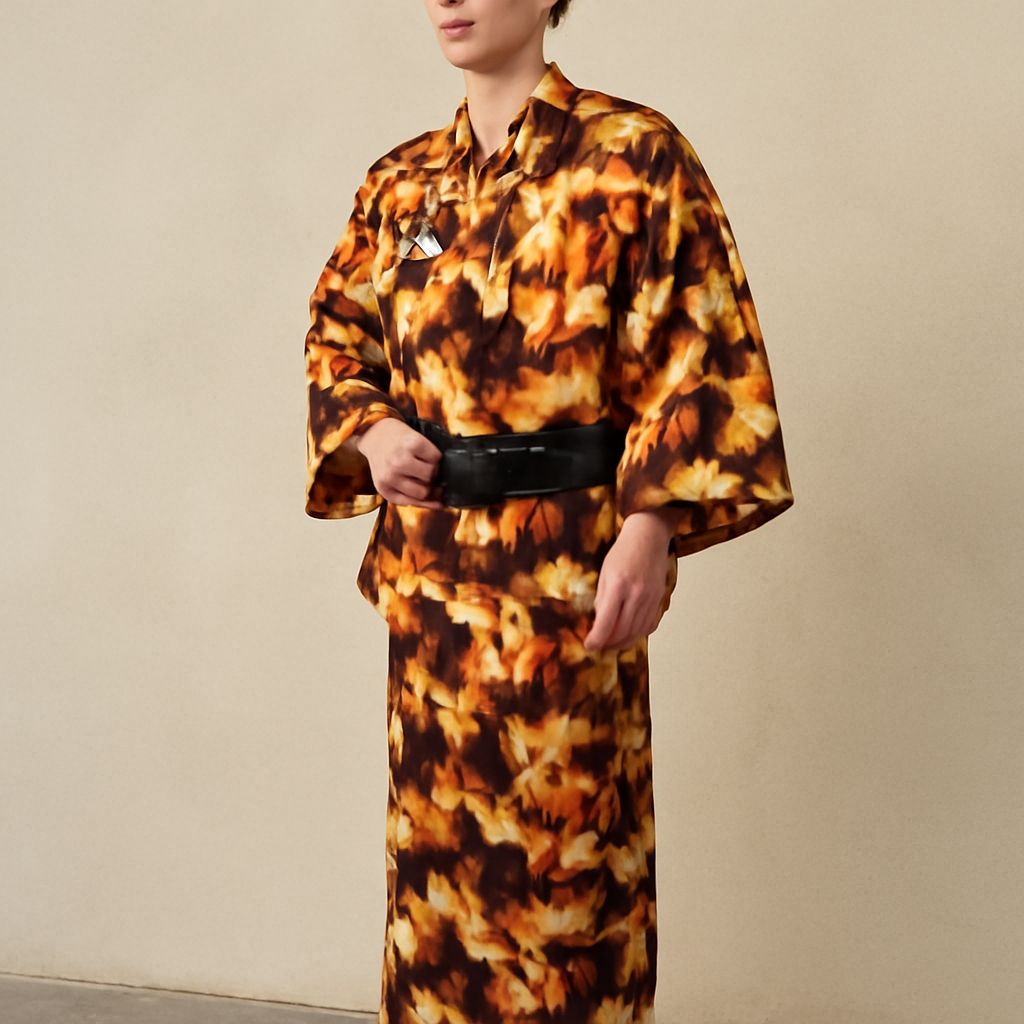
A men’s kaku obi is typically about 8–10 cm wide, far narrower than many women’s obi. Its slimmer profile suits the straight male silhouette and allows a haori or hakama to sit comfortably over it. A soft heko obi gives a more relaxed, casual finish.
Set Formality with Crests, Fabric, Haori and Hakama
Casual-to-formal signals
Fabric is a major signal. Silk, subdued color and restrained patterns generally look more formal; cotton, linen and wool usually suit everyday wear. A yukata is especially casual and is commonly worn without a full juban.
- Crests: One or more kamon raise formality. A five-crest montsuki is reserved for the most formal settings, while fewer crests are less formal.
- Haori: A haori adds structure and polish over the kimono. A plain, dark haori works for smart daytime wear; a crest-bearing haori is more ceremonial.
- Hakama: Wearing hakama over the kimono and obi creates a formal, traditional outfit, especially with a haori. Without hakama, the same kimono can remain comparatively relaxed.
For a ceremony, choose subdued silk, appropriate crests, a haori and hakama. For casual outings, use cotton or wool, a simple obi and no hakama.