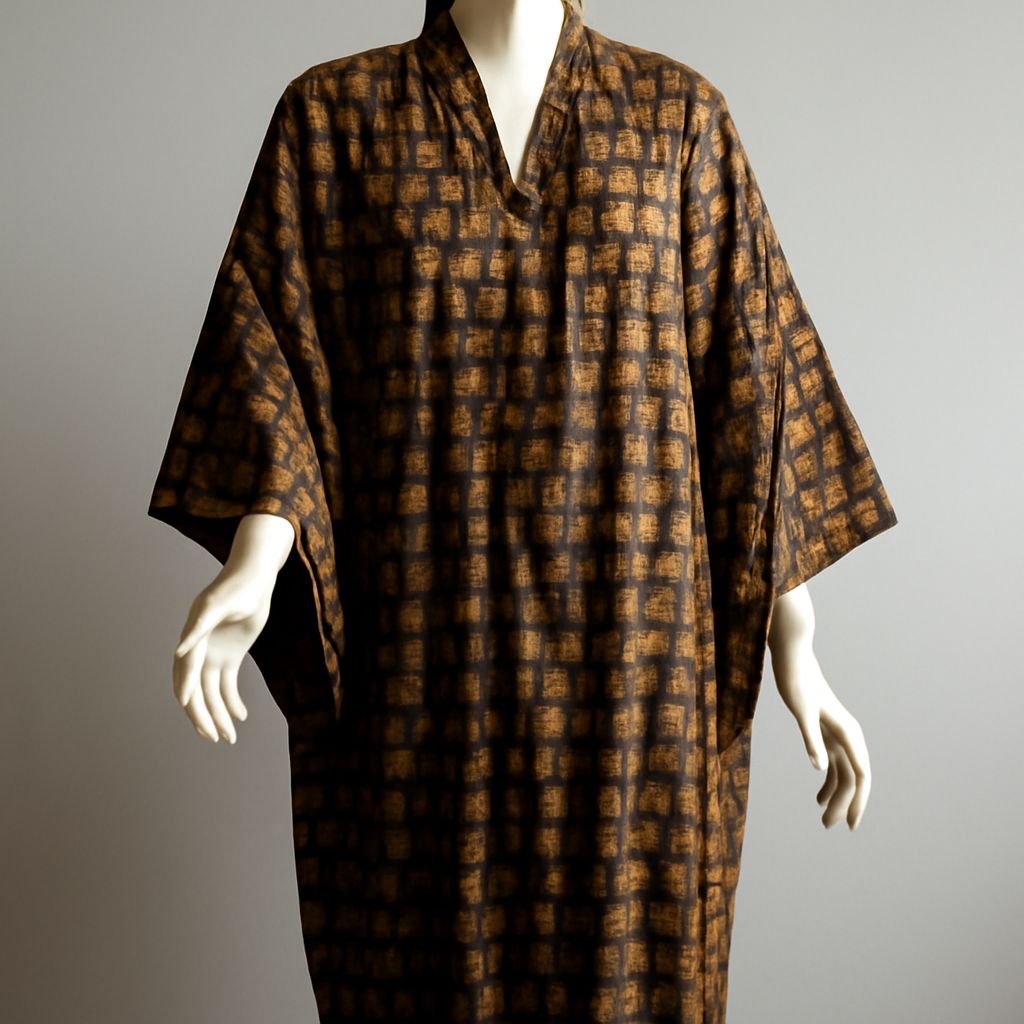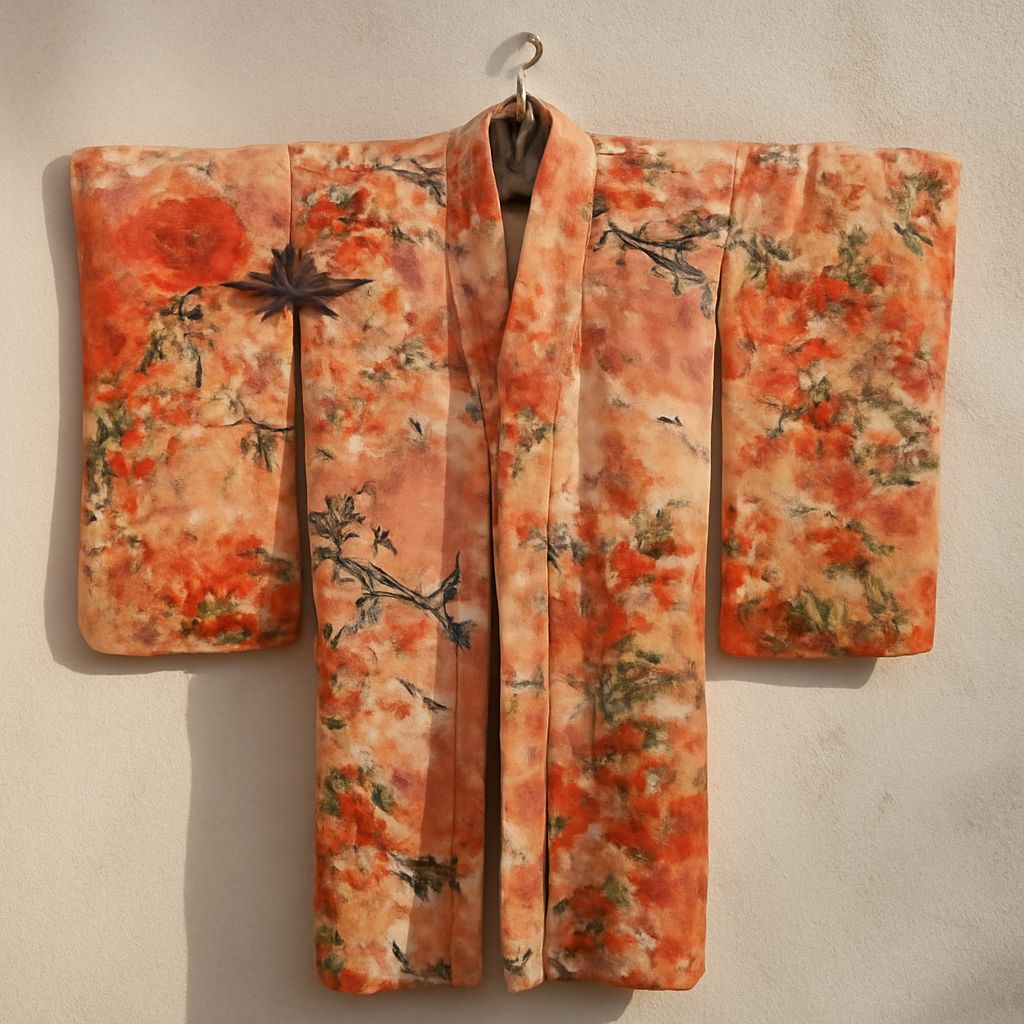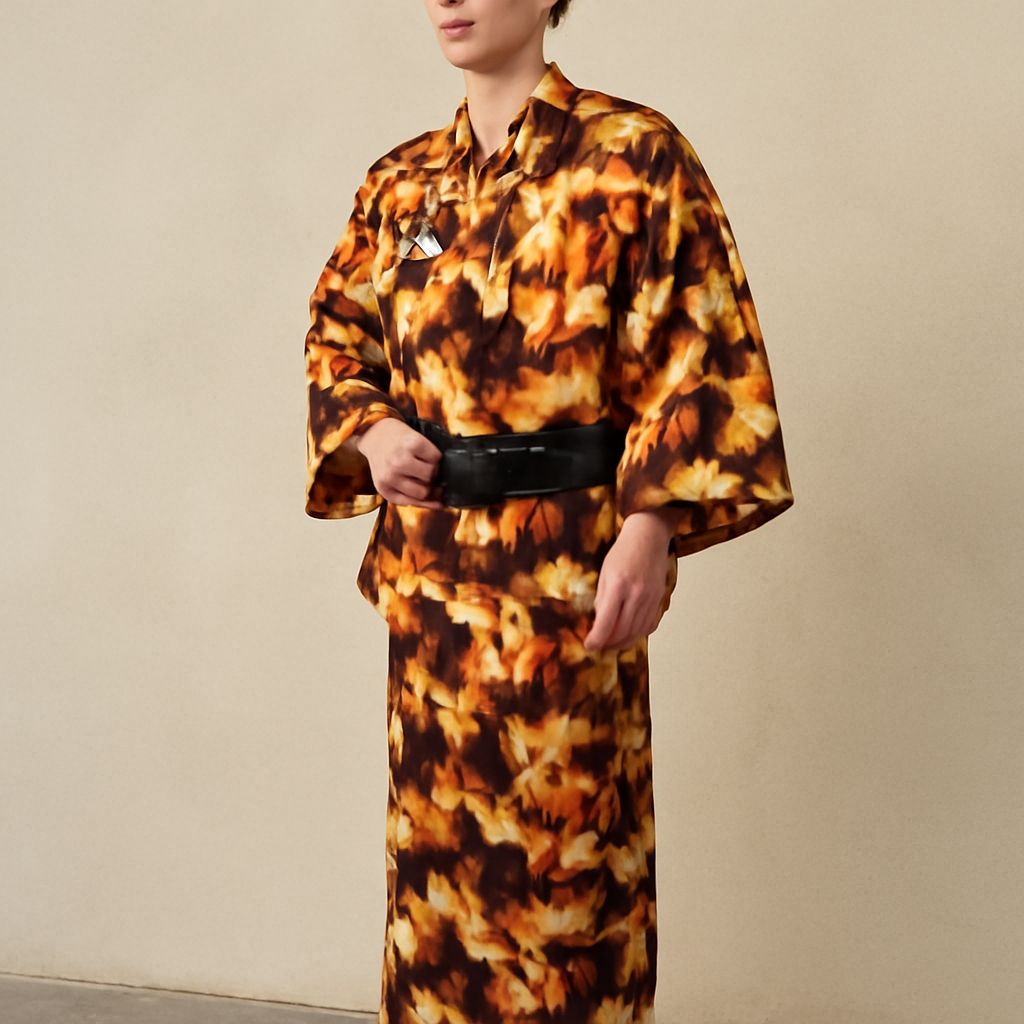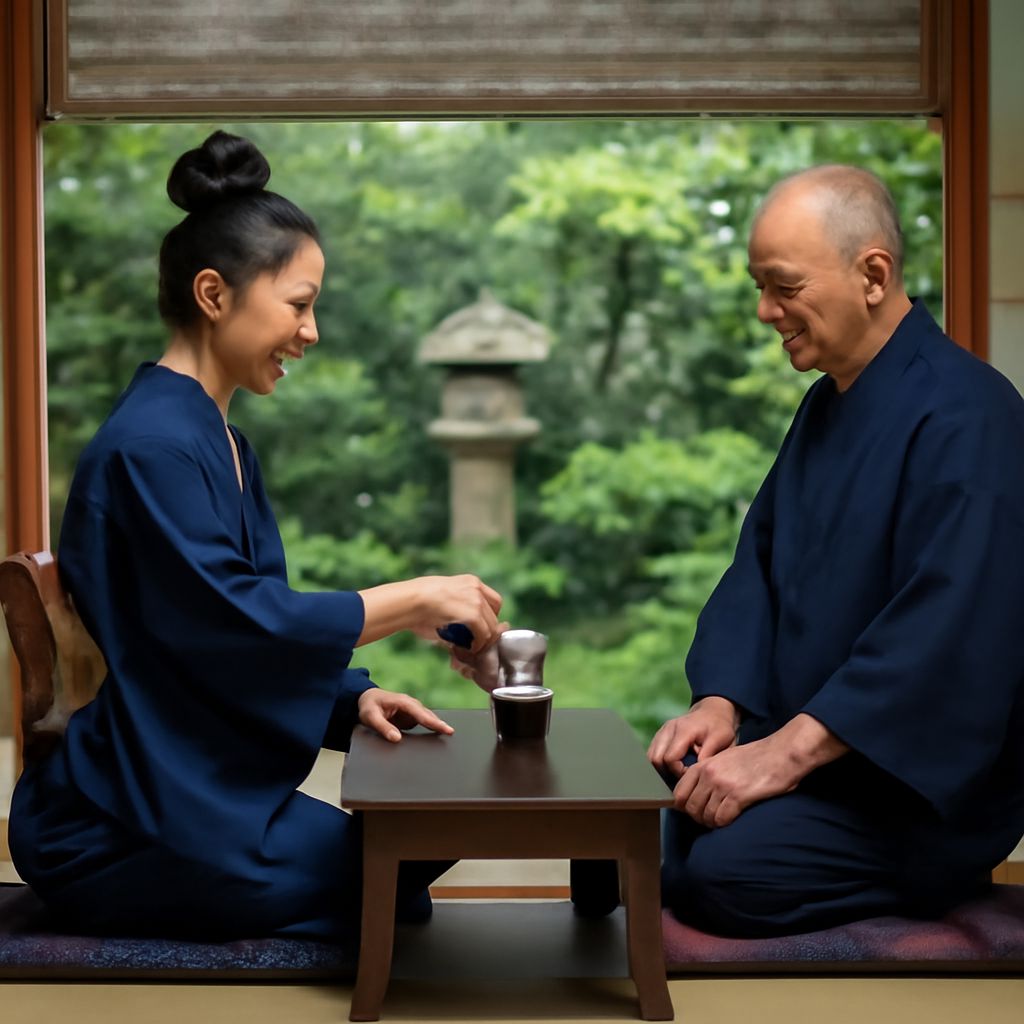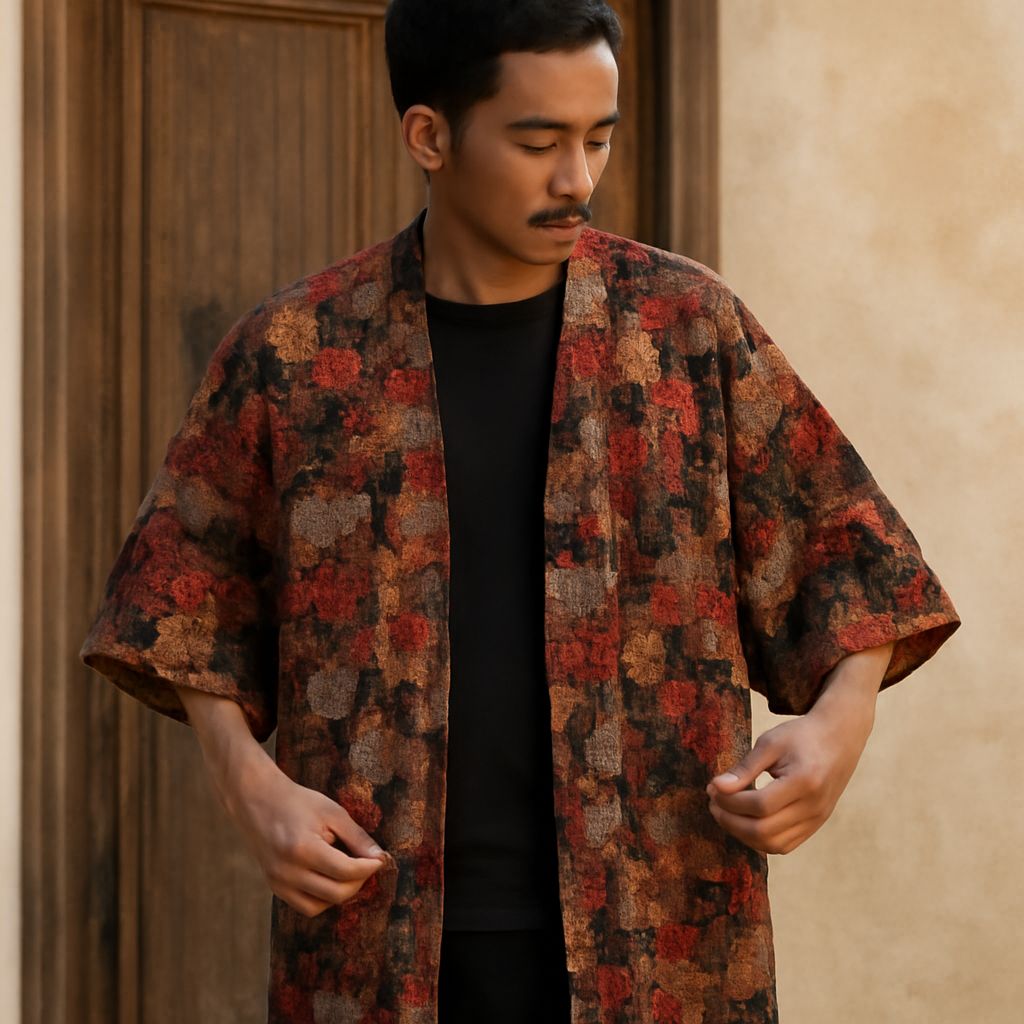
A men’s haori is an open-front jacket worn over a kimono, rather than a complete kimono robe. Its defining features include a short-to-mid-thigh length, a structured collar, wide sleeves, and small himo ties that fasten the front. Current designs may use denim, linen, wool, or technical cloth, but the jacket’s open shape remains its visual anchor.
This distinction helps when choosing a men’s kimono jacket. A modern version should still read as an outer layer: the collar frames the neck, the sleeves hang from the body like kimono sleeves, and the front is not secured by a full wraparound sash. A loose cardigan or robe can look similar without being a haori.
What Makes a Men’s Haori?
Traditionally, a haori sits over the kimono and obi without replacing either garment. Its front edges fall vertically from the neck, while a narrow collar extends down both sides. Broad, relatively straight sleeves follow the kimono tradition, with generous openings rather than close tailored armholes. Himo are short cords attached near the collar; they tie loosely at chest level or hang untied.
Traditional men’s haori often use restrained colors such as black, charcoal, indigo, brown, or deep green, particularly for formal settings. Silk and woven fabrics were common, while linings could hide vivid seasonal or pictorial designs. A black haori with family crests may signal ceremony; an uncrested patterned piece may suit social wear. These conventions changed across periods, regions, and levels of formality, so treat them as clues rather than fixed rules.
How Men’s Haori Are Worn with Kimono
With kimono, the haori is an outer jacket for leaving the house, visiting, attending performances, or completing formal dress. Put on the kimono and obi first, then place the haori over your shoulders. Let the collar lie flat and keep the front edges even. Fasten the himo with a small knot for a tidy finish; in relaxed wear, the cords may remain untied.
The haori generally ends around the hip or thigh, leaving the lower kimono and footwear visible. It is not tied like an obi or pulled tightly across the chest. Choose a quiet haori over a solid kimono for formal dressing; with a plain kimono, a patterned haori can provide the main accent.
Modern Haori Structure vs. Robes and Cardigans
A modern haori keeps the open front and kimono-influenced sleeve shape while adapting the fit for everyday clothing. It may be shorter, longer, lightly tailored, or finished with pockets, snaps, or an inner tie. Linen and cotton give a relaxed drape; wool adds warmth; denim or nylon creates a sharper streetwear interpretation.
Unlike a full kimono robe, it has a shorter outer-jacket proportion and is not secured with an obi or belt. It is also more specific than a generic cardigan. Cardigans normally have knitted construction, fitted armholes, and a buttoned or open placket. If a garment lacks the haori’s collar, sleeve, and open-jacket cues, call it haori-inspired rather than traditional.
Modern Fabrics, Proportions and Casual Pairings
Use the jacket’s proportions as the styling guide. Keep its front visible, avoid covering the collar with a bulky scarf, and balance a roomy upper layer with a clean lower silhouette.
- Relaxed daytime: Wear a cotton or linen modern haori over a plain T-shirt, straight-leg trousers, and low-profile sneakers. Leave it open, or tie the himo once without flattening the fabric.
- Indigo workwear: Pair a shorter denim haori with an ecru shirt, wide chinos, and leather shoes. A defined collar and hem keep the outfit jacket-like.
- Cool-weather layering: Put a wool haori over a fine-gauge turtleneck or Oxford shirt, then add pleated trousers and boots. Keep the inner layer close to show the haori’s sleeves.
- Traditional-modern mix: Combine a subdued patterned silk haori with a plain kimono, or wear a light version over a minimal shirt and tailored trousers. Let the pattern remain the focal point.