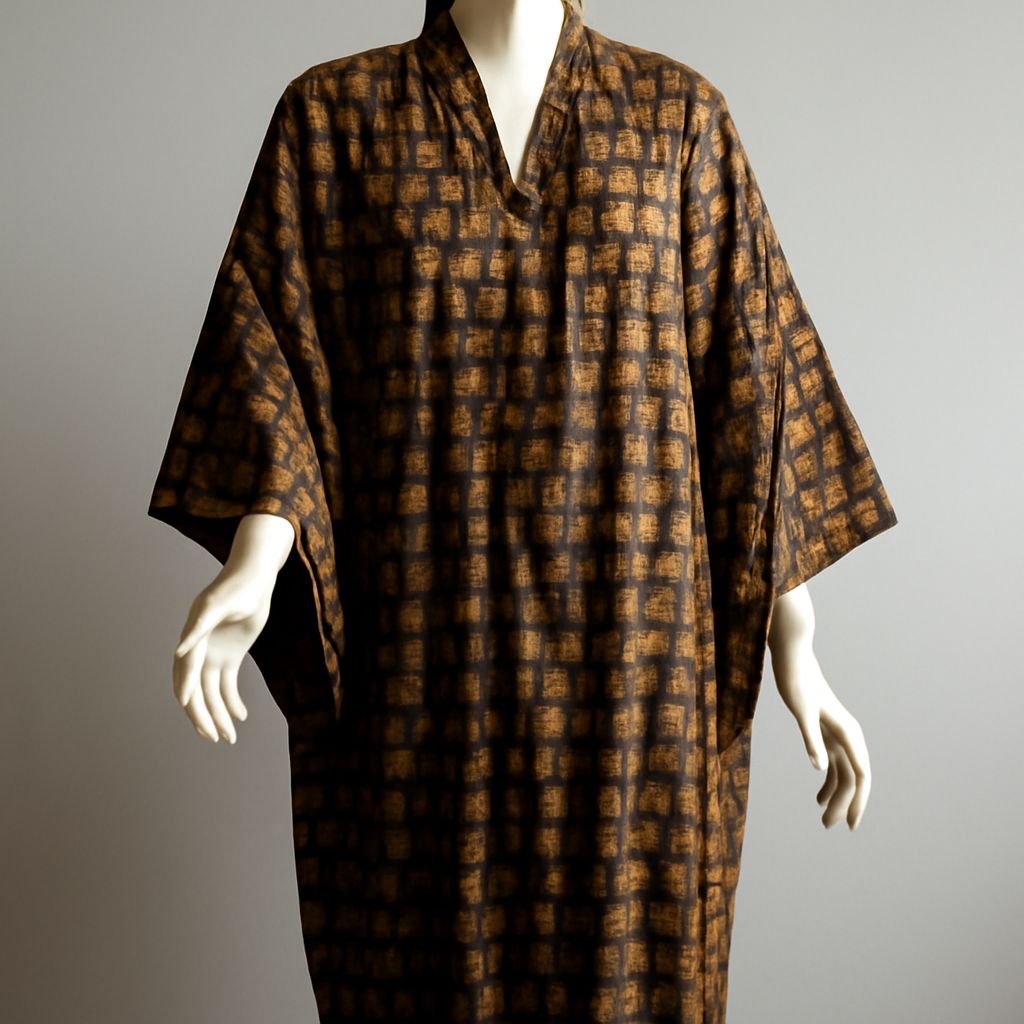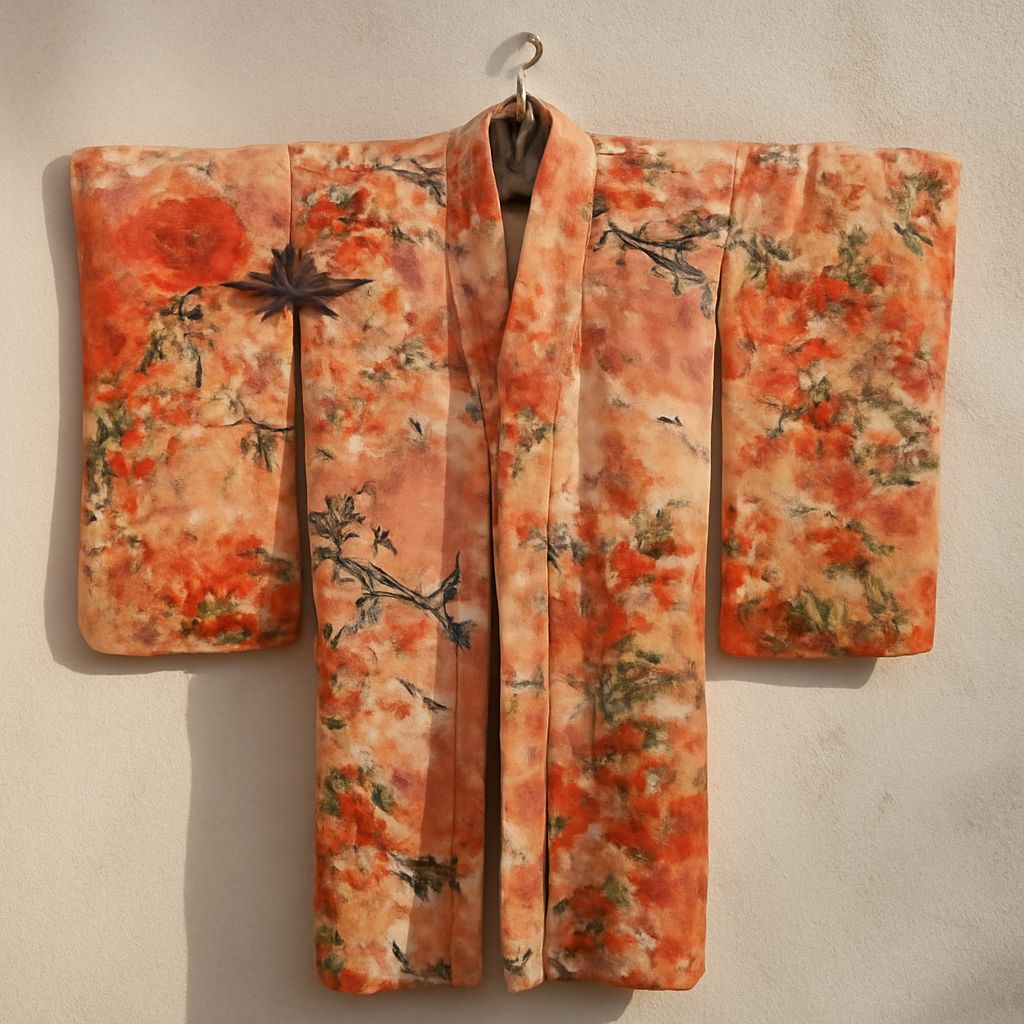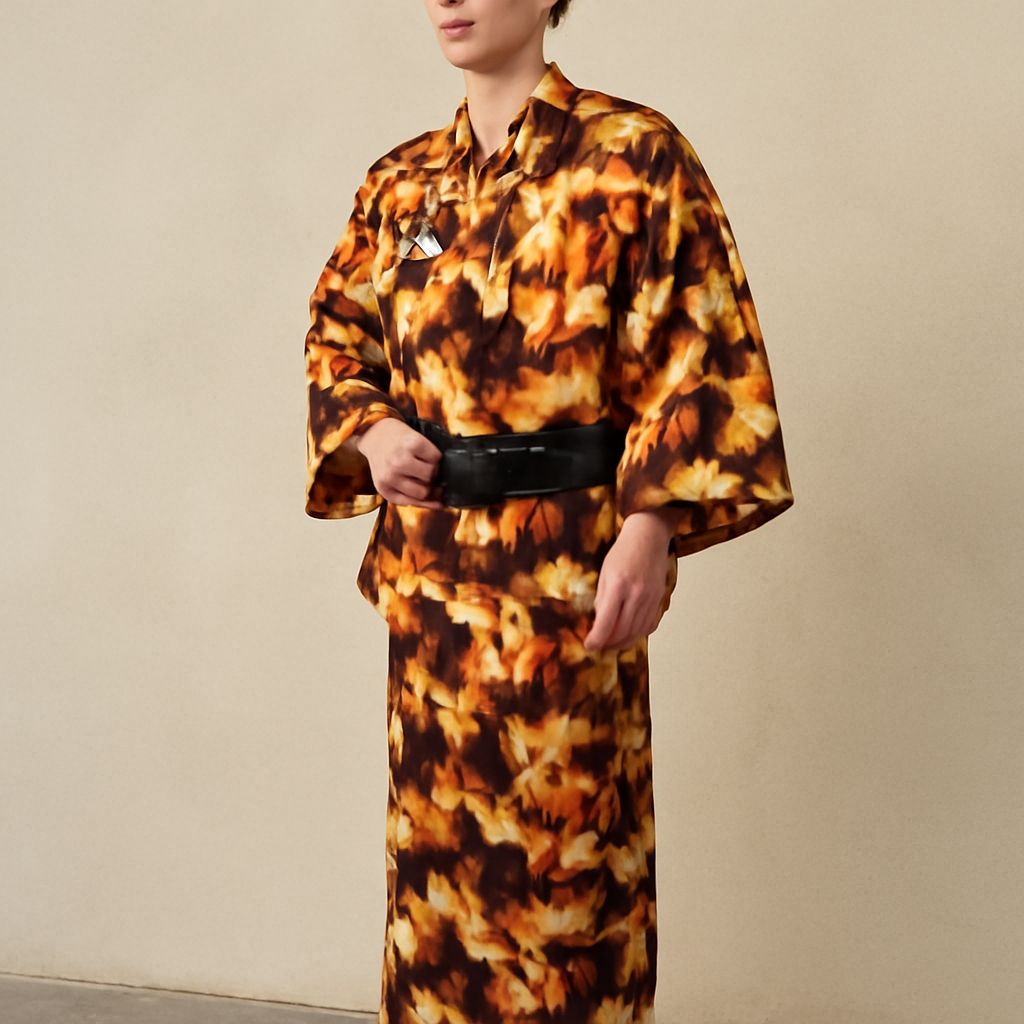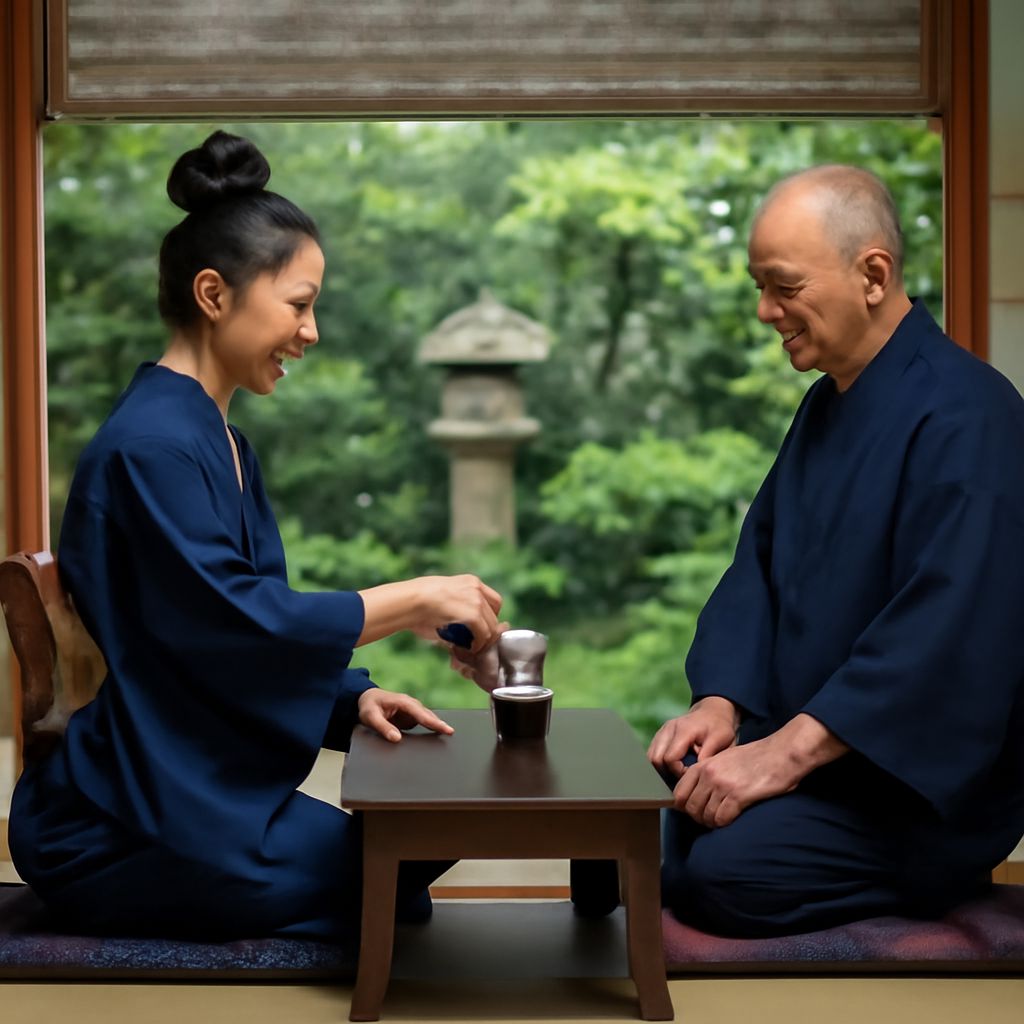
A men’s Japanese robe may mean a traditional kimono, a casual yukata, or simply a kimono-inspired dressing gown. The label alone does not establish authenticity. Construction, fabric, fastening, and intended use matter more than the shop description.
Traditional dress is easiest to understand from the garment downward: first identify the robe, then choose split-toe tabi socks or shoes, and finally select zori shoes at a compatible formality level.
Men’s Japanese Robe: Kimono, Yukata, or Dressing Gown?
How English Shops Use Robe
English-language shops often use robe as a broad retail term for a wrap-front garment. It may describe a genuine kimono, a lightweight yukata, or a Western dressing gown with Japanese-inspired printing and sleeves.
A traditional kimono has a specific construction. A dressing gown may use a similar overlapping front and wide belt, yet still be cut from jersey, fleece, satin, or synthetic fabric. It should not be presented as an authentic kimono solely because a seller calls it a Japanese robe.
Why the Terms Are Not Synonyms
Kimono and yukata are related garments, but they are not interchangeable names. “Kimono” generally refers to a structured traditional garment, while “yukata” identifies a lighter, usually unlined robe associated with casual summer wear.
“Robe” is an English category word. It can include either garment, plus modern loungewear that only borrows their appearance. Check the fabric, lining, sleeve shape, collar, belt, and stated occasion before buying.
Kimono vs Yukata: Construction and Formality
Kimono Structure and Dress Codes
A men’s kimono uses straight sewn panels, a wrap front, and a relatively narrow sleeve shape. The left front always crosses over the right when worn. An obi or narrower men’s sash holds the layers closed.
Silk, wool, linen, and synthetic fabrics are all possible. Formality depends on textile, color, pattern, lining, accessories, and occasion. A dark, restrained kimono with white tabi and formal zori can suit a ceremony, while a simple cotton or wool version is more relaxed.
Yukata Structure and Casual Uses
Yukata are commonly made from breathable cotton and lack the heavy lining associated with many formal kimono. They are practical for summer festivals, informal gatherings, and traditional inns.
The usual pairing is a casual sash with bare feet in sandals. A yukata can look more dressed-up with cloth tabi and zori, but that combination remains less formal than a complete ceremonial kimono outfit.
Cloth Tabi and Japanese Tabi Shoes
Split-Toe Tabi Socks
Cloth tabi are socks with a separate compartment for the big toe. Their split-toe shape allows the wearer to grip a sandal thong comfortably. Traditional pairs often close with small hooks at the back rather than stretching like ordinary socks.
White tabi are the standard choice with formal kimono. Colored or patterned tabi can work with informal outfits, provided their texture and decoration do not overpower the garment.
Outdoor Jikatabi Shoes
Jikatabi are outdoor footwear, not cloth socks. They have a split toe, a durable rubber sole, and fastenings around the ankle. Farmers, workers, performers, and walkers may use them for grip and flexibility.
Retailers also use “tabi shoes” for modern split-toe sneakers, boots, and jikatabi-inspired footwear. These are separate from the thin cloth tabi worn under zori, even when both share the divided toe.
Zori Shoes: Flat Thong Sandals vs Raised Geta
Formal Kimono Pairings
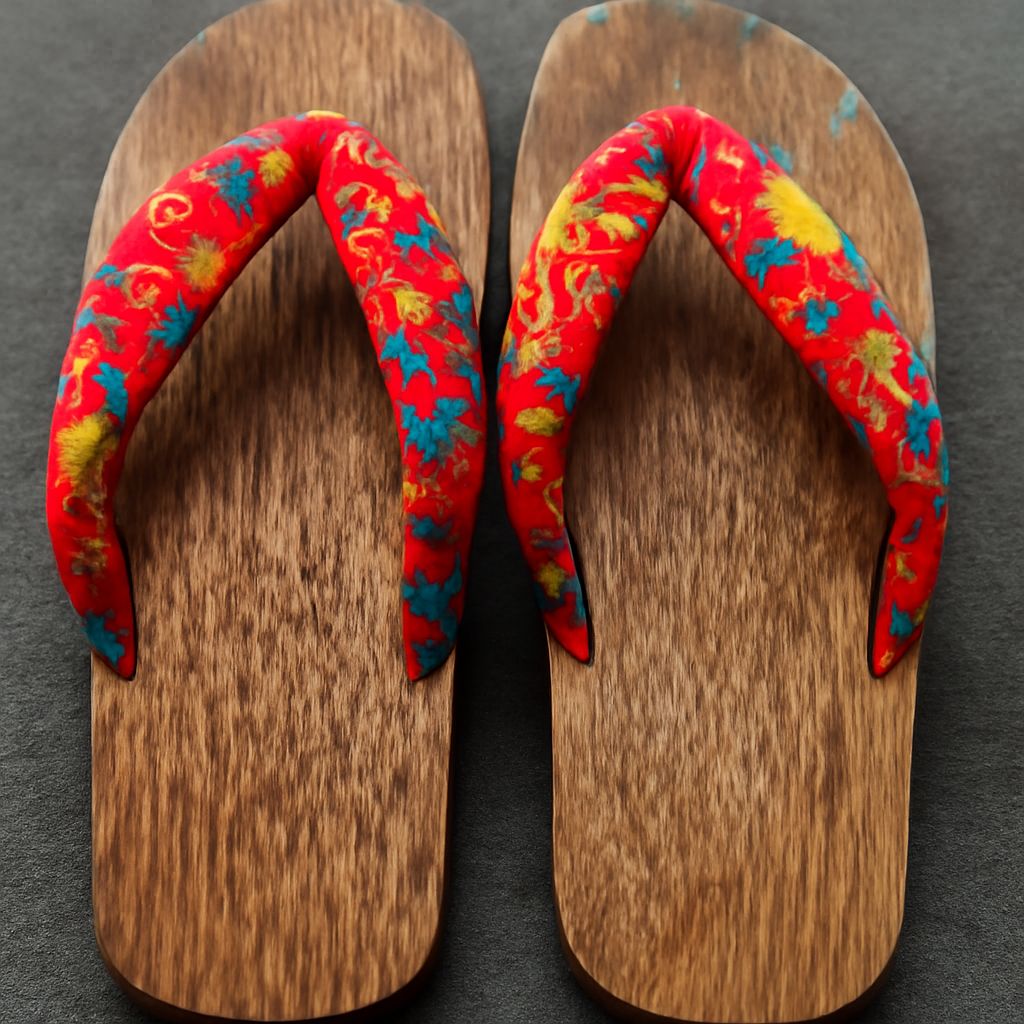
Zori are flat thong sandals. A strap passes between the first and second toes and connects to a flat sole made from materials such as straw, fabric, leather, or synthetic compounds. They may have a small thickness, but they do not have the tall wooden teeth of geta.
For a formal men’s kimono, pair white cloth tabi with understated zori in a finish suited to the obi and garment. This creates a coordinated, polished outfit without confusing zori with raised wooden geta.
Yukata and Casual Pairings
For a cotton yukata, choose casual zori, and wear them barefoot or with informal tabi according to the setting. Geta are another traditional option: their elevated wooden base and teeth lift the foot above wet ground, creating a visibly more rustic summer look.
A practical outfit might combine a dark cotton kimono, colored tabi, and simple zori for an informal dinner. For a festival, a cotton yukata with a casual sash and flat zori or geta is more appropriate than formal white tabi and ceremonial footwear.