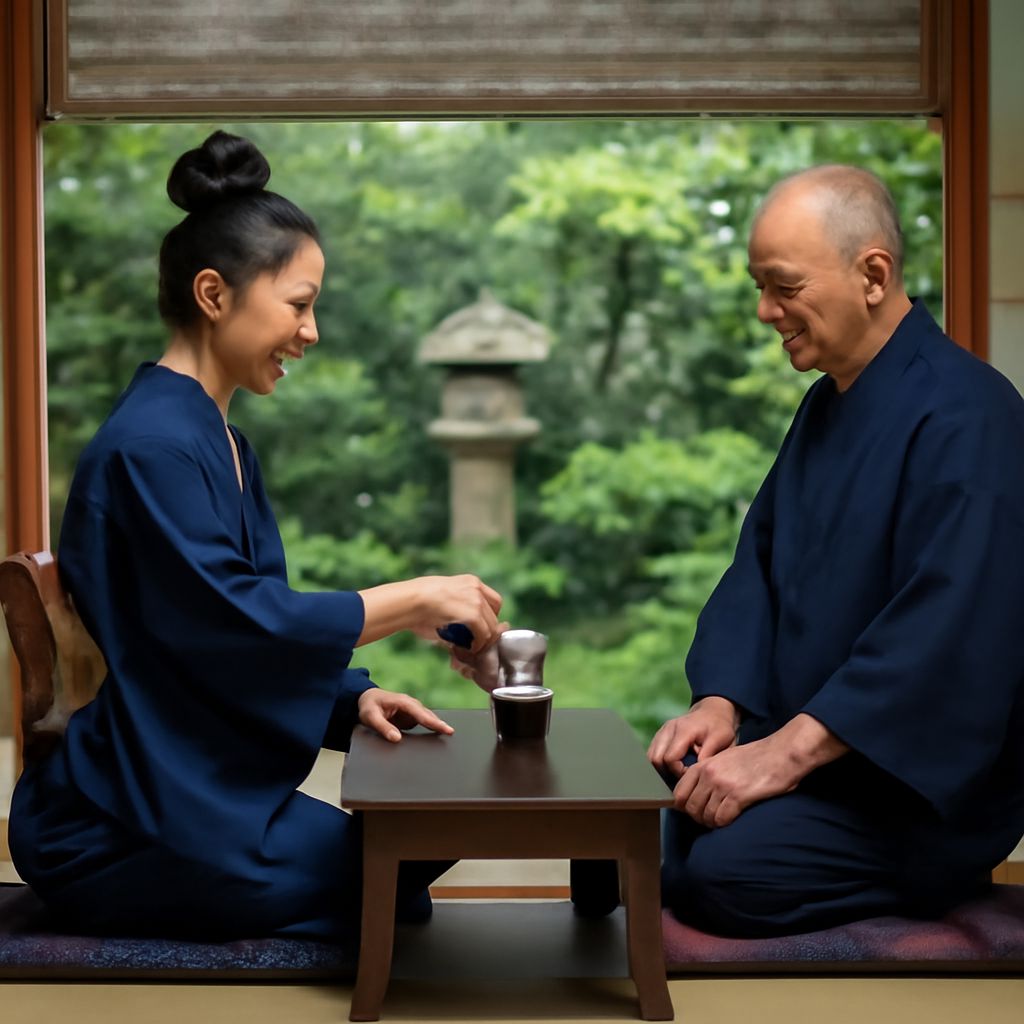
An obi is the wide sash worn around the waist with a kimono or another traditional Japanese outfit. This guide explains what an obi is, how Japanese tabi socks separate the toes, and why hakama are recognized as traditional Japanese pants.
The three pieces serve different visible and practical roles: the obi secures and shapes the upper garment, tabi protect and separate the feet, and hakama create a pleated lower layer.
What Is an Obi? The Kimono Sash
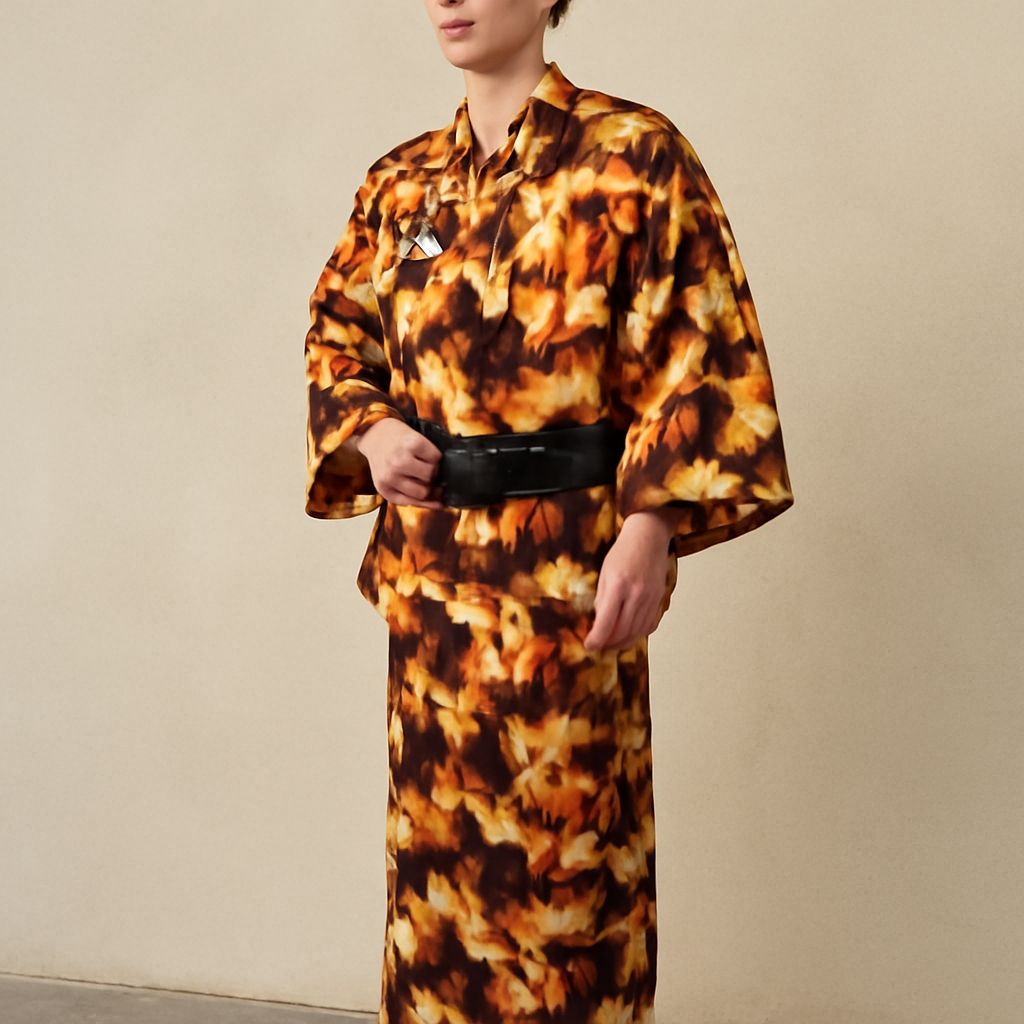
In Japanese dress, an obi is a long, structured sash wrapped around the waist and tied over a kimono. It helps hold the kimono’s overlapping front closed, while also creating the outfit’s strong horizontal band.
Obi vary by occasion and wearer. Formal women’s obi may be wide, stiff, and tied into a large decorative knot at the back. Men’s obi are usually narrower and tied more simply. A yukata, or informal summer kimono, commonly uses a lighter hanhaba obi.
The obi is not part of the kimono fabric itself. It is a separate accessory worn over the robe, sometimes with cords, padding, and a decorative knot. Here, “obi” refers to the sash in Japanese clothing—not a vinyl record obi strip, nor an unrelated OBI acronym.
How Japanese Tabi Socks Work
Japanese tabi socks are split-toe socks. A sewn division separates the big toe from the other four toes, allowing the foot to fit footwear with a thong between the toes. Traditional tabi usually reach above the ankle and close at the back with small fasteners called kohaze.
White cotton tabi are especially associated with formal kimono dress, ceremonies, and traditional performers. Colored or patterned versions are common with more relaxed outfits. Stretch tabi provide an easier modern fit, but retain the characteristic split toe.
Tabi are designed to accompany Japanese footwear such as zori sandals, geta wooden clogs, and setta sandals. The split makes the footwear’s central thong comfortable and secure. Tabi are socks, not sandals themselves. Jika-tabi, by contrast, are split-toe shoes or boots with attached soles.
Hakama and Traditional Japanese Pants
Hakama are pleated garments worn from the waist down, usually over a kimono. They are often described as traditional Japanese pants because some forms have separate leg compartments, though others resemble a divided skirt.
Divided hakama, called umanori, have two leg sections. Their shape supports movement and riding, and they are commonly associated with martial arts, formal wear, and some historical men’s outfits. Undivided hakama, called andon, hang like a wide, pleated skirt without separate legs. Both types are secured with long waist ties.
Not every loose Japanese trouser is hakama. Monpe work trousers, samue trousers, and modern wide-leg pants have different cuts, functions, and histories. Pleats, the waist-tied construction, and the garment’s role over a kimono help identify hakama specifically.
How Obi, Tabi, and Hakama Fit Together
A traditional layered outfit can be pictured from the body outward: an undergarment and nagajuban first, then the kimono. The obi wraps the kimono at the waist. If hakama are worn, they are tied over the kimono and cover much of the obi, leaving its upper edge or knot area visible.
Tabi sit on the feet beneath zori, geta, or another compatible traditional shoe. In words, the assembly is: base layers → kimono → obi → hakama, when used → tabi socks → zori or geta. Without hakama, the obi remains the main visible waist feature; with hakama, it anchors the upper layers beneath the pleated lower garment.