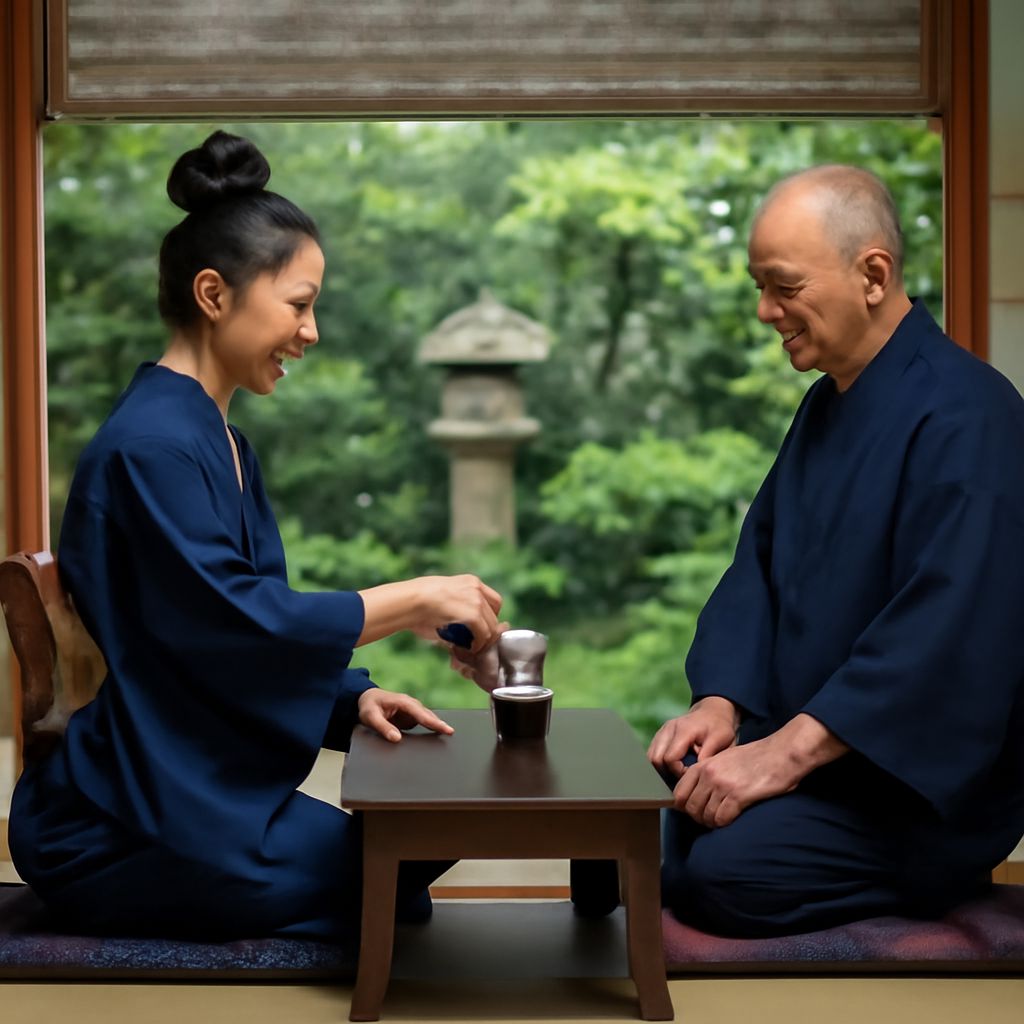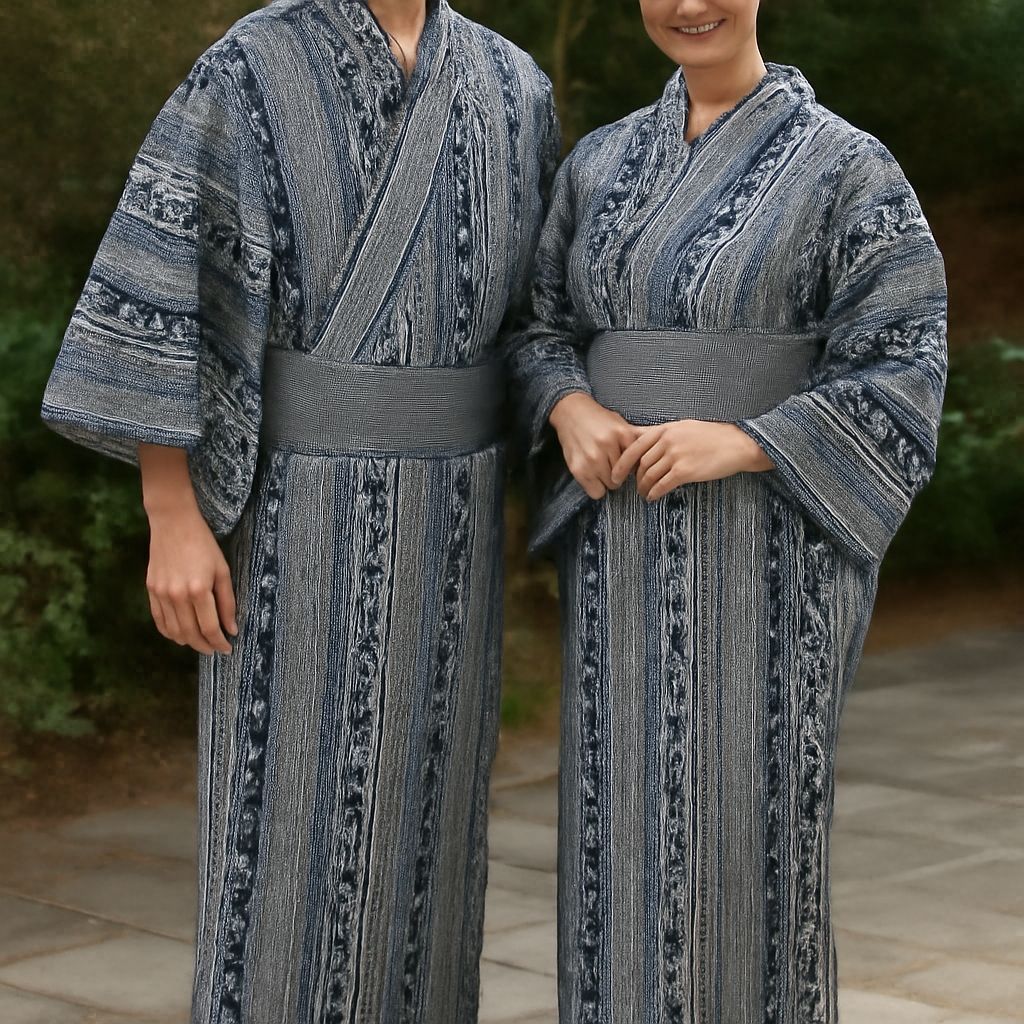
Kimono for men and women share the same basic architecture, but styling conventions often signal gender, age, formality and occasion. The differences appear most clearly in sleeve proportions, motif placement, obi width and the number of coordinating accessories.
These conventions are flexible rather than universal. Period, region, fabric, personal taste and the wearer’s role can all change how a garment looks.
The T-Shaped Construction Shared by Kimono
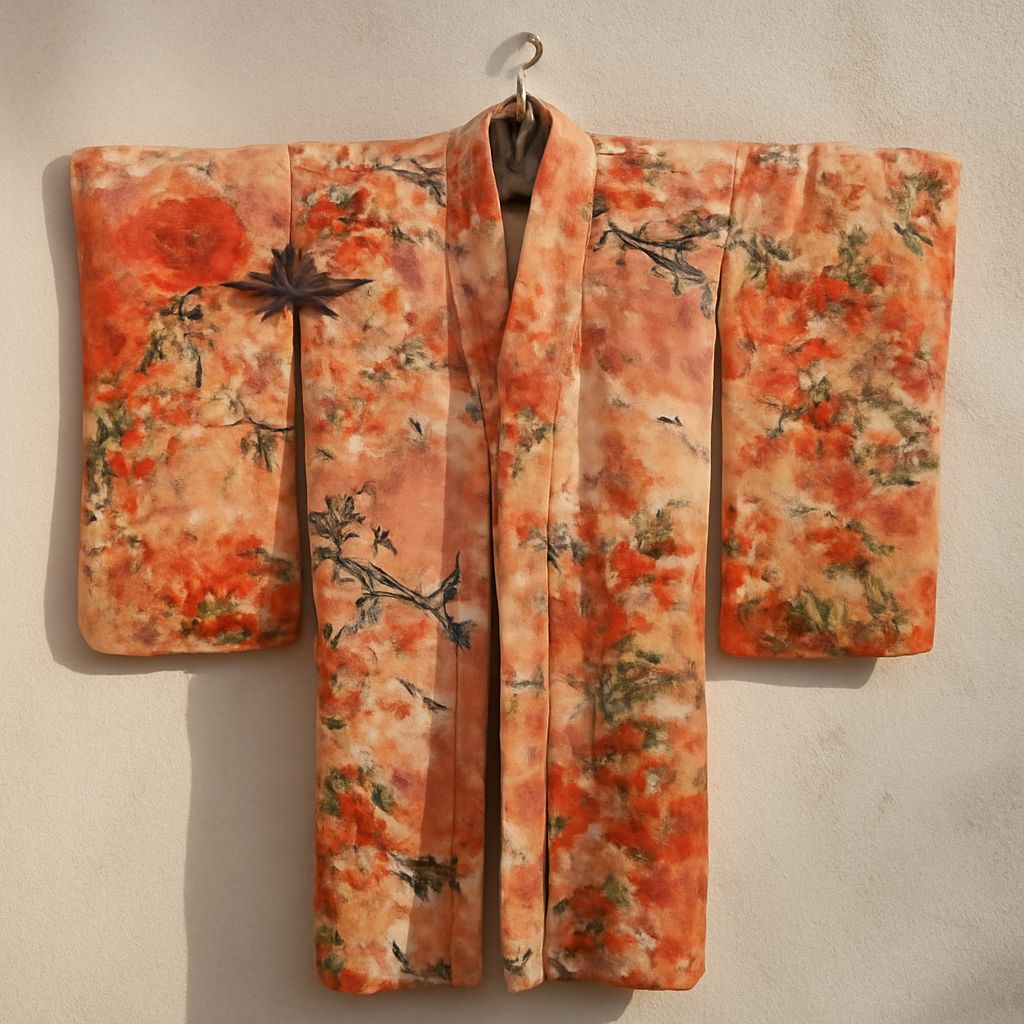
A traditional kimono is built from straight rectangular panels that form a T-shaped garment. The body falls vertically from the shoulders, while sleeves extend at right angles. Long front panels meet at the center and are always wrapped left over right for living wear.
This construction uses the width of woven fabric efficiently. Instead of darts and curved seams creating a close waist, the wearer adjusts the garment with folds, ties and an obi. Length is measured from the nape toward the ankles, while body width, shoulder width and sleeve length determine how the panels sit. Excess fabric is commonly folded at the waist as an ohashori, especially in women’s kimono.
Collars, underlayers and obi establish the final outline. A kimono may therefore look loose before dressing but appear carefully fitted once the layers are secured.
Men’s Kimono: Typical Cut, Color and Motifs
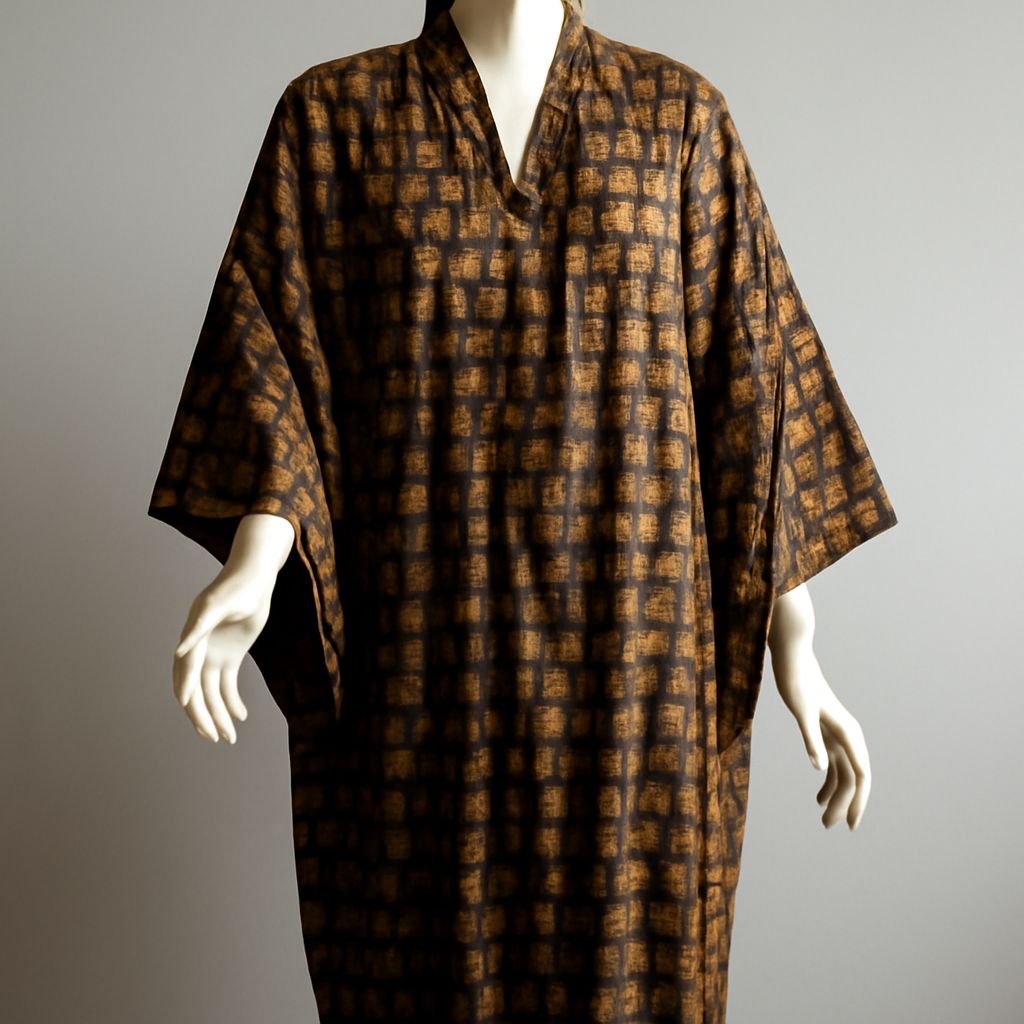
Men’s kimono usually have shorter, squarer sleeves with a relatively small opening where the sleeve joins the body. The sleeve drop is often modest, creating a straighter silhouette. Men’s garments are commonly worn with the hem near the ankle and little visible waist folding.
Formal men’s kimono frequently use black, navy, gray or muted brown, sometimes with family crests. However, casual cotton yukata, silk garments and contemporary designs may use vivid color, checks, stripes or large motifs. Subtle repeating patterns are common, but no color or design belongs exclusively to men in every period.
Silk remains important for formal wear, while cotton, wool, linen and synthetic blends suit everyday or seasonal use. A haori jacket, hakama trousers or a restrained kaku obi can add structure for ceremonies and formal visits.
Women’s Kimono: Sleeves, Fabrics and Motifs
Women’s kimono often show greater variation in sleeve length and shape. Furisode have dramatically long, swinging sleeves for unmarried wearers, while tomesode and many everyday styles use shorter sleeves. The sleeve opening and attachment can also look more pronounced than on a typical men’s garment.
Women’s formal garments frequently use silk, crepe, satin or patterned woven textiles. Motifs may flow across the shoulder, sleeve and lower body, creating a continuous seasonal scene. Flowers, birds, landscapes and geometric designs are popular, but motif placement depends on the garment type and period rather than a fixed gender rule.
Color can be delicate, dark, saturated or highly graphic. Age and formality often influence the scale and placement of decoration more than gender alone.
Obi, Layers and Accessories: Fit and Occasion
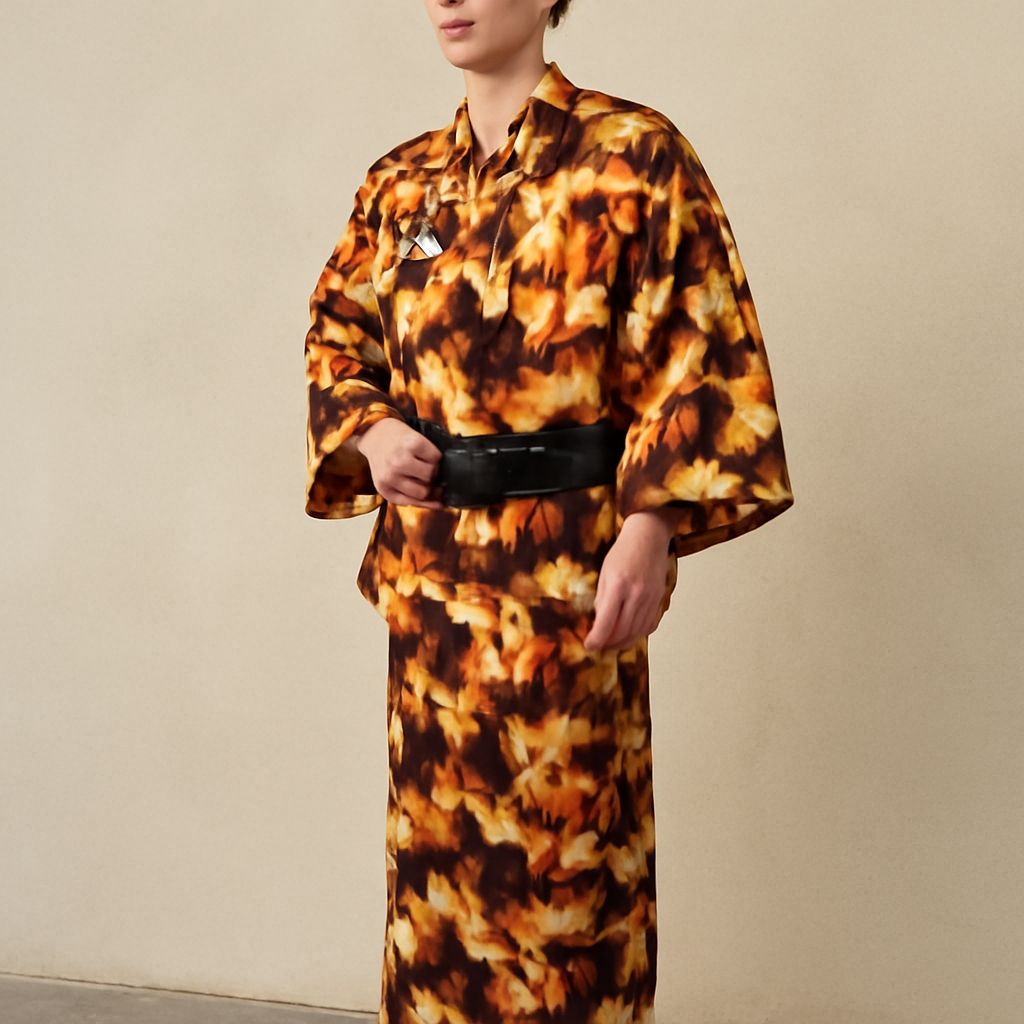
The obi creates one of the clearest styling differences. A women’s formal obi is commonly about 30 centimeters wide and may be tied into a prominent taiko bow at the back. It sits high on the torso and helps create a long, column-like line. Men’s kaku obi are often narrower, around 8 to 10 centimeters, and sit lower around the hips. A simple knot or soft heko obi may suit informal wear.
Women’s dressing often involves more visible components: a nagajuban underlayer, decorative collar, waist ties, datejime, obi-ita, obiage and obijime. Hair ornaments, zori and a coordinated handbag may complete formal styling. Men may use fewer layers, with a juban collar, tabi, haori-himo, haori or hakama selected according to the event.
For choosing between styles, start with the occasion and desired fit. A wedding, tea ceremony or formal celebration may require prescribed fabric, crests, sleeve type and obi. Festivals allow cotton yukata and simpler belts. Age, historical period and personal styling can override common conventions, so the garment’s cut and dressing method matter more than the label alone.