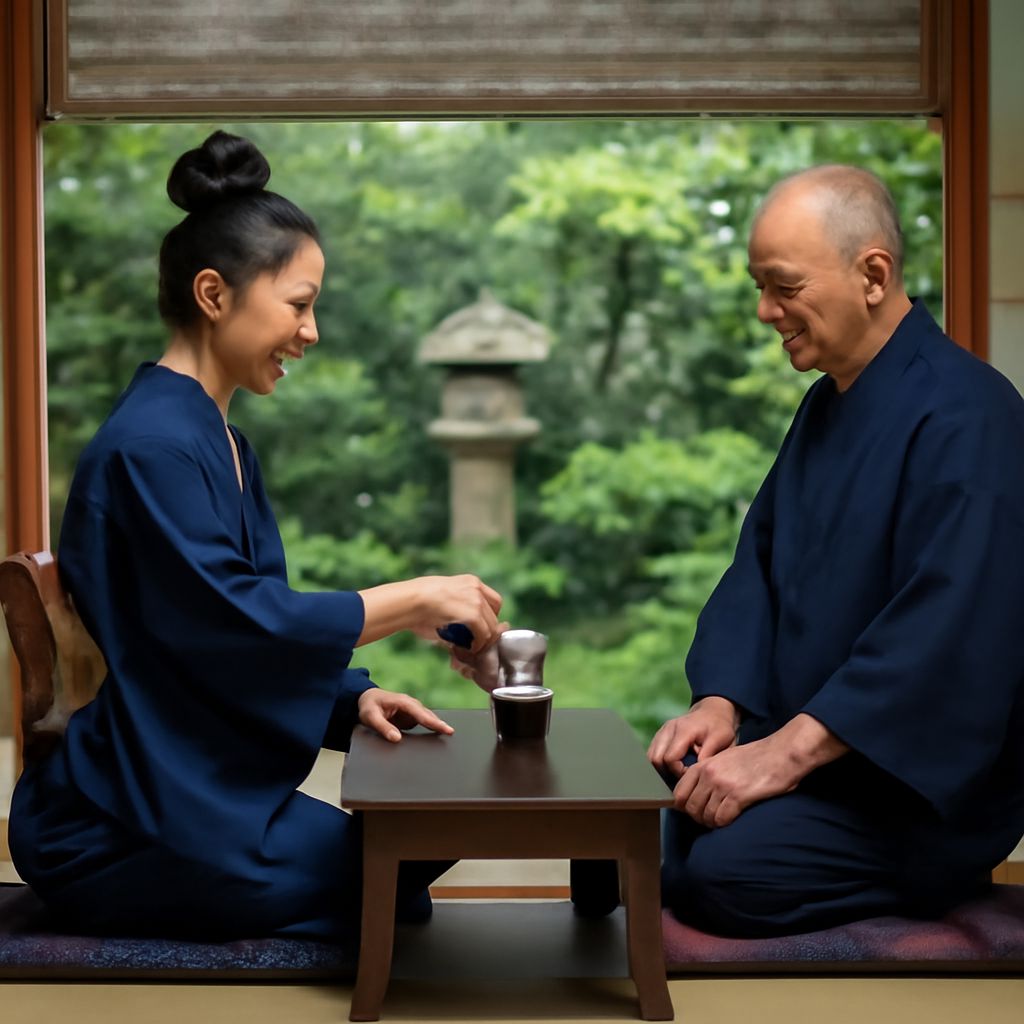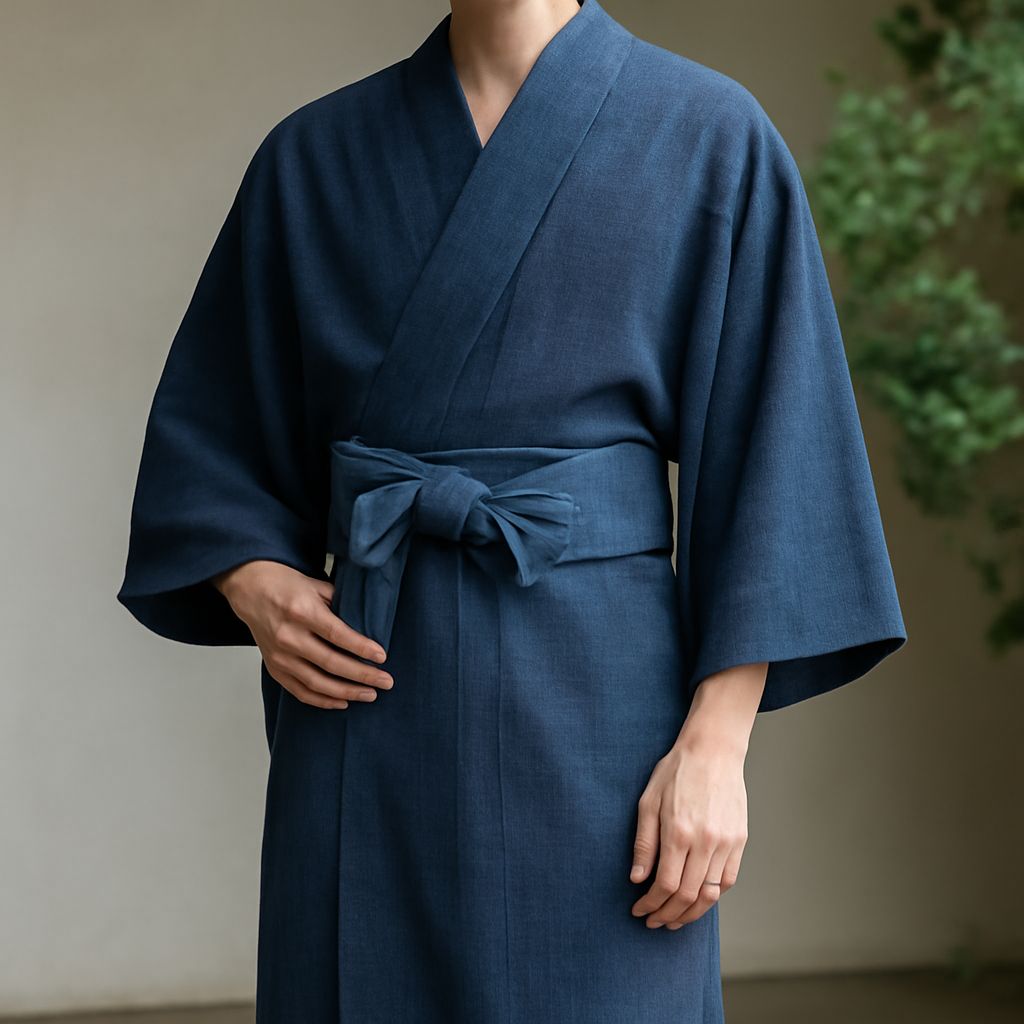
The standard male kimono name is simply kimono. Japanese does not use a separate universal word for a kimono worn by a man. Men’s versions follow different proportions, fabrics and styling conventions, but the garment name remains kimono.
A search for man kimono usually means a men’s kimono. The correct term depends more on the garment’s construction and occasion than on the wearer’s gender.
What Is the Male Kimono Name?
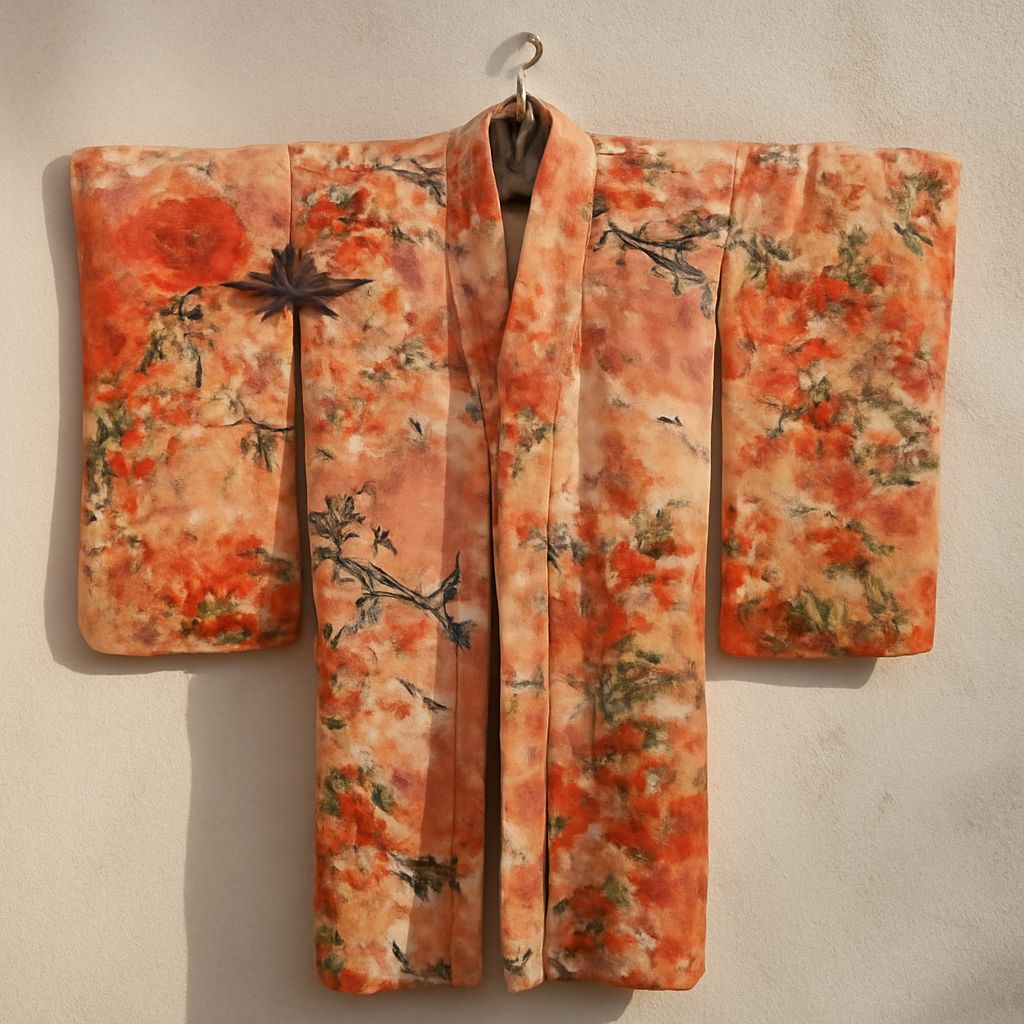
Kimono means the traditional T-shaped Japanese robe with straight seams, a full front opening and overlapping panels secured with an obi. Both men and women wear kimono, although men’s styles are typically less colorful and use a straighter, more restrained silhouette.
Men’s formal kimono may be black with family crests, while informal examples can use dyed silk, wool or other patterned textiles. Men usually wear the obi lower on the waist, often with a firm kaku obi. The name does not change to a male-only equivalent.
Men’s Kimono: Construction and Formality
A men’s kimono is usually made from a relatively subdued fabric and has a narrow sleeve opening, straight body lines and sleeves that hang close to the torso. The robe is normally unlined or lined according to its weight and intended season, but formal silk kimono are commonly fully lined.
Formality comes from the fabric, color, crests and accompanying garments. A formal outfit may include a white undergarment, a dark crested kimono, hakama and a haori jacket. Informal kimono can be worn with a simpler obi and fewer layers.
Do not identify every Japanese robe as a kimono in the broadest practical sense. A yukata has a distinct fabric, lining and seasonal role, while samue and jinbei are separate two-piece garments.
Men’s Yukata: Fabric, Season, and Obi
The phrase men yukata generally refers to a men’s yukata. A yukata is a lightweight, casual form of kimono, traditionally made from cotton. It is usually unlined, breathable and associated with summer, warm evenings, festivals, inns and informal home wear.
Compared with a typical men’s kimono, a yukata is less formal and easier to wash. Its fabric is lighter, and its styling requires fewer layers. Men often wear it with a narrow kaku obi or a softer heko obi, rather than the more formal accessories used with silk kimono.
Both garments have overlapping fronts and attached sleeves, so fabric and occasion are important clues. A cotton, unlined robe worn in summer is probably a yukata; a lined silk robe worn with formal accessories is more likely a kimono.
Haori, Hakama, Samue, and Jinbei Explained
- Haori: A short or hip-length jacket worn over a kimono. It opens at the front and adds warmth, structure or formality; it is not the underlying kimono.
- Hakama: A pleated lower garment resembling a divided skirt or wide trousers. It is worn over a kimono for formal events, martial arts and some ceremonies.
- Samue: A practical two-piece outfit with a wrap-style jacket and trousers. Traditionally associated with work and craft settings, it is casual clothing rather than a kimono.
- Jinbei: A relaxed summer set with a short-sleeved top and shorts or loose trousers. Side ties and lightweight cotton make it suited to hot weather and lounging.
Choose the Term from the Outfit
- One long overlapping robe: Call it a kimono or yukata, then use fabric, lining and occasion to distinguish them.
- Light cotton, no lining and summer styling: Identify it as a yukata.
- A jacket over the robe: The outer jacket is a haori; the complete outfit may still include a kimono.
- Pleated lower garment or visible wide trousers: Those are hakama, worn with another upper garment.
- Separate top and trousers: Consider samue if the outfit has a workwear-like jacket, or jinbei if it has a short-sleeved summer top and shorts.
- Sleeve and jacket shape: A kimono or yukata has robe sleeves and no separate trouser section, while samue and jinbei have distinct jacket-and-bottom shapes.