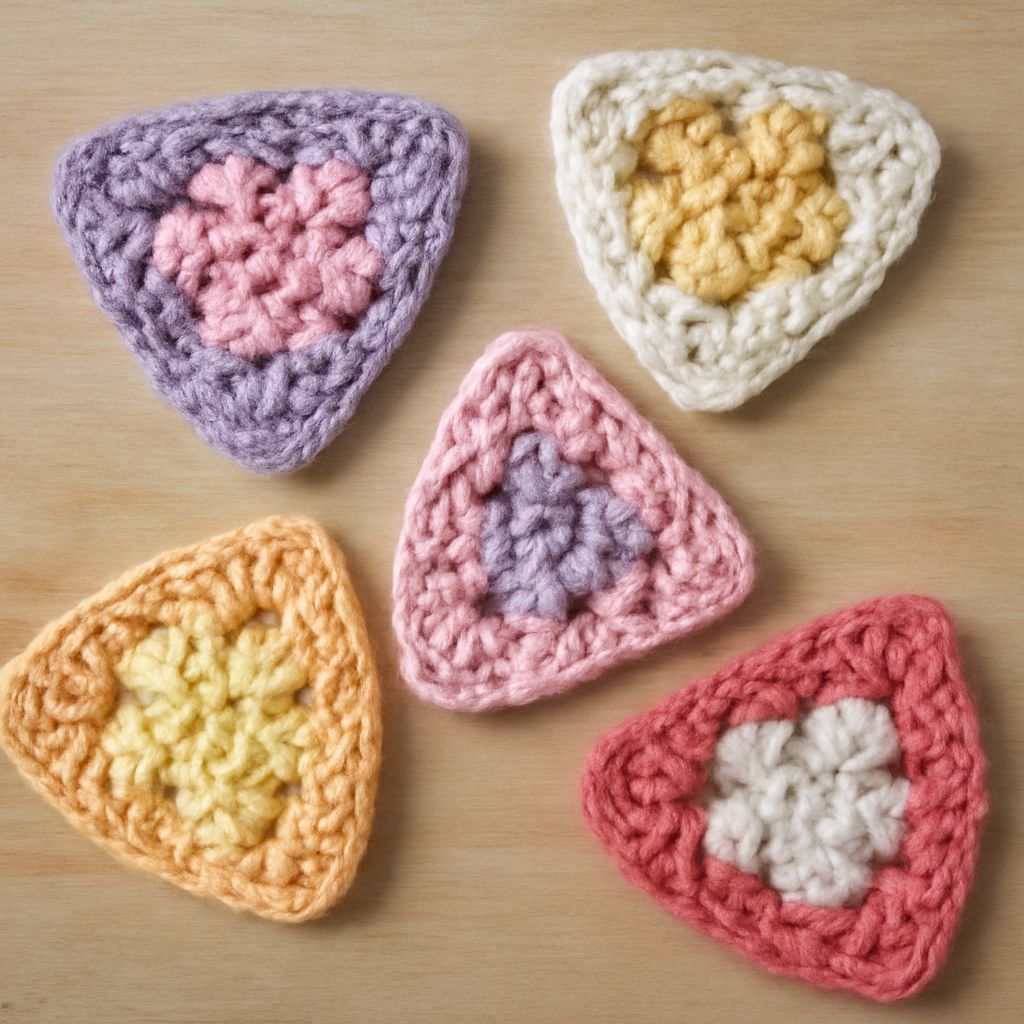
Crocheting a triangle opens up endless creative opportunities, whether you want to make bunting, shawls, motifs, or patchwork-style blankets. This guide explains exactly how to crochet a triangle, using a beginner-friendly triangle crochet pattern. With clear steps, essential tips, and inspiring project ideas, you’ll be ready to craft perfect triangles for any project.
Materials and Tools Needed
Gathering the right materials makes your crochet triangle project simpler and more enjoyable. Start with these essentials:
- Yarn: Choose a smooth, medium-weight (worsted or DK) yarn for best visibility and easy handling. Cotton or acrylic yarns are both excellent beginner options.
- Crochet Hook: Use the size recommended on your yarn label; for most medium-weight yarns, a 4mm (G) or 4.5mm (7) hook works well.
- Scissors: Sharp, small scissors let you cut your yarn neatly when finishing the triangle.
- Yarn Needle: For weaving in the ends to give your triangle a neat finish.
- Stitch Marker (optional): Useful for marking the tip of your triangle, especially if you’re new to crochet.
If you’re experimenting with colors, gather small balls of various shades for stripes or motifs. Having a flat, well-lit workspace helps you see your stitches clearly and avoid mistakes.
Triangle Crochet Pattern: Step-by-Step
This basic triangle crochet pattern uses double crochet stitches worked from the bottom tip upward. The result is a classic, flat triangle—perfect for beginners.
- Start with a Slip Knot and Chain: Make a slip knot and chain 4. Insert your hook in the first chain and slip stitch to form a small ring.
- Row 1: Chain 3 (counts as your first double crochet). Work 2 double crochets into the ring (total of 3 stitches in this row). Turn your work.
- Row 2: Chain 3 (counts as first double crochet). In the same stitch, work 1 double crochet. In the next stitch, work 2 double crochets. In the last stitch, work 2 double crochets (total of 6 stitches). Turn.
- Row 3 and Beyond: Chain 3, double crochet in the same stitch. Double crochet in each stitch across until the last stitch. In the last stitch, work 2 double crochets. Each row adds 3 stitches; always increase at the first and last stitches to keep the triangle growing evenly. Repeat this process until your triangle is the desired size.
- Finish: Fasten off and weave in the yarn ends with a needle for tidy edges.
For a symmetrical triangle, ensure you always increase on both ends of every row. This simple method creates a flat triangle that’s easy to use in many projects or as a foundation for more advanced motifs.
Tips for Perfect Triangles
Getting a neat, even triangle can take some practice, but these tips will help you achieve consistent results:
- Count Your Stitches: After each row, count your stitches to make sure your increases are correct. Skipping an increase will distort your triangle’s shape.
- Use a Stitch Marker: Marking the first or last stitch of each row can help you keep track, especially when increasing on both sides.
- Keep Tension Even: Consistent tension gives your crochet triangle straight edges and an even surface. If your work is curling, try using a larger hook or loosening your grip.
- Block Your Triangle: Wet or steam-blocking your finished triangle helps it lay flat and sharpens the corners, especially for decorative or join-as-you-go projects.
Experiment with different yarn weights and hook sizes to see how your triangle crochet pattern changes in scale and texture. With practice, you’ll develop a feel for what works best for your style and projects.
Creative Uses for Crochet Triangles
Once you know how to crochet a triangle, you can add them to dozens of projects. Here are some favorite ways to use your finished motifs:
- Bunting and Garlands: String together multiple crochet triangles in bright colors to create festive bunting for parties or home decor.
- Shawls and Wraps: Make large triangles and join them to form beautiful, draping shawls. Experiment with color changes and edging for unique effects.
- Pillow Covers or Blankets: Sew or crochet triangles together to create geometric, patchwork-style throws and pillow fronts.
- Appliqué and Motifs: Use small triangles as appliqué on bags, hats, and clothing or as the base for granny triangle projects.
Mix and match triangle sizes, play with color blocking, or try joining triangles in different orientations for custom designs. Every triangle you crochet adds a new possibility to your crafting toolkit.