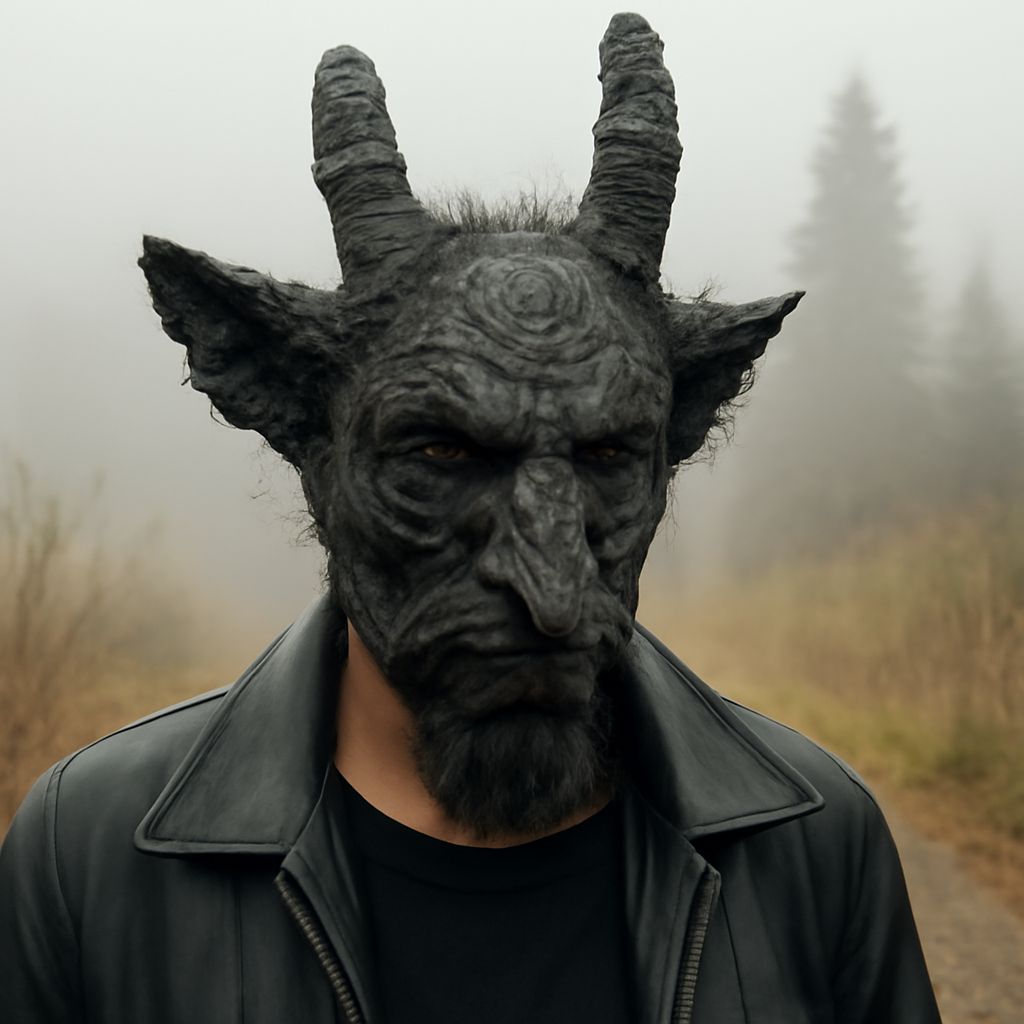
A carved face, curved horns, shaggy fur, and the sound of bells announce a figure before its wearer speaks. In Salzburg’s Advent processions, local tourism describes masks, pelts, and bells as part of a noisy winter spectacle. A Krampus outfit can borrow that strong silhouette while being built for the wearer’s own event, space, and movement.
Krampus Costumes in Context
In Alpine tradition, Krampus is a devil-like companion of St. Nicholas. Salzburg’s guide to Krampus and Perchten describes the former in connection with St. Nicholas and the latter as distinct figures appearing in related seasonal processions. Their masks can resemble one another, so a specific local event is a better reference than treating every horned figure as the same character.
For a regional example, Tyrol’s account of Krampus processions describes groups wearing carved wooden masks and animal furs. The Second Face Mask Museum’s Tyrolean mask is documented as having been worn in parades from 2009 to 2015 and has ibex horns. These Krampus costumes represent particular contemporary practices rather than a universal template for every valley.
A Krampus costume for a community procession may need to follow a group’s own rules and equipment. A Halloween or stage interpretation can use lighter materials and a more theatrical face while keeping the recognizable combination of horns, fur, and bells. Decide which setting the Krampus outfit is intended for before buying a mask or making large attachments.
Start With the Mask and Horns
A wooden mask can produce deep relief: a projecting brow, nose, and teeth cast shadows that remain visible from a distance. It can also be heavy and expensive. A commissioned carver or a specialist mask maker may offer an appropriate piece for someone joining a local group; ask about the weight, internal padding, fastening, and field of view before ordering.
A lightweight Krampus ensemble can start with a commercially made mask or a foam base. Build the brow and muzzle in layers of flexible craft foam, then seal and paint them with products intended for the material. Leave generous openings for eyes and breathing, and place padding at the forehead and cheeks so the face does not press against the shell. An adjustable strap should hold it steady without requiring the wearer to clench their jaw.
Horns create height and a wide outline. Carved wood or real horns may suit a traditional group’s established equipment, while hollow foam or lightweight costume horns are more manageable for an indoor party. Fix each horn to a reinforced base on the mask or a separate head harness; glue on the surface alone can fail under leverage. Rounded tips and a modest span make it easier to pass through doorways and move among other people.
A Krampus Halloween costume can exaggerate the mouth, add painted cracks, or use a dramatic color palette. Those choices suit a theatrical Krampus outfit; they need not reproduce the appearance of a named Austrian procession. Test the mask with any glasses or head covering before committing to permanent padding.
Build the Fur and Clothing in Layers
A fur-covered Krampus ensemble gives the head its visual weight. A full Krampus suit creates a continuous animal-like shape, while a shaggy vest over dark trousers suggests the same figure with less heat and fewer materials. Faux fur is available by the yard or as a ready-made jacket; a thrifted dark coat can serve as a base for removable panels. Longer pile reads strongly from a distance, though it adds bulk around elbows and knees.
For a homemade Krampus costume, cut a loose vest pattern from a sturdy backing fabric and attach the fur with its pile running downward. Leave a clear front opening and use strong closures that can be reached while wearing gloves. Add fur cuffs or leg panels to connect the vest visually to dark sleeves and trousers. A lining prevents the backing from rubbing and helps the piece slide over a base layer.
Measure over the clothes that will be worn underneath, allowing room to bend and reach. Indoors, a lighter base layer and a removable vest make temperature easier to manage. Outdoors, the same silhouette can be worn over warmer clothing. Avoid trailing panels near the feet, and check that any fur stays clear of flames, heaters, and other heat sources.
Add Bells, Gloves, and Footwear
Bells can make a restrained Krampus look recognizable even before the mask is fully seen. A broad belt or shoulder harness distributes their weight better than a thin cord. Secure each bell individually, cover hard edges on the inside, and try the arrangement while walking; a bell that strikes the hip or thigh with every step needs a different position. For a quiet indoor event, smaller bells or decorative replicas can provide the visual cue without the same volume.
Dark gloves finish the hands and hide the transition from sleeve to skin. Foam claws can be attached to gloves for a costume inspired by Krampus at Halloween, but short, flexible tips leave the wearer better able to handle a door or drink. Sturdy dark boots provide a base; faux-fur gaiters or fabric covers can suggest hooves while leaving the sole and heel unobstructed.
A bundle of lightweight branches or a soft prop can complete a staged Krampus outfit, provided the event permits it and the wearer has space to carry it. Chains and large props add weight and can catch on clothing or surroundings, so choose a substitute or omit them when the setting is crowded. A theatrical Krampus look gains more from a coherent silhouette than from carrying every possible accessory.
Check the Finished Outfit
Before leaving, put on the complete Krampus costume with its intended base layers and footwear. Walk, turn, sit, and raise both arms; the mask should remain stable, the horns should clear the surroundings, and the fur should not catch underfoot. Look to both sides and down at the floor through the eye openings, then adjust padding or widen the openings if the view is restricted. Finally, check that closures can be released without help and that every bell and prop stays secure during movement.