How much can a small holder carry without becoming awkward in a pocket? The answer begins with a count of the bills and cards carried on an ordinary day. A cash clip can suit a few folded notes, while a compact card case with a separate grip keeps cards organized alongside them. The right construction depends on both the load and the pocket where it will sit.
Money Clips and the Daily Carry
Folded currency has a different shape from a stack of cards. A simple metal clamp grips notes together by spring tension, while a holder with slots separates cards and uses a clip for cash. Some wallet clips attach to a rigid card case; others are built into a folding leather wallet. In each design, the useful capacity depends on the thickness of the contents and the size of the grip.
Before choosing, lay out a typical day’s cash, payment cards, identification, and any access card. A clip with no slots may hold a card against folded notes, but extracting one item can disturb the rest. A case with individual pockets makes those movements more predictable.
The size printed on a product page is usually the size of the empty holder. Folded bills and filled slots add thickness, so compare the loaded shape with the depth and width of the intended pocket. A jacket pocket can take a longer case; a close-fitting trouser pocket may feel more comfortable with a shorter, flatter one.
Metal Grips: Small and Direct
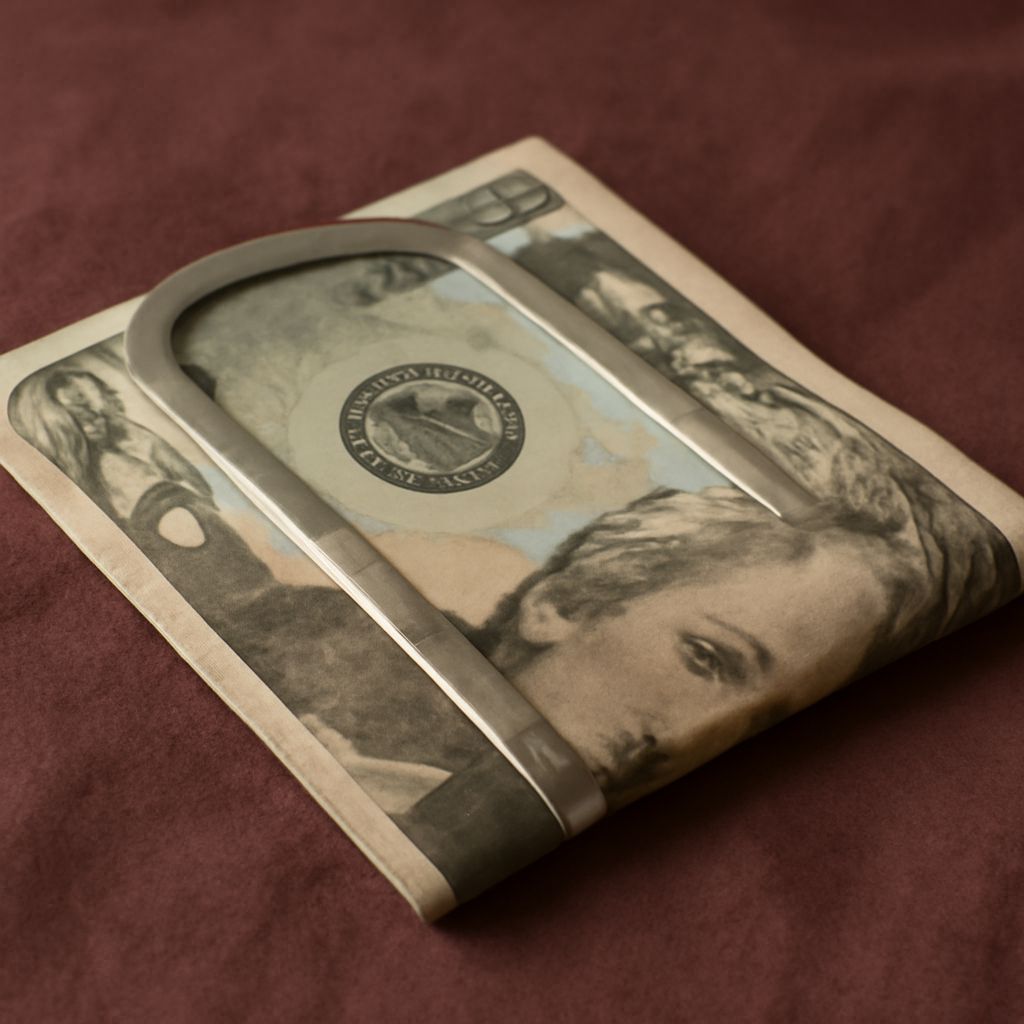
A spring-style cash grip is a bent piece of metal whose sides press together. Slide folded notes into the opening with the folded edge against the bend, then check that the grip holds when the bundle is gently shaken. It is worth testing both the smallest and largest stack usually carried: a clip that grips a thick bundle may hold one bill less securely.
Metal clips leave the edges of the notes visible and give quick access without opening a wallet. Their compactness suits a cash-light routine, especially when cards are carried separately. A polished surface also makes the object a visible part of an outfit when it is taken from a pocket; rounded edges are more comfortable against fabric and fingers than sharp ones.
Engraving changes the surface rather than the method of holding cash. The Montblanc Extreme patterned clip, for example, is listed as stainless steel with an engraved pattern and a weight of about 1 ounce. Money clips engraved with initials or a design should still be judged by their grip and shape. Check the available lettering area and a proof before ordering personalization, since a decorative finish may leave less room for text.
Leather Cases With a Cash Grip
A leather cash holder can mean a leather-covered magnetic grip, a card case with an exterior clip, or a folding wallet with metal hardware inside. Those constructions behave differently in use. A magnet closes over the cash; a spring clip presses it against another surface. Inspect how the grip opens and where the bills sit in relation to the card pockets.
The Hand and Hide leather wallet is an example of the folding type. Its maker lists a brass clip, two card slots with room for up to four cards each, and folded dimensions of 3 by 4.3 inches. A wearer carrying several cards and a modest group of bills can compare that footprint with a pocket before choosing it. The stated card capacity is a maximum, and a full load will feel thicker than the empty leather.
For a flatter format, the ili New York magnetic card holder has three front card slots, an ID window and another slot on the back, plus a leather-wrapped magnetic cash grip. Its listed dimensions are 4.5 by 3 by 0.5 inches. This arrangement places cards and notes on different faces, which can make a frequently used card easier to reach; the loaded thickness still depends on what is inserted.
Leather money clips can soften the feel of the holder in a pocket, but stitching, folded layers, and hardware add their own bulk. Look at the edges and the slot openings as well as the exterior finish. A narrow pocket can make a card difficult to remove; a wide pocket may need more than one card to hold its contents firmly.
Card Capacity and Cash Attachment
A leather money clip card holder combines the two functions in one piece, but its card slots and cash grip should be evaluated separately. Ribbon & Seal’s folding holder lists four card slots, a rear quick-access slot, a steel spring clip, and capacity for up to six cards. Its stated dimensions are approximately 4.1 by 3 inches. That example is sold in bulk, so it is most useful here as a construction reference rather than an individual shopping recommendation.
A rigid case provides another comparison. Ridge’s product guide gives its standard wallet dimensions as 3.39 by 2.13 by 0.24 inches and describes an optional external clip for folded bills. The maker states a capacity of 15–20 folded bills for that attachment; this is a product-specific figure, not a capacity for every clip. A loaded case becomes thicker, and removing a card from a stacked compartment differs from pulling it from its own slot.
A money clip for men is often marketed as a gift, but the practical questions are shared by any wearer: how many bills must be held, how many cards need access, and whether the holder sits comfortably when seated. A men’s cash clip with an engraved finish may look particularly deliberate beside a tailored jacket; the finish should not obscure the feel of the grip or the ease of retrieval.
For a few daily bills and cards carried elsewhere, choose a simple metal spring. For several cards and a small cash bundle, choose a compact leather card holder with a clip and enough accessible slots. When the usual load includes a thicker stack of folded bills, select a holder whose stated cash capacity covers that stack and check its loaded fit in the intended pocket.