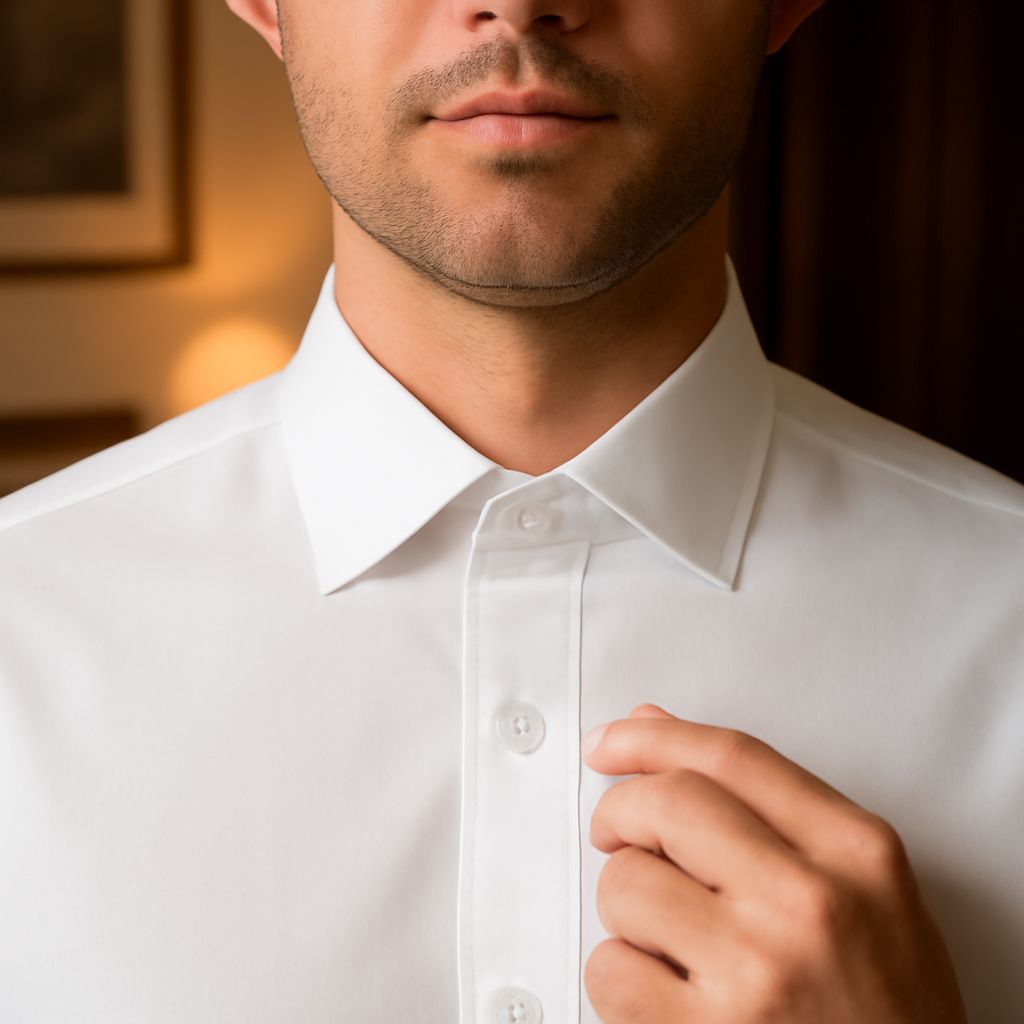
Choosing the right dress shirt fit is essential for both comfort and style. A shirt that fits properly enhances your appearance, feels comfortable all day, and lets you focus on the occasion—not your clothing. This dress shirt fit guide covers what makes a great fit, which areas matter most, how to measure yourself correctly, and the main types of fit found in stores today.
What Defines a Good Dress Shirt Fit?
A good dress shirt fit should look sharp while allowing for ease of movement. The best fit sits close to your body without pulling, bunching, or billowing. Shoulder seams align with the edge of your shoulders. The sleeves reach your wrist bone but don’t extend onto your hand. The torso fits smoothly—neither too tight nor excessively loose. When the shirt is tucked, it should stay in place with minimal extra fabric bunching around your waist. The collar should allow you to slide two fingers between your neck and the fabric when buttoned.
Comfort is as important as appearance. A shirt that is too tight will restrict movement and highlight tension at seams or buttons, particularly across your chest and midsection. Conversely, a shirt that is too loose can look sloppy and feel bulky under a jacket. The ideal balance is a shirt that flatters your body shape and lets you move comfortably throughout the day. Your confidence comes from knowing you look put together, whether you’re at work or attending a special event.
Key Areas to Check for Fit
When assessing your dress shirt fit, pay special attention to these zones:
- Shoulders: Shoulder seams should sit exactly where your shoulder ends. Seams that droop down your arm indicate a shirt is too large, while seams that pull inwards mean the shirt is too small.
- Collar: A well-fitted collar should let you comfortably fasten the top button and slide two fingers between your neck and the collar. If you see visible gaps or feel constriction, the collar size is off.
- Chest and Torso: The shirt should lie smoothly across your chest and stomach, without pulling at the buttons or forming excess billows when tucked. Try sitting down—there should be no strain at the buttons.
- Sleeves: Sleeve cuffs should end precisely at the base of your wrist. With arms at your side, cuffs should show about a half-inch of shirt when worn with a jacket.
- Cuffs: Cuffs should be snug enough that they don’t slide over your hand but loose enough for comfort. You shouldn’t need to unbutton the cuff to check your watch.
- Length: The shirt tail should be long enough to stay tucked in when you move or raise your arms, but not so long that it bunches up inside your trousers.
Evaluating each of these areas ensures your shirt will look polished and feel comfortable in any setting.
How to Measure Yourself for a Dress Shirt
Knowing your measurements is the foundation of a reliable dress shirt fit. Use a flexible measuring tape and follow these steps:
- Neck: Wrap the tape around the base of your neck where the collar sits. Insert two fingers under the tape for comfort. This is your collar size, listed in inches (e.g., 15.5″).
- Sleeve Length: Start from the center back of your neck, stretch across the shoulder, and measure down to your wrist bone. This accounts for both your arm and shoulder width.
- Chest: Measure around the fullest part of your chest with arms relaxed at your sides. The tape should be level and snug, not tight.
- Waist: Measure around your natural waist, just above the navel, with the tape comfortably fitted.
Write down your measurements and reference them when choosing shirts. Many brands include sizing guides to match your measurements to their shirt sizing. Always check the specific brand’s fit guide since sizing can vary.
Common Fit Styles Explained
Dress shirts come in several standard fit styles, each offering a different silhouette. Understanding these helps you choose the best option for your body and your preferred look:
- Classic Fit: This traditional style features a fuller cut through the chest, sleeves, and waist, providing maximum comfort and a relaxed look. It suits men who prefer roomier shirts or have a broader build.
- Slim Fit: Slim fit shirts are trimmer through the body and sleeves, offering a closer and more modern silhouette. They work well for athletic or slender builds and those who want a crisp, contemporary appearance.
- Tailored (Modern) Fit: Sitting between classic and slim, tailored fit shirts offer a slightly tapered waist for a neat profile without being restrictive. This style is a versatile choice for most body types.
- Extra Slim Fit: For those seeking an ultra-fitted look, extra slim fit shirts are cut very close to the body, with minimal excess fabric.
Try on different fit styles if possible, and prioritize comfort alongside appearance. The right dress shirt fit will help you look sharp and feel confident for any occasion.