Choosing the right knitting needle size is crucial for crafting successful projects. Whether you’re a beginner or an experienced knitter, understanding the different knitting needle sizes can significantly impact your work. This guide will help you navigate these sizes, utilize a knitting needle conversion chart, and make the most of a knitting needles size chart.
Introduction to Knitting Needle Sizes
Knitting needles come in a variety of sizes, and selecting the appropriate one depends on the type of yarn and the desired tension. Needle sizes are typically represented in metric (millimeters) and US numbers. For example, a US size 8 needle corresponds to 5mm. Knowing these conversions is essential for following patterns accurately and achieving the desired texture in your work.
Using a Knitting Needle Conversion Chart
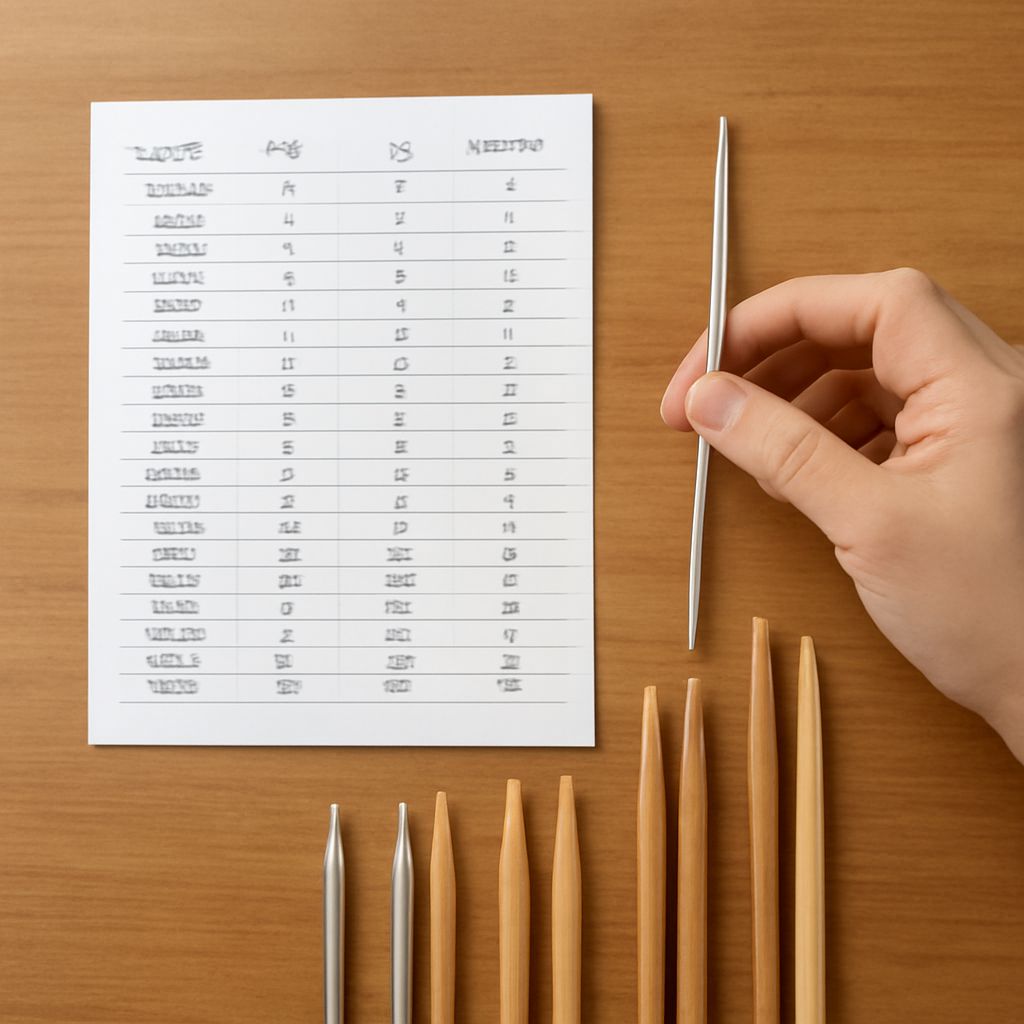
A knitting needle conversion chart is a valuable tool, especially when working with patterns from different regions. These charts provide a quick comparison between metric, US, and sometimes UK sizes. For instance, a UK size 4 is equivalent to a US size 6 and a 4mm needle. Having a conversion chart on hand ensures that you can easily translate sizes and maintain consistency across your projects.
Understanding the Knitting Needles Size Chart
The knitting needles size chart is more than just a list of numbers. It is a guide that helps knitters match the correct needle size to their yarn and project. The chart typically includes the recommended needle size for various yarn weights, such as lace, fingering, or bulky. For example, lace yarn might require a 1.5-2.25mm needle, while bulky yarn could need a 5.5-8mm needle. By consulting the size chart, you can ensure your projects have the correct gauge and finish as desired.
By familiarizing yourself with knitting needle sizes and the related charts, you can enhance your knitting experience and achieve professional-looking results.