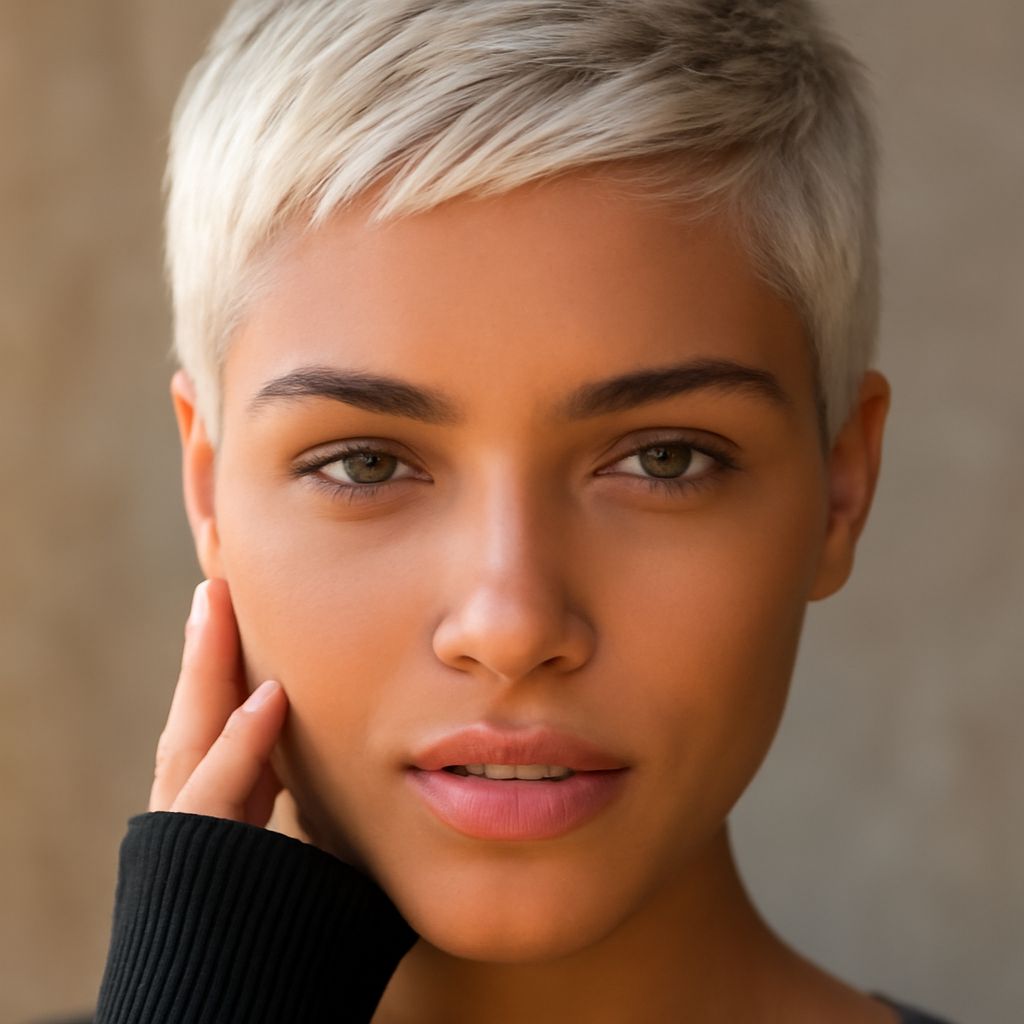
A fringe that ends above the eyebrows exposes more of the face; one that sweeps across the cheek creates a softer diagonal. On short hair, that small change can alter the whole outline, even when the length at the nape stays the same.
A short style for women can be crisp, airy, smooth, or deliberately tousled. The most convincing choice begins with the desired silhouette and the hair’s natural movement, then accounts for the time available to shape it each morning. A few named examples help turn a reference photograph into a clear conversation with a stylist.
Hairstyles Short on Styling Time
A buzz cut keeps the hair very close to the head, making the shape of the head and hairline highly visible. A uniform length has a clean, graphic effect; a slightly longer top with shorter sides adds a subtle change in contour. It needs little daily arranging, although maintaining a precise close finish means frequent trims. Earrings, makeup, and a strong collar become particularly visible against this spare outline.
For someone who wants their hair short, short hairstyles such as a cropped pixie can leave more texture on top while keeping the neck open. A pixie is a close cut with longer sections at the crown or front. A little styling paste worked through dry ends can separate the strands, while brushing them forward produces a smoother finish. The amount needed depends on whether the hair holds its shape naturally.
A tapered crop gradually shortens toward the sides and nape. Keeping some length above the temples creates a softer transition into the top, while a closely tapered perimeter makes the outline more defined. The stylist can leave the ears fully visible or retain a fine veil of hair around them. This is one of several women’s short hairstyles in which small changes at the edges carry much of the visual character.
Smooth Shapes Around the Face
A bixie combines the close nape of a pixie with the longer, rounded outline associated with a bob. The extra length around the ears offers movement and can be tucked back, while layers at the crown keep the shape from lying flat. For straight hair, a light blow-dry can direct the ends toward the face; natural waves may need only a small amount of product to define their bend.
A French bob usually ends around the jaw and often includes a fringe. Its compact perimeter draws attention to the cheek and neckline. A straight fringe creates a clear horizontal line, while a parted fringe opens the center of the face. Depending on texture, a brush may help smooth the ends, or air-drying may produce a relaxed curve. The desired result should be specified when discussing the cut.
For short hairstyles for a polished look, a sleek side-parted crop can use a longer top combed across the head and a close, tidy outline at the sides. A comb and light styling cream create a controlled surface; a stronger product can hold a more sculptural shape. This arrangement works especially well when a clear part and an exposed ear are part of the intended image.
Texture, Layers, and Fringe
Layers are sections cut at different lengths. Short layers can introduce lift and separation; longer ones tend to leave a smoother surface. On curls, removing length may allow the pattern to spring upward, so the shape should be discussed in its dry state as well as when wet. A curly crop with a longer crown can form a rounded silhouette without requiring the same finish as a straight, polished cut.
Women’s short haircut styles also differ in how much of the forehead they cover. A blunt fringe draws attention to its straight edge and may require regular shaping. A side-swept fringe creates a diagonal and can be directed with a brush; a longer, parted fringe gives more room to tuck sections away. A cowlick, an area where hair grows in a different direction, can lift a fringe or alter the way it parts.
Nice short haircuts can look effortless while still relying on a specific routine. A textured crop may need only finger styling, but a precise smooth shape can require a brush and dryer. Keeping female hairstyles short also makes changes at the neckline and around the ears more visible as they grow. Ask how often the chosen outline will need trimming and whether the fringe can be adjusted between appointments.
Explain the Shape to a Stylist
Bring photographs showing the front, side, and back when possible. Point to the elements that matter: exposed or covered ears, length at the nape, fullness at the crown, and where the fringe ends. A reference may show a finish created with heat or product, so explain whether the desired result should also work when air-dried.
A clear request might be: “Keep the nape close, leave the ears partly covered, and make the fringe long enough to sweep to the cheek.” Ask how the cut will behave with the hair’s natural texture and how much length will remain when curls or waves dry. If a polished example is appealing, request a demonstration of the tools and steps needed to reproduce it.
Keeping hair styles short can make styling choices more visible: a change in part or direction alters the outline without changing the cut. Classy short haircuts such as a smooth bixie or a side-parted crop offer a composed finish, while a textured pixie gives a more relaxed effect. Choose the silhouette that suits the desired look, the way the hair moves, and the minutes realistically available each day.