Which haircut will look at home at work and still suit the hair itself? A work-ready cut starts with the expectations of the workplace, the hair’s natural texture, and the time available for styling. Men’s hairstyles for a professional setting can be short and precise or longer and softly shaped, depending on those conditions.
Professional Hairstyles for Men: Start With the Setting
A conservative client-facing office may favor a restrained outline and hair kept away from the face, while a creative studio may welcome a more pronounced silhouette or longer layers. In a kitchen, laboratory, or workshop, the relevant requirement may be securing hair under protective equipment. The written dress or safety policy and the practice of colleagues offer more specific guidance than a job title alone.
For a professional haircut, men can first decide what the working day requires: an unobstructed view, a shape that fits under a hat, or a style that holds through meetings. Those constraints help narrow the choices before discussing length. A neat result can retain curls, coils, waves, or straight texture; the shape and care routine should work with the hair’s own behavior.
The following examples are starting combinations rather than fixed rules. Each can be adjusted in length or finish, and each makes a different demand on the morning routine and the interval between appointments.
A side part with a tapered outline
A classic side part leaves enough length on top to comb the hair to one side. The sides and back taper, meaning they gradually become shorter toward the edges. A soft taper preserves some coverage around the ears and neckline, while a closer one creates more contrast with the top.
For example, a consultant in a formal office might choose about 3 inches on top and shorter, blended sides. On straight hair, a small amount of light-hold cream and a comb can define the part without a hard shine. Wavy hair may need a little more length to settle into the same direction; a brush and blow-dryer can guide it after washing.
This men’s business haircut depends on the part remaining visible. Someone who prefers to air-dry and leave the hair untouched may find a textured crop easier. As the sides grow, the outline softens, so a sharper taper calls for more frequent maintenance than a longer, scissor-cut edge.
Crew cut and textured crop
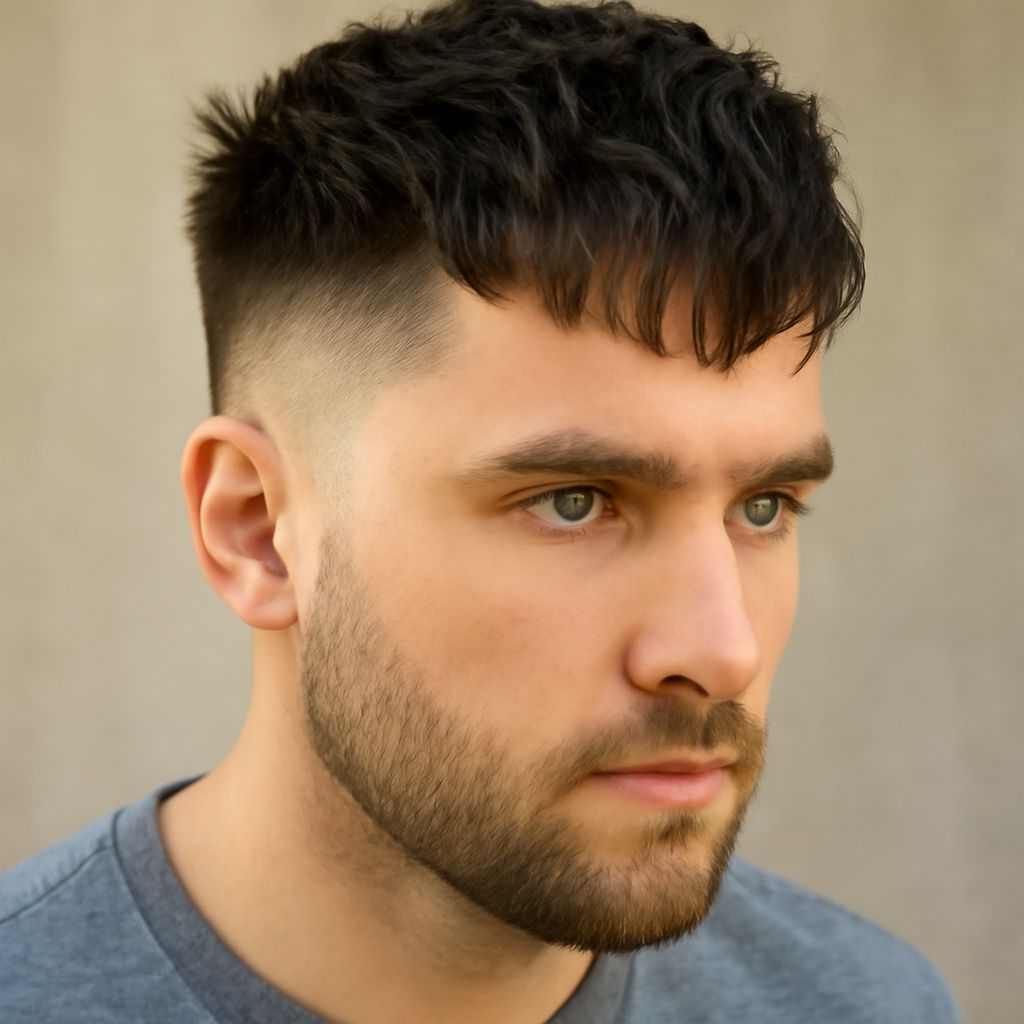
A crew cut is short at the sides and back, with a little more length on top. It produces a compact outline and needs little daily arranging. A low fade can be added: a fade is a gradual blend down to very short hair, with a low fade concentrated near the lower edge. The close blend will become less distinct as hair grows, even though the cut remains short.
A textured crop keeps a short top with visible separation and often a fringe directed forward. A small amount of matte paste can define the pieces; fine hair usually needs less product to avoid looking weighed down. In a busy office with a relaxed dress code, a crop with a soft fringe and blended sides offers a less formal business hairstyle while keeping hair clear of the eyes.
For a men’s office haircut with very little styling, the crew cut is the simpler choice. A crop gives the wearer more control over the front but may need a few minutes of drying and shaping. Both depend on the barber leaving a length that suits growth patterns, especially around a cowlick, where hair grows in a different direction.
Curls, coils, and longer shapes
A curly taper keeps length and texture on top while shortening the hair gradually around the temples and neckline. The top can be shaped into a rounded outline or left longer for more visible movement. Curl cream applied to damp hair can help define the pattern; the amount needed varies with the hair, so begin lightly and add more if the strands feel dry or undefined.
In an example of professional hairstyles for men in a client-facing setting, a rounded curly top with a modest taper frames the face while leaving the natural texture visible. Coily hair can also be shaped into a short, even silhouette or a fuller form with a clean perimeter. Discuss the desired finished shape with a barber experienced in the texture, including how the hair changes length as it dries.
Medium-length layers offer another route. Hair can fall around the ears or be swept back, with layers removing some weight and allowing movement. In a workplace where longer hair is practical, a restrained shape tucked behind the ears can sit comfortably beside a tailored jacket. If the job requires hair to be secured, retain enough length for a low tie or choose a shorter shape that meets the stated requirement.
Explain the result to the barber
A photograph is most helpful when the reference has a similar texture and density. Bring a front and side view if possible, then describe the features that matter: the top length in inches, how close the sides should be, where a taper should begin, and whether the neckline should look soft or sharply outlined. A men’s business cut can have several interpretations, so its name alone leaves too much to guess.
A practical request for a professional haircut might be: “Leave about 3 inches on top so I can part it; taper the sides around the ears without taking them down to skin, and keep the neckline soft.” Mention glasses, headwear, and whether the hair is usually air-dried or blow-dried. Ask the barber to show how much product is needed and how the cut will look as it grows out.
Among men’s professional haircuts, the best fit is the one the wearer can maintain between visits. Choose a crop or crew cut for a short routine, a part for hair that can be directed into place, or a shaped curl or layered cut when texture and length are part of the desired look. Match that choice to the actual workplace and to the time available for daily care and regular trims.