Embroidery is a delightful craft that allows you to express creativity through needle and thread. For beginners, starting with basic embroidery stitches is essential to build your skills and confidence. In this guide, we’ll explore different embroidery stitches, focusing on types suitable for those just starting their embroidery journey.
Introduction to Embroidery Stitches
Embroidery stitches are the building blocks of any embroidery project. Understanding the basic embroidery stitches enables you to create intricate designs with ease. Whether you’re embellishing clothing or creating standalone art pieces, mastering these stitches is the first step to becoming proficient in embroidery.
Types of Basic Embroidery Stitches
There are several types of embroidery stitches that beginners can learn to start their crafting adventure. Here are some fundamental stitches to consider:
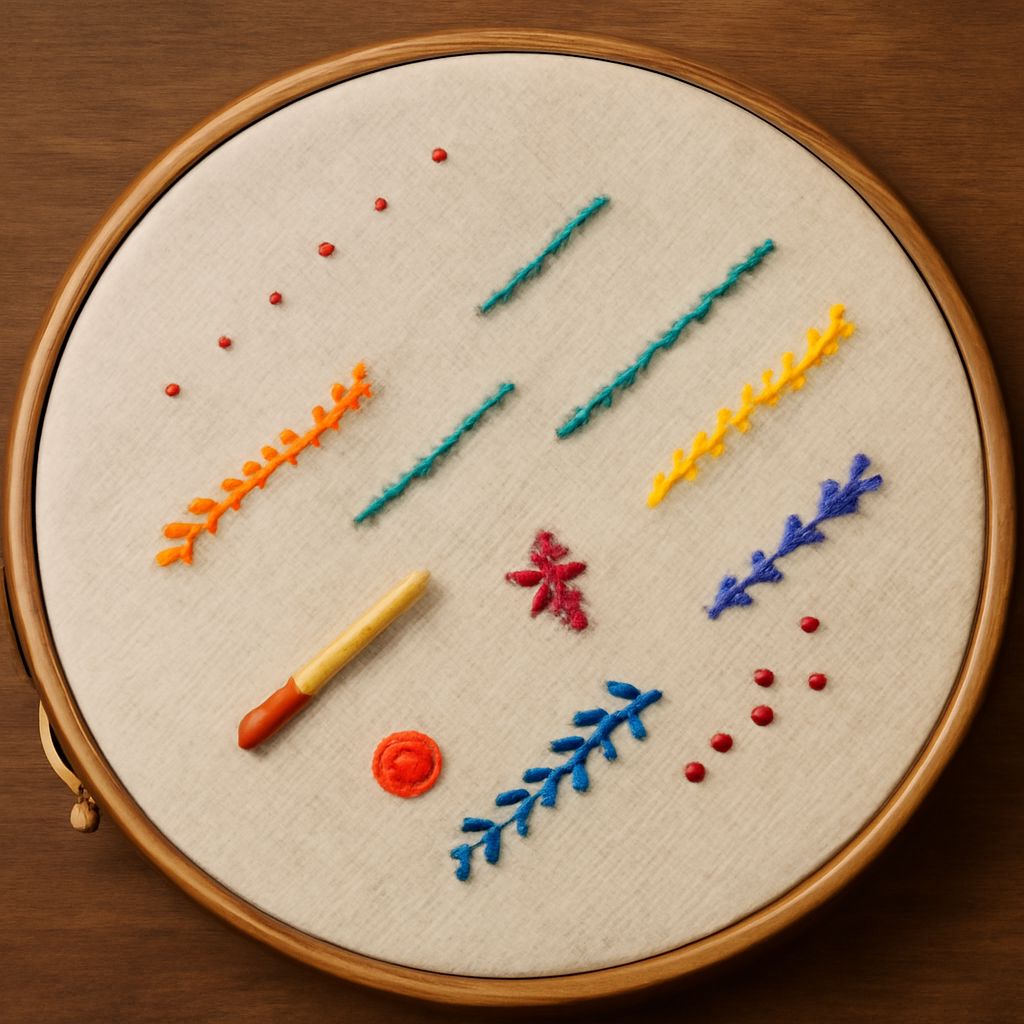
- Running Stitch: The simplest of stitches, the running stitch is created by passing the needle in and out of the fabric at regular intervals. It’s perfect for outlining shapes.
- Back Stitch: Known for its strength and durability, the back stitch is used for outlining and adding detail to embroidery projects. It involves creating a continuous line by stitching backward along the design.
- Chain Stitch: This stitch forms a series of loops resembling a chain. It’s excellent for creating outlines and decorative patterns.
- French Knot: Small, textured knots that add dimension to your work. They are made by wrapping the thread around the needle before inserting it back into the fabric.
- Satin Stitch: Used for filling shapes, the satin stitch involves long, smooth stitches placed closely together to create a solid block of color.
How to Practice Embroidery Stitches
Practicing embroidery stitches regularly is key to improving your technique. Start by selecting a simple design and focus on one stitch at a time. Use a hoop to keep your fabric taut, which will make stitching easier and more accurate. It’s also helpful to use fabric with a clear weave pattern, as it can guide your stitches and improve consistency.
Begin with a small project, such as a monogram or a simple floral design, and gradually increase the complexity of your projects as you gain confidence. Remember, consistency and patience are vital, so take your time to perfect each stitch.
Tips for Beginners
- Choose the Right Materials: Use embroidery floss suitable for your project and a needle that matches the thickness of the floss.
- Keep Tension Consistent: Maintain even tension on your thread to prevent puckering or loose stitches.
- Practice Regularly: Dedicate time each week to practice, and experiment with different types of embroidery stitches to broaden your skills.
- Use Online Resources: There are numerous tutorials and videos available online that can provide visual guidance and inspire new ideas.
Embroidery is a rewarding craft that combines creativity with precision. By mastering these basic embroidery stitches, you’ll be well-equipped to tackle a variety of projects. Remember, practice makes perfect, so keep experimenting and enjoy the art of embroidery.