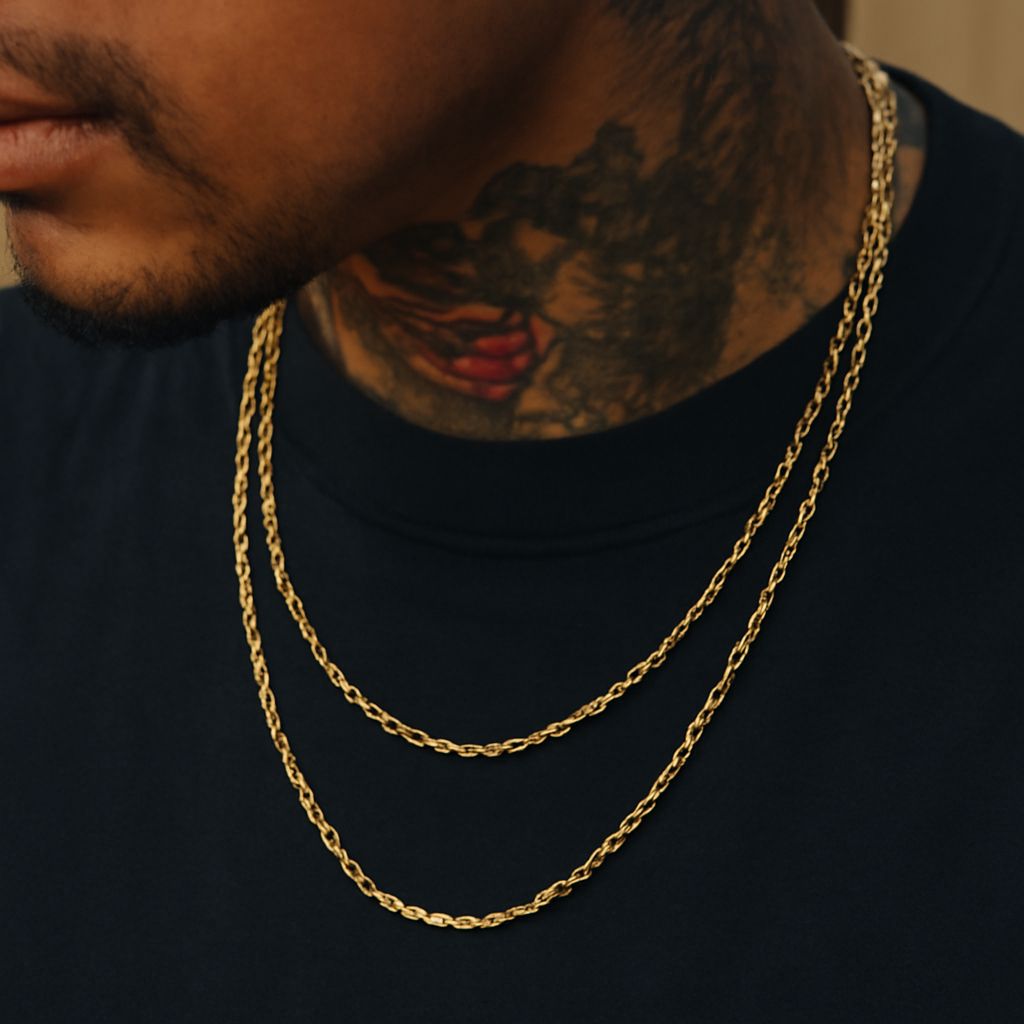
The small links of a rope chain turn around one another in a repeating spiral, so their facets catch light from several directions. A necklace in gold with this rope pattern can be a quiet glint at the collar or a substantial part of an outfit; its dimensions and construction determine which effect it creates.
A photograph shows the twist, but it cannot establish how a chain will sit or what lies beneath its surface. A useful comparison brings together width, length, weight, clasp, and the seller’s description of the metal before considering how the piece will work with clothing or a pendant.
Gold rope necklace: understand the metal
A gold rope necklace may be made from a gold alloy throughout its links or from another metal with a gold-colored surface. Karat describes the proportion of pure gold in an alloy: 14K is 14 parts gold out of 24, and 18K is 18 out of 24. The remaining metals contribute to the alloy’s properties and color, but their precise composition depends on the manufacturer. Ask for the alloy details when a particular metal causes skin irritation.
The Federal Trade Commission’s jewelry guidance distinguishes a solid item, which is not hollow, from a plated one. A gold-plated chain has a layer over a base metal, and that layer can wear with use. Vermeil is a particular form of gold plating over sterling silver; sterling contains 92.5% silver. Ask for the base metal, gold fineness, and coating thickness where applicable. A color name or a karat claim alone does not establish independent certification.
When buying a rope necklace made of gold, request the karat mark and the maker’s trademark, and check whether the links are described as solid or hollow. Hollow construction reduces the amount of metal for a given outward size, but the thin walls may dent or be more difficult to repair. A detailed listing and a seller willing to explain construction give the buyer more to compare than color alone.
Width, weight, and the way the links move
Rope chains use interlocking links to create their twisting surface. Look closely at the joins: the spiral should be regular, with no sharp projections, obvious gaps, or kinks. Flex the piece gently if examining it in person; it should move smoothly without catching. The construction is intricate, so ask a jeweler whether the particular chain can be repaired and what that service would involve.
Width is usually listed in millimeters. A fine chain, around 1 to 2 mm wide, can create a restrained line; a broader chain, around 4 to 5 mm, has a more visible texture. These are starting points, not rules for any body or outfit. A men’s rope chain can be delicate or substantial, and a men’s rope chain necklace should be judged on the wearer’s preferences rather than its department label.
Compare weight in grams only among pieces of similar length, width, metal, and construction. Two rope chains that look alike in a listing can feel different because one is hollow or because the links are made differently. The gram weight helps reveal that difference, but it does not establish strength on its own. Ask for a clear disclosure of construction and return terms if the weight or feel is not right.
Length, clasp, and pendant fit
Length changes where the necklace falls, but the same measurement will sit differently on different necks and bodies. To estimate the drop, fasten a flexible measuring tape or a piece of string at the desired position, then measure its length in inches. Try it with the actual neckline: a chain that rests cleanly over a crewneck may disappear under a high collar or compete with an open shirt.
A men’s rope necklace can be worn close to the neck or longer over a shirt; the label does not determine the fit. If a listing uses “mens rope chain,” check its measurements rather than treating the label as a sizing standard. For rope necklaces marketed to men, compare the measured length with a chain already owned, then allow for the chosen clasp and pendant. If layering, leave enough separation between pieces for each to remain visible without twisting into the other.
A lobster clasp has a spring-loaded lever and is easy to inspect; a spring-ring clasp opens with a small tab. Either should close fully, feel manageable to operate, and connect to a secure end ring. Examine the end links as carefully as the clasp itself, since they carry the pull of the whole piece. A jeweler can advise on a suitable replacement if a fastening is difficult to use.
For a pendant, check the inside dimensions of its bail, the loop through which the chain passes, against the widest part of the chain and its end fittings. Confirm that the chain and clasp can support the pendant’s weight with the seller or jeweler. A gold rope necklace can hold a pendant, but its textured surface also makes a complete visual statement on its own.
Finish and daily use
A gold necklace with a rope pattern may have a polished surface that throws bright flashes along the twist; a less reflective finish makes the pattern quieter. Examine it in daylight and indoor light, checking for uneven color or rough spots where the chain meets the clasp. Ask whether polishing or repair would affect a coating, especially if the piece is plated.
A men’s rope chain in gold may be styled above a dark knit for contrast or inside an open collar for a subtler line. For gold rope necklaces worn every day, remove the piece before activities that could catch or pull it, and follow the seller’s care instructions for its specific metal and finish. Store it separately to reduce tangling and abrasion.
For a specific purchase, choose the chain whose measured length, disclosed construction, and secure clasp all suit the outfit and pendant it will actually be worn with.