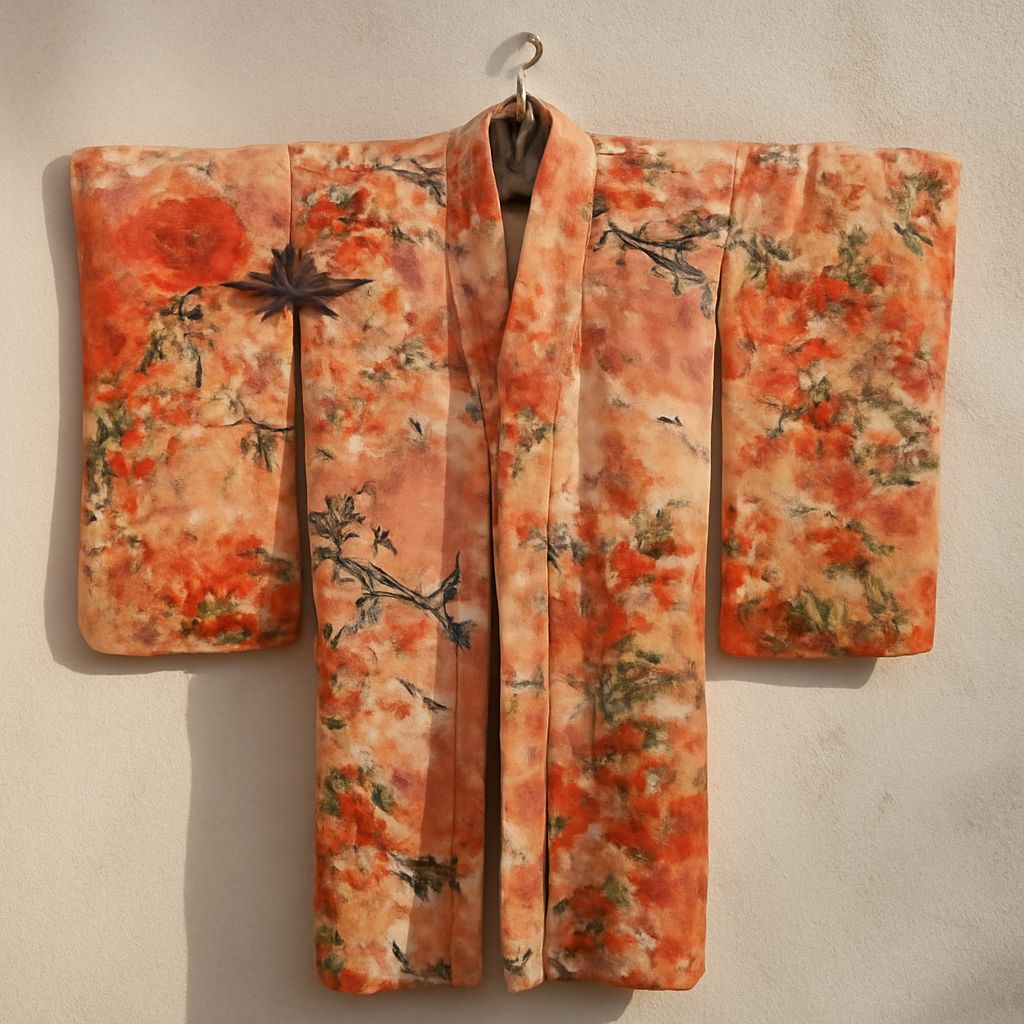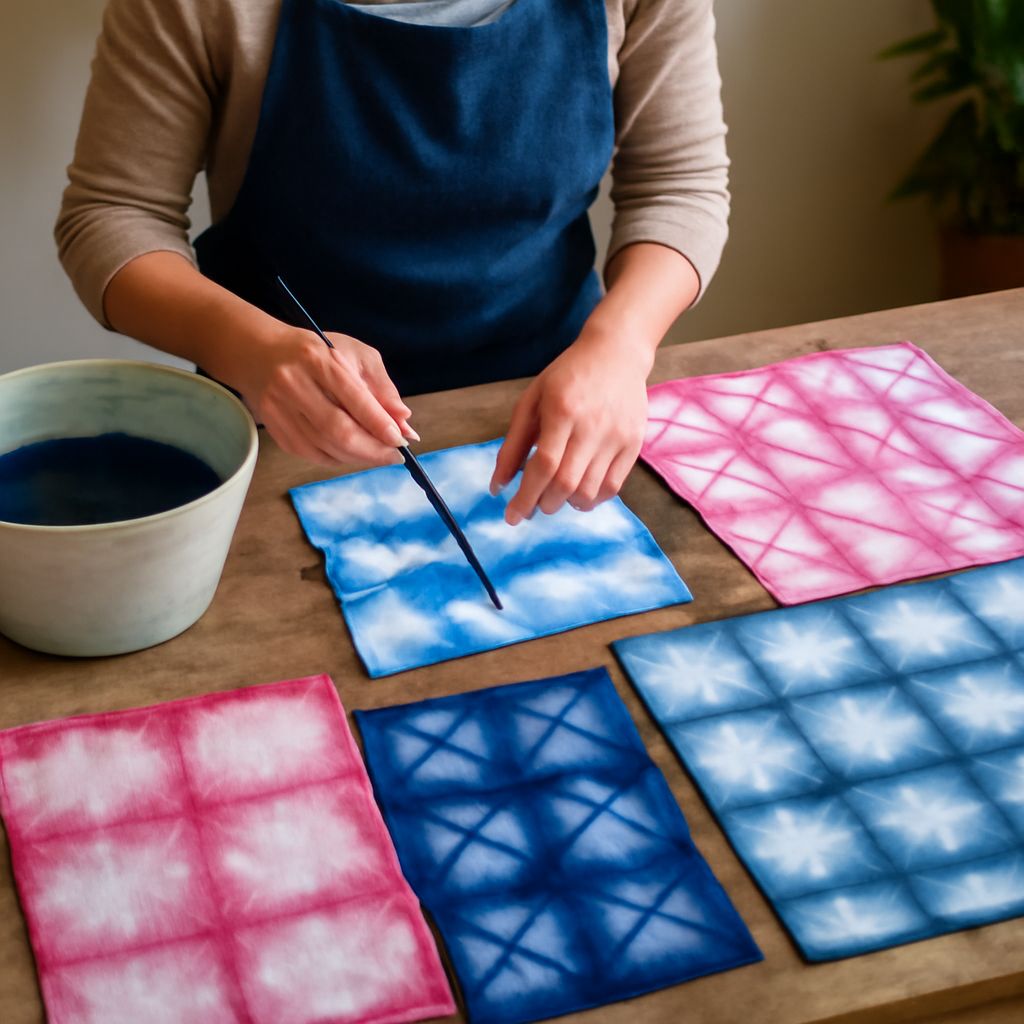
Shibori dye creates pattern by blocking dye from parts of the cloth. Folding, binding, stitching, and wrapping shape that resist, so the physical preparation determines the final design more than the dye color does.
This beginner project uses a folded-and-bound resist on a cotton square. It produces a repeatable geometric pattern, although hand-bound shibori fabric will have charming variations rather than perfect symmetry.
What Makes Shibori Dye Work?
Shibori is a form of resist dyeing. Parts of the fabric are compressed, covered, or gathered before dye enters the bath. Tight folds and bindings keep dye from reaching protected layers, while exposed edges absorb it. When you remove the resist, the untouched areas appear as pale lines, blocks, or shapes.
Compression controls the result. Firm, even ties create clearer boundaries; loose ties allow seepage and softer edges. Wet fabric can also take dye more readily than tightly packed, damp layers. For that reason, secure binding and consistent folding matter more than forcing an exact design.
Choose Shibori Fabric and Dye
Use a prewashed, absorbent natural fiber such as cotton, linen, hemp, or silk. Cotton is the easiest choice for an indigo project because it absorbs evenly and tolerates repeated rinsing. Avoid polyester unless you have a dye formulated for synthetic fibers. Factory sizing, oils, and fabric softener can repel dye, so wash the cloth without softener and rinse it well.
For one 45-centimeter cotton square, gather an indigo dye kit, a bucket, gloves, strong cotton twine or elastic bands, two small flat boards, and cool running water. Follow the kit’s instructions for preparing the vat. Test a scrap first; the sample reveals how quickly the dye darkens and whether your ties are tight enough.
Fold and Bind a Repeatable Pattern
- Dampen the washed fabric, then squeeze out excess water. It should be evenly moist, not dripping.
- Fold the square in half lengthwise. Accordion-fold it across the width, making pleats about 4 to 5 centimeters wide.
- Fold the pleated strip into thirds to form a compact rectangle. Keep the pleats aligned rather than twisting them.
- Place one board on each face. Bind the bundle tightly in two directions, spacing the ties evenly. Pull each knot firm and trim loose ends; gaps invite unwanted dye.
- Lower the bundle into the prepared dye for 1 to 2 minutes. Keep it submerged, but do not crush or unfold the resist.
- Lift it over the vat and gently squeeze out excess dye. Let it oxidize in air for 5 to 10 minutes. Indigo may look green at first, then turn blue.
- Repeat the dip and oxidation two or three times for a deeper blue. Shorter exposure gives a paler, higher-contrast result.
- After the final oxidation, rinse the bound bundle in cool water until the runoff is mostly clear. Remove the ties and boards, open the fabric slowly, and rinse again. Wash it separately with mild detergent and dry it away from direct heat.
White areas turning blue indicate loose compression or too much exposed fabric. If the whole piece remains pale, add another short dye dip rather than leaving it submerged for a long period.
How Shibori Patterns Take Shape
Different resist methods create different visual languages:
- Folding makes repeated bands, grids, triangles, and angular blocks. Aligned pleats produce the most regular repeats.
- Binding compresses selected points or bundles, creating rings, rays, starbursts, and uneven circular marks.
- Stitching draws lines through the cloth. Tight running stitches gather the fabric and form ripples, curves, or branching motifs.
- Pole-wrapping winds cloth around a cylinder before binding and compressing it. Dye reaches the raised ridges, producing vertical stripes and elongated waves.
These methods can be combined, but each resist leaves its own signature. The fold protects repeated sections, the tie controls compression, and the dye exposure sets the depth of the final shibori patterns.